Lemongrass
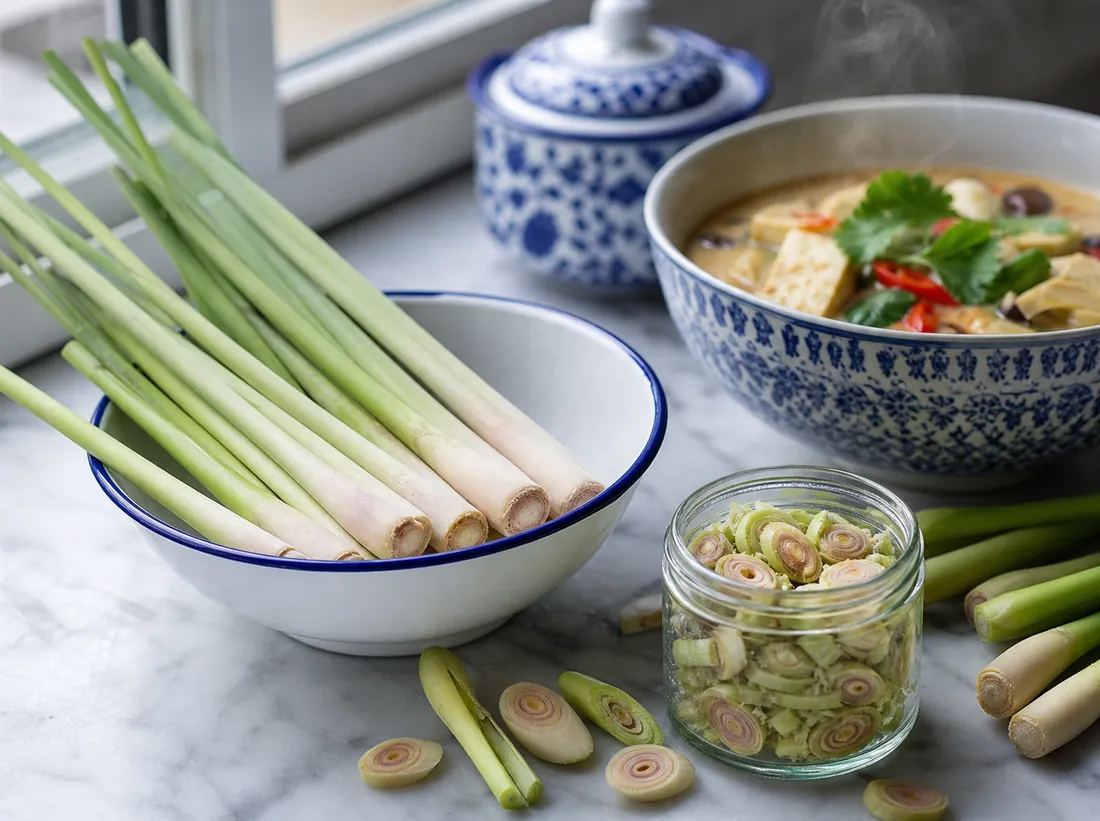
Lemongrass is a tall tropical grass whose stalk gives a soft lemon scent with no sourness at all. It is the base of tom yum, Thai coconut soup and curry pastes, and you cook mainly with the pale lower end of the stalk.
 Illustration
What is Lemongrass
Lemongrass is a perennial grass that grows in dense clumps, with long sharp leaves and a thick stalk at the base. In the kitchen you use mostly the bottom 10 to 15 cm of the stalk, the pale, hard part, while the green leaves above it go into stock or a hot infusion. It loves heat, and in Israel it grows happily in a garden bed or a large pot.
The scent is lemony and floral with a green edge, but there is none of a lemon's acidity. The fibres are very tough and never soften in cooking, so in soup you add large pieces and lift them out before serving or leave them at the side of the bowl, and for a paste you slice the stalk very thinly and pound it. It is common in Thai, Vietnamese, Lao, Indonesian and Malaysian cooking, and in Israel it is best known from tom yum, coconut soup and herbal infusions.
Price and where to buy
bunch, about 100 g
per kg
Where
Fresh lemongrass is sold at the Asian vegetable stalls of Carmel Market and the Asian shops around it, at the Asian supermarkets near the Central Bus Station and in Florentin in Tel Aviv, and on the speciality vegetable shelf of some supermarket chains. Frozen lemongrass is in the freezers of Asian shops, and dried lemongrass at spice shops and online spice and Asian food shops.
Shelf prices, October 2026, VAT included.
Kinds of Lemongrass
Fresh lemongrass
Whole stalks 30 to 50 cm long, sold in bunches. The strongest, cleanest scent, for soup, paste and marinades.
Frozen lemongrass
Finely chopped or minced, in bags or tubs at Asian shops. Handy for pastes and stir fries, since the hard work of slicing is done. The scent is a little weaker than fresh.
Dried lemongrass
Sliced or chopped, at spice shops and online. Good for infusions and for stock you strain, less so for paste, since it never pounds down soft.
How to use Lemongrass
Preparing the stalk
Trim the root end and the dry top, peel off one or two tough outer layers and keep the pale bottom 10 to 15 cm. For soup cut it into 5 cm pieces and bruise them with the back of a knife or a rolling pin; for paste slice it into the thinnest possible rings.
Tom yum
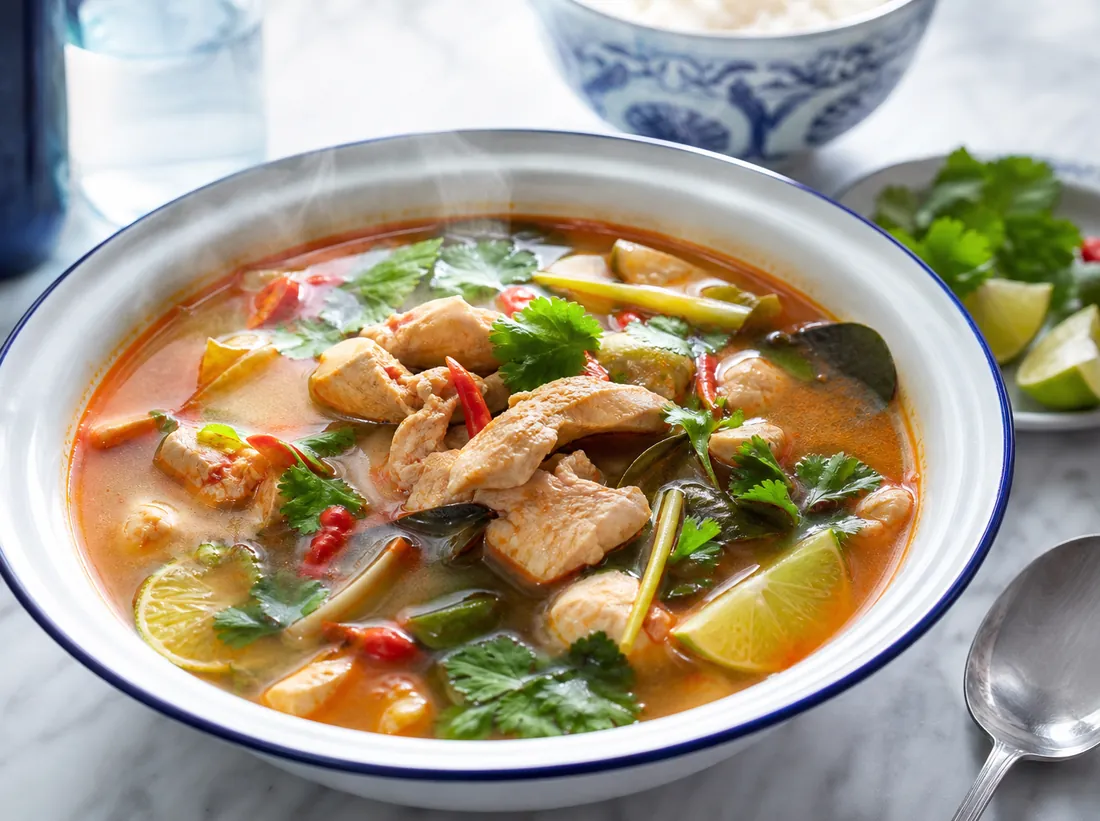
Three stalks, about 80 g, for a pot of one and a half litres, 4 bowls. They go into the stock with the galangal and lime leaves and simmer for 10 minutes before the chicken or mushrooms go in, and they are not eaten.
Thai coconut soup
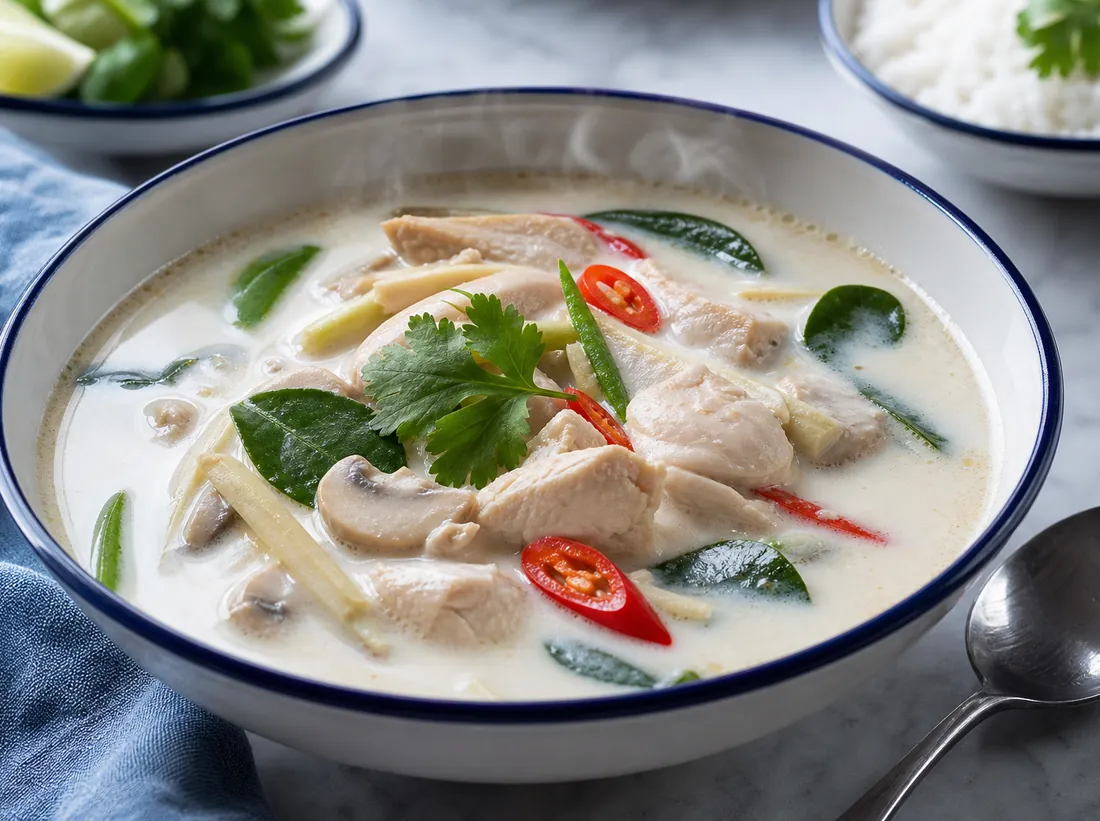
Three bruised stalks for a pot of 6 bowls. Cook them in the coconut milk over medium heat without a rolling boil; the coconut fat soaks up the scent and holds on to it.
Curry paste and marinade
One or two thinly sliced stalks, pounded in a mortar or blitzed in a food processor with garlic, shallot, chilli and galangal or ginger. The paste goes into curries, chicken skewer marinades and stir fries.
Infusion
The green leaves and the upper stalk, cut up, in a cup of boiling water for five to seven minutes. Add mint or a slice of ginger, and drink it hot or over ice.
How to choose Lemongrass
Firm, heavy stalks with a thick, pale yellow green base, no wrinkles and no dry brown ends.
Scratch the skin lightly with a fingernail: a fresh stalk gives off a strong lemon scent at once. No scent means it is old.
For tom yum and coconut soup fresh is best. With ready pastes and frozen lemongrass, read the ingredients, since some also contain salt, oil or fish sauce.
For packed lemongrass, frozen or dried, look for a kashrut mark on the pack.
What to use instead of Lemongrass
| Substitute | How, and what changes |
|---|---|
| Lemon peel | A 5 cm strip of lemon peel without the white pith for each stalk. Sharper and less floral; take it out after 10 minutes so it does not turn bitter. |
| Lemon verbena leaves | Three or four fresh leaves for each stalk, in soup or an infusion. Lemony, sweet and very close, and the soft leaves are easy to lift out. |
| Kaffir lime leaves and lemon peel | Two lime leaves and a little lemon peel for each stalk, in tom yum and coconut soup. A deeper citrus scent, different but right for the soup. |
| Dried lemongrass | A tablespoon of dried lemongrass for each fresh stalk, in a muslin bag or tea strainer so no fibres stay in the soup. Gentler scent; taste and add more if needed. |
How to store Lemongrass
In the pantry
In the fridge
In the freezer
The science of Lemongrass
Where the lemon scent comes from
The scent comes mainly from citral, the same compound that gives lemon peel its smell. Lemongrass is rich in citral but has almost no citric acid, so it smells of lemon without tasting sour. In tom yum the sourness comes from the lime juice squeezed in at the end.
Why you bruise the stalk
The aromatic oil sits in tiny cells between the fibres. Bruising and thin slicing tear those cells open and release the oil into the soup within minutes, while a whole, unbruised stalk gives very little scent even after half an hour.
Why it never simmers for an hour
Citral is volatile, so heat makes it evaporate and break down. Ten to 20 minutes of gentle cooking draws out most of the scent, while a long hard boil weakens it and leaves a dull, grassy taste. Fat, as in coconut milk, dissolves the aromatic oil and keeps it in the pot.
Ask for Lemongrass
Looking for Lemongrass and cannot find it? Send a request and we will come back with a price and availability.
- Tell us how much you need and by when.
- We come back with a price, pack size and availability.
- Pick up at 99 Ibn Gabirol or delivery in Tel Aviv.
Frequently asked questions
What is lemongrass?
A tropical grass with a fragrant stalk that smells of lemon without the sourness. Its pale lower part goes into tom yum, coconut soup, curry pastes and infusions.
Is lemon grass the same as lemongrass?
Yes, it is the same plant written two ways. Lemon verbena is a different plant, with soft leaves and a similar lemon scent.
Which part of lemongrass do you use?
The pale bottom 10 to 15 cm, once the outer layers are peeled away. The green leaves are good for stock and infusions, and you strain them out.
Do you eat the lemongrass in the soup?
Usually not. The pieces are tough and fibrous, so you lift them out or leave them at the side of the bowl. Only lemongrass sliced very thinly and pounded into paste is eaten.
What can I use instead of lemongrass?
A strip of lemon peel for each stalk, or three or four lemon verbena leaves. In tom yum add kaffir lime leaves as well.
Where can I buy lemongrass in Israel?
At the Asian vegetable stalls of Carmel Market, the Asian supermarkets near the Central Bus Station and in Florentin, and some supermarket chains. Frozen and dried lemongrass are at Asian shops and online.
The Complete99 pantry
Ingredients and kitchen gear, with prices and availability.
More from the pantry
Amba
Amba is a sour, spicy sauce of pickled green mango, yellow from turmeric with a strong smell of fenugreek. It…
Baharat
Baharat is a blend of warm, fragrant spices, and its name is simply the Arabic word for spices. In Iraqi,…
Bulgur
Bulgur is wheat that has been boiled, dried and cracked, so it is ready in minutes. Fine bulgur, which many…