Saffron
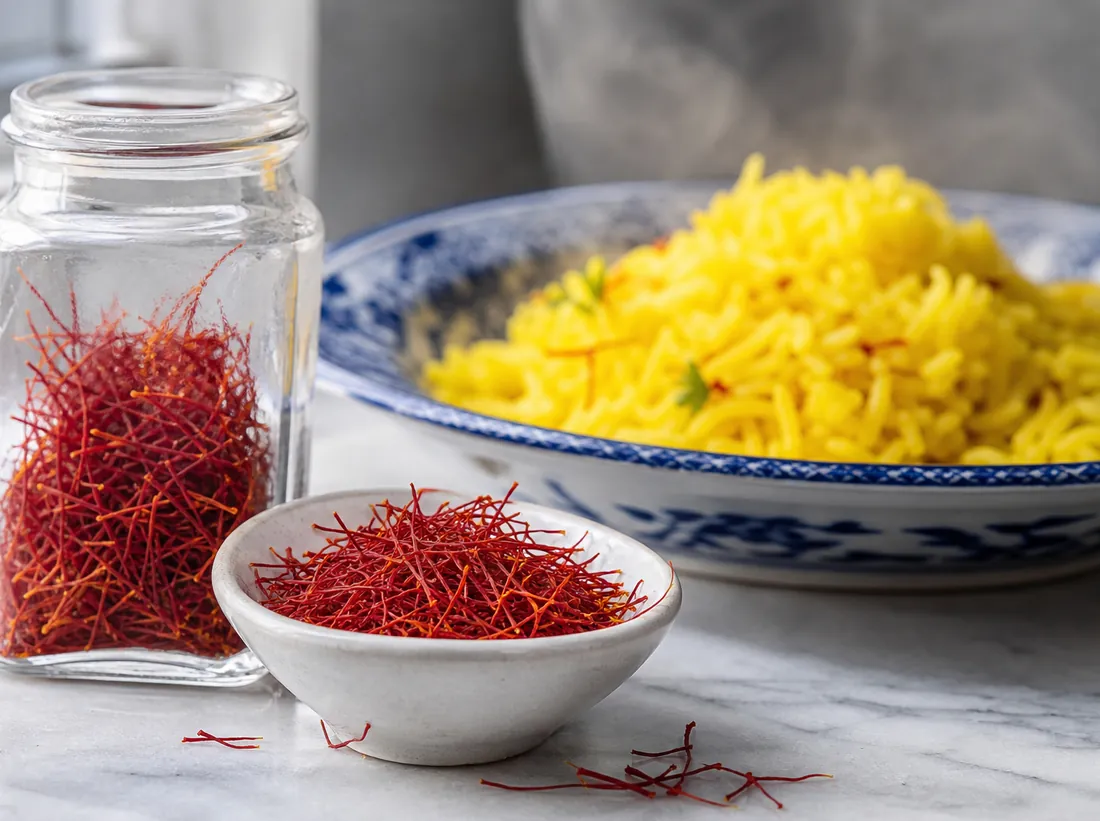
Saffron is the dried red stigma of the saffron crocus, and very little of it is needed: a pinch of threads turns a whole pot gold and brings a scent of honey, hay and flowers. It is the most expensive spice in the world, so it is bought by the gram and used by the tenth of a gram.
 Illustration
What is Saffron
Every saffron crocus flower holds three red stigmas, the female part of the flower. The flowers are picked by hand in autumn, early in the morning, over a season of just a few weeks; the stigmas are separated by hand and dried over gentle heat. Every kilo of saffron takes hundreds of thousands of flowers, and that is the reason for the price.
Most of the world's saffron comes from Iran, and it is also grown in Spain, Kashmir, Afghanistan, Greece and Morocco. It is at the heart of Persian rice and Indian biryani, Spanish paella, Milanese risotto, Marseille bouillabaisse and Moroccan tagines. In Moroccan homes it sometimes goes into the yellow couscous soup, and in Persian homes into a festive rice pudding with rose water.
Price and where to buy
1 g threads
per kg
Where
Real saffron is sold at the spice shops of Carmel Market, Levinsky Market and Hatikva Market in Tel Aviv, Mahane Yehuda in Jerusalem and Wadi Nisnas in Haifa, at Persian grocers and at online spice shops. Israeli supermarket chains rarely stock it. Ask the seller for whole threads and the country of origin, and ask to smell it before you buy.
Shelf prices, October 2026, VAT included.
Kinds of Saffron
Saffron threads
The whole dried stigmas. The safe form to buy, because you can see what is in the bag, and the aroma keeps a long time.
Sargol and negin
Persian grades of saffron. Sargol is only the red tips of the stigma, negin long, thick red threads. Both are free of the yellow part, and both are the strongest and most expensive.
Ground saffron
A powder that dissolves quickly. It is easy to mix with colourings and cheap fillers, so buy ground saffron only from a spice shop you know.
Safflower, not saffron
Orange petals of a different flower, sometimes sold cheaply as saffron. They colour a little and have none of saffron's aroma or taste.
How to use Saffron
How to bloom saffron
Crush a pinch of threads, about 0.1 to 0.2 g, in a mortar with a pinch of sugar or salt, and steep in two or three tablespoons of hot but not boiling water for 15 to 20 minutes, until the liquid is deep orange. Add the liquid along with the threads.
Persian saffron rice
0.2 g of bloomed saffron for two cups of rice. At the end of cooking stir the saffron liquid with a tablespoon of butter or oil into a cup of the rice, and scatter the golden rice over the white before serving.
Bouillabaisse and fish soup
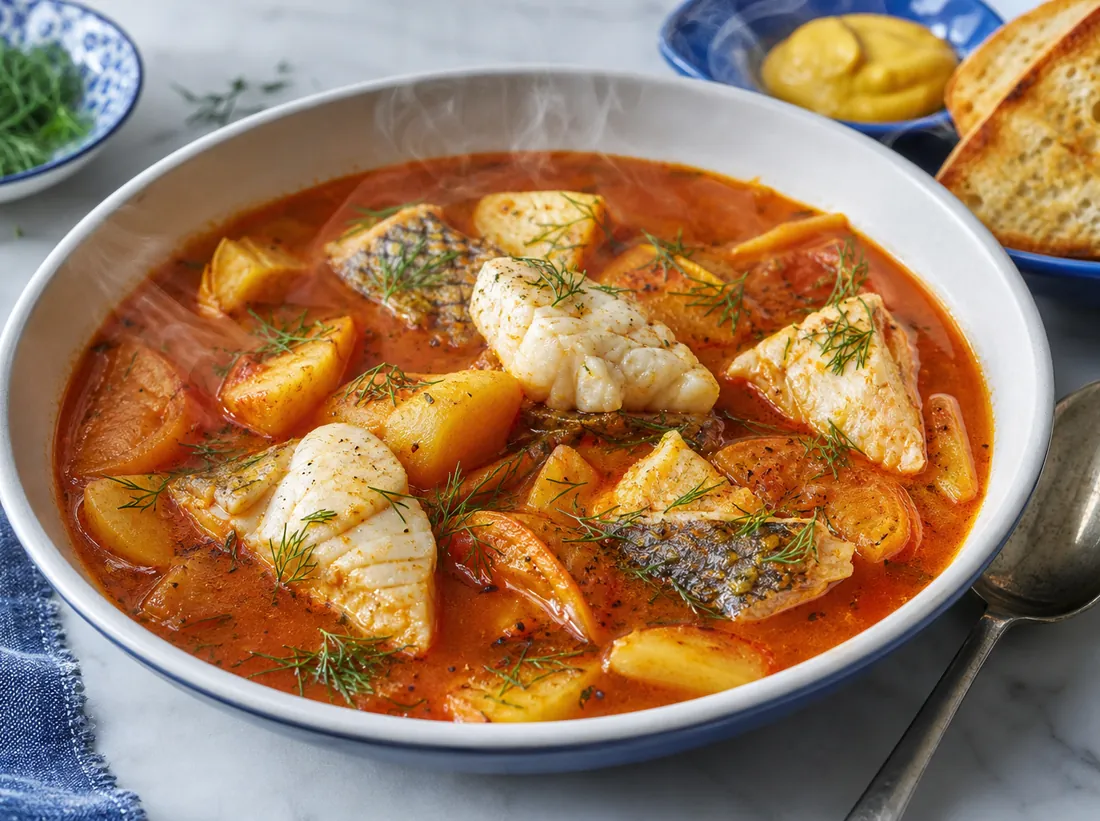
In the Marseille fish soup 0.4 g of saffron threads go into a pot for six, along with the fennel and orange peel, plus 0.1 g more in the garlic sauce on the croutons.
Saffron risotto
0.2 g of bloomed saffron for 300 g of risotto rice, with vegetable stock. Add the liquid halfway through cooking, so the colour spreads and the aroma stays.
In desserts
A pinch of saffron steeped in warm milk for rice pudding, malabi or a simple cake. Add a little rose water or cardamom, and the dessert turns golden and fragrant.
How to choose Saffron
Deep red, even threads with very little orange or yellow at the end, dry and brittle. A strong smell of honey and hay as soon as the box is opened.
A simple test: one thread in a glass of hot water. Real saffron slowly releases a golden yellow colour over a few minutes while the thread stays red. A thread that bleeds red at once or loses its own colour is probably dyed.
A very low price is a warning sign. Buy small packs of half a gram or a gram, since very little is enough for several dishes.
Look for a kashrut mark on the pack.
What to use instead of Saffron
| Substitute | How, and what changes |
|---|---|
| Turmeric | For colour only: about a quarter teaspoon of turmeric in place of 0.1 g of saffron. The taste is completely different, earthy rather than floral. |
| Sweet paprika with turmeric | Half a teaspoon of paprika and a quarter teaspoon of turmeric, for a golden orange colour in rice and paella. None of saffron's aroma. |
| Safflower | A pinch of petals in hot water, for a gentle yellow colour only. Cheap, but weak in flavour. |
How to store Saffron
In the pantry
In the fridge
In the freezer
The science of Saffron
Three compounds, three jobs
Crocin gives the colour and dissolves in water, not in oil. Picrocrocin gives the gentle bitterness. Safranal gives the aroma, and it forms from picrocrocin during drying. Good saffron is rich in all three.
Why saffron is steeped in water
Crocin dissolves in water, but it takes time to leave the thread. Crushing and steeping in hot water draw out the colour in advance, so it spreads evenly through the pot. In boiling water and very long cooking the safranal evaporates, so saffron is not boiled for an hour.
Why saffron is so expensive
Each flower has only three stigmas, picking and separating them is done by hand, and the season is short. Drying takes away most of their weight, so every gram takes a great deal of handwork. No machine does it well.
Ask for Saffron
Looking for Saffron and cannot find it? Send a request and we will come back with a price and availability.
- Tell us how much you need and by when.
- We come back with a price, pack size and availability.
- Pick up at 99 Ibn Gabirol or delivery in Tel Aviv.
Frequently asked questions
What is saffron?
The dried stigmas of the saffron crocus. It colours food gold and gives a scent of honey, hay and flowers, and only a tiny amount is needed.
How much does saffron cost?
At Israeli spice shops a gram of saffron costs around 27 shekels, which works out at about 27,000 shekels a kilo. The price varies widely with grade and origin, and one gram is enough for five to ten dishes.
Why is saffron so expensive?
Each flower has only three stigmas, they are picked and separated by hand, and every kilo takes hundreds of thousands of flowers.
How do you use saffron?
Crush a pinch of threads, steep them for 15 to 20 minutes in a few spoonfuls of hot water, and add the liquid and threads to rice, soup, risotto or dessert.
How much saffron do you use?
Usually 0.1 to 0.2 g for a pot serving four to six. Too much saffron tastes bitter and harsh.
How can you tell if saffron is real?
Drop a thread into hot water. Real saffron slowly releases a golden yellow colour and the thread stays red. A strong smell of honey and hay is also a good sign.
What can I use instead of saffron?
Nothing truly replaces its flavour. For colour use turmeric, or sweet paprika with turmeric.
The Complete99 pantry
Ingredients and kitchen gear, with prices and availability.
More from the pantry
Amba
Amba is a sour, spicy sauce of pickled green mango, yellow from turmeric with a strong smell of fenugreek. It…
Baharat
Baharat is a blend of warm, fragrant spices, and its name is simply the Arabic word for spices. In Iraqi,…
Bulgur
Bulgur is wheat that has been boiled, dried and cracked, so it is ready in minutes. Fine bulgur, which many…