The story of Bouillabaisse
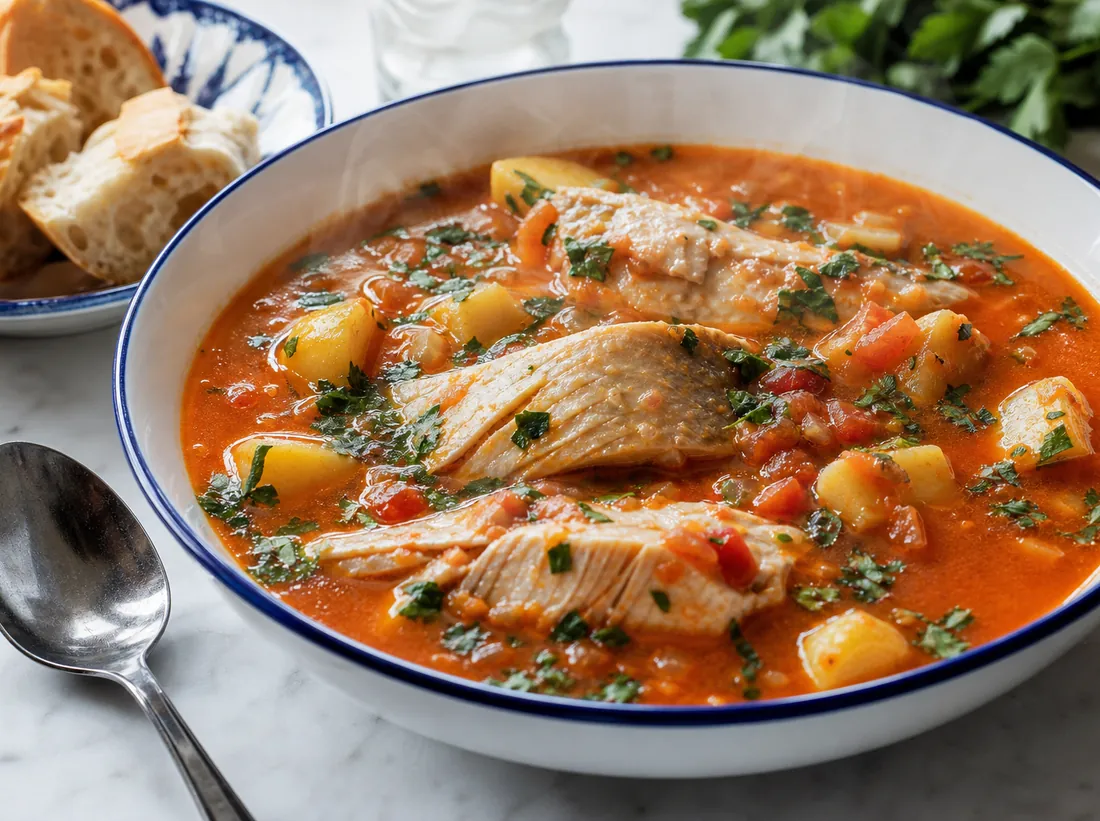
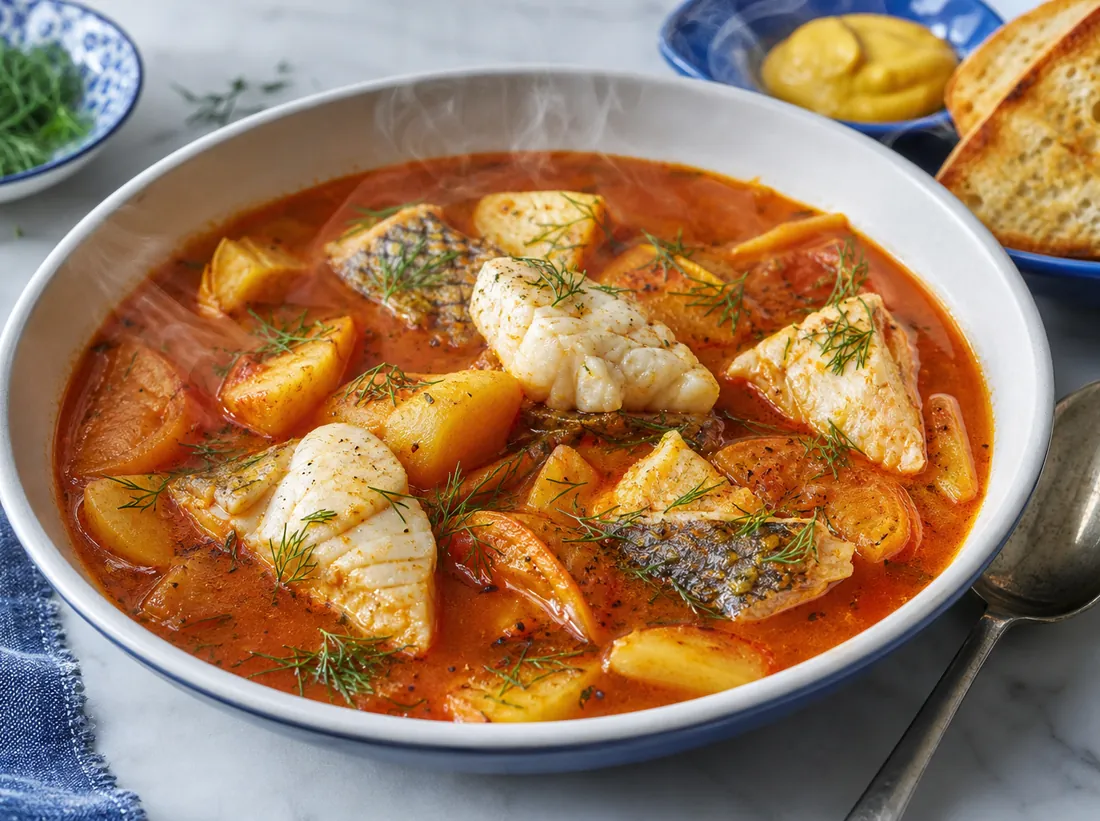
Bouillabaisse was born in Marseille as fishermen's food: small, bony rock fish that were hard to sell, cooked in one pot with olive oil, tomatoes, fennel and saffron. The name is usually read from Provençal as boil, then lower the heat, which is exactly the order of the method. Over the years the harbour soup became one of the city's famous restaurant dishes.
In 1980 a group of Marseille restaurateurs drew up a charter defining what may be called bouillabaisse: Mediterranean rock fish, rascasse among them, served in two stages, first the broth with toast and rouille, then the fish. The classic also includes scaleless fish such as monkfish and conger eel, and often crabs or mussels. A kosher kitchen does not use them, so our version keeps the method, the saffron, fennel, orange peel and rouille, and uses only kosher fish.
What makes Bouillabaisse itself
Bouillabaisse is the opposite of a clear soup. It boils hard on purpose, so the olive oil blends into the broth as a rich golden emulsion, slightly thick and glossy. The trio of saffron, fennel and orange peel gives the taste you recognise at once, and the rouille, a mayonnaise of garlic, saffron and chilli, ties it all together. The serving is part of the dish too: broth over toasted bread, then a platter of fish and potatoes.