Silan
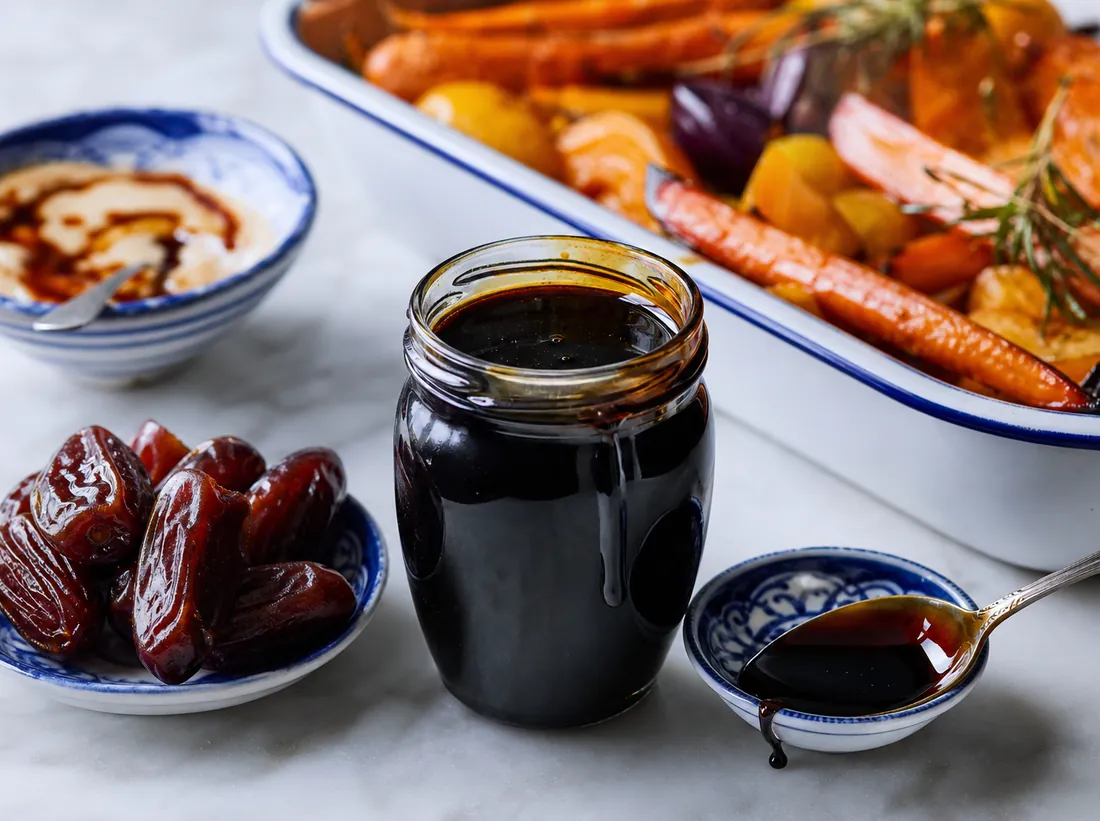
Silan, or date syrup, is a dark, thick syrup made from cooked and pressed dates. It is as sweet as honey, with a taste of caramel and dried fruit, and in Israel it goes on bread with tahini, into cakes and over roast chicken and vegetables.
 Illustration
What is Silan
Silan is made from dates alone. The dates are simmered in water until they fall apart, the sweet liquid is pressed and strained, and then it is slowly reduced until it becomes a thick, dark brown syrup. The name came into Hebrew from the homes of Iraqi Jews, where homemade silan was the sweetener of the whole year, and in Arabic it is called dibs tamr.
It tastes sweet and deep, with notes of caramel, dates and a slight toasted bitterness, and it is a little thinner than bee honey. Silan is not honey: nothing in it comes from the hive, and it is entirely plant based. For Iraqi Jews it is the base of the Passover charoset, with chopped walnuts, and in Israeli cooking it goes into honey cakes and cookies, glazes for chicken and meat, and the classic plate of raw tahini with silan.
Price and where to buy
470 g squeeze bottle
per kg
Where
Silan is sold in every Israeli supermarket chain, next to the honey and spreads, in squeeze bottles and jars. Homemade and small batch silan is at the spice and dried fruit shops of Carmel Market, Levinsky Market and Hatikva Market in Tel Aviv, Mahane Yehuda in Jerusalem and Wadi Nisnas in Haifa, and at Iraqi and Persian grocers.
Shelf prices, October 2026, VAT included.
Kinds of Silan
100% date silan
The ingredient list says only dates, sometimes dates and water. It is darker, less sweet and deeper in flavour, and works for everything.
Silan with sugar or glucose syrup
Some products add sugar or another syrup to the dates. They are lighter, sweeter and cheaper, and the date flavour is weaker. The ingredient list shows it.
Organic silan
Silan from organically grown dates. Same taste and same uses, at a higher price.
Homemade silan
Dates are simmered in water, squeezed through a cloth and reduced. It is thinner and cloudier than bought silan and keeps for less time, so it lives in the fridge.
How to use Silan
Tahini and silan
Two tablespoons of raw tahini and one of silan on a slice of bread or a pita, not fully mixed. It is the classic Israeli dessert and snack.
Instead of sugar in baking
Three quarters of a cup of silan in place of one cup of sugar, and cut about a quarter cup of liquid from the recipe. Lower the oven by 10 to 15 degrees, because a batter with silan browns fast.
Glaze for chicken and meat
Three tablespoons of silan, two of soy sauce, two crushed garlic cloves and a tablespoon of lemon juice. Brush it on in the last 15 minutes of roasting, because the sugar burns quickly.
Iraqi charoset
One cup of silan and half a cup of coarsely chopped walnuts, and that is all. Mix it a few hours before the Seder so the walnuts soak up a little syrup.
In soup and stews
One or two teaspoons in place of sugar in a sweet and sour kubbeh soup, in pumpkin kubbeh or in a meat stew. Add it gradually and taste, because silan also adds a dark colour and a caramel note.
How to choose Silan
Read the ingredient list. If it says only dates, it is full silan. Sugar or glucose syrup on the list means a blended product.
Look for an even dark brown colour and a syrup that flows slowly. Small crystals at the bottom are sugar that crystallised, not spoilage.
A squeeze bottle is handy for every day, and a large jar costs less per kilo and suits people who bake a lot.
Look for a kashrut mark on the pack, and for Passover look for a kosher for Passover mark as well.
What to use instead of Silan
| Substitute | How, and what changes |
|---|---|
| Bee honey | Same amount. It is lighter, more floral and less deep, and it is not plant based. |
| Maple syrup | Same amount. A little thinner and milder, and especially good for glazes and roast vegetables. |
| Dark brown sugar | One heaped tablespoon of dark brown sugar and a teaspoon of water for each tablespoon of silan. Similar sweetness, without the date flavour. |
| Homemade date paste | Soak 200 g of pitted dates for 15 minutes in a cup of boiling water and blend until smooth. It is thicker than silan, good for baking and smoothies, and keeps about a week in the fridge. |
How to store Silan
In the pantry
In the fridge
In the freezer
The science of Silan
Why silan is so dark
During the long boil of the date juice the sugars caramelise and react with amino acids from the fruit in the Maillard reaction. Brown pigments form, along with hundreds of aroma compounds of caramel, toffee and dried fruit. The longer it reduces, the darker silan gets, and the slightly more bitter.
Why a cake with silan browns fast
Most of the sugar in silan is glucose and fructose, not table sugar. Fructose caramelises at a much lower temperature than table sugar, and both sugars react readily in the Maillard reaction. So the crust colours and darkens before the inside is done, which is why the oven goes a little lower.
Why silan cakes stay moist
Fructose draws water from the air and holds it more tightly than table sugar. A cake made with silan or honey loses moisture more slowly and stays soft for several days, sometimes even turning slightly sticky the next day.
Ask for Silan
Looking for Silan and cannot find it? Send a request and we will come back with a price and availability.
- Tell us how much you need and by when.
- We come back with a price, pack size and availability.
- Pick up at 99 Ibn Gabirol or delivery in Tel Aviv.
Frequently asked questions
What is silan?
Date syrup: a dark syrup made from dates that are simmered in water, pressed and boiled down until thick.
What is the difference between silan and honey?
Honey comes from the hive, and silan is made only from dates. Silan is darker, with a taste of caramel and dried fruit, and it is entirely plant based.
Is all silan 100% dates?
No. Some products add sugar or glucose syrup. The ingredient list of full silan says only dates.
How do you replace sugar with silan in baking?
Three quarters of a cup of silan for each cup of sugar, cut about a quarter cup of liquid and lower the oven by 10 to 15 degrees.
Does silan need the fridge?
Not necessarily. It keeps well somewhere cool and dark, and in a hot summer or long after opening the fridge is better.
Why did my silan crystallise?
Its sugar is very concentrated and sometimes crystallises, mostly in the cold. Stand the closed bottle in a bowl of hot water for a few minutes and the crystals melt.
How much does silan cost?
In the supermarket a 470 g squeeze bottle costs about 13.9 ILS and a 900 g jar about 20 ILS. Organic products cost more.
The Complete99 pantry
Ingredients and kitchen gear, with prices and availability.
More from the pantry
Amba
Amba is a sour, spicy sauce of pickled green mango, yellow from turmeric with a strong smell of fenugreek. It…
Baharat
Baharat is a blend of warm, fragrant spices, and its name is simply the Arabic word for spices. In Iraqi,…
Bulgur
Bulgur is wheat that has been boiled, dried and cracked, so it is ready in minutes. Fine bulgur, which many…