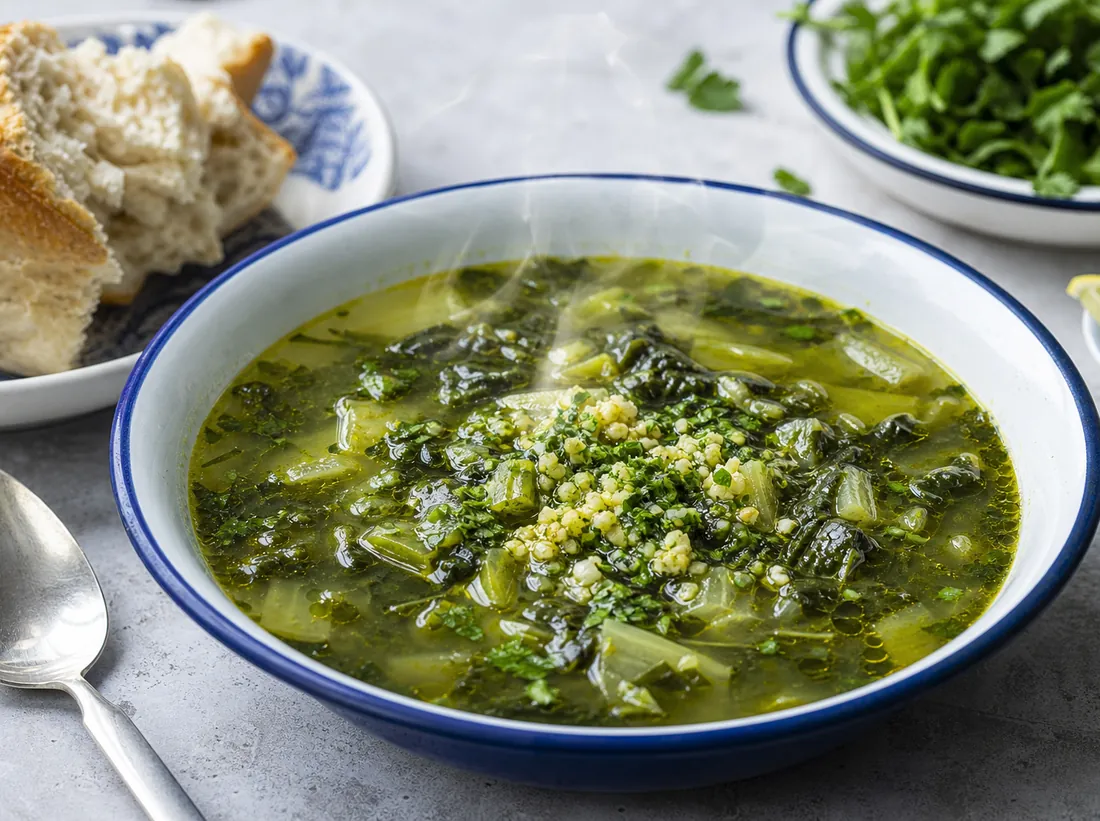
The story of Swiss chard soup
Chard and beetroot are the same species. Beet was bred for its root and chard for its leaves and stalks, which is why its Hebrew name is selek alim, leaf beet, while mangold, the German name, is the one that stuck in everyday Israeli speech. Across the Levant and in the Jewish communities of the Muslim lands, chard with lemon and garlic is a familiar pairing: in stuffed leaves, in pies and in sour soups, including the Kurdish kubbeh hamusta.
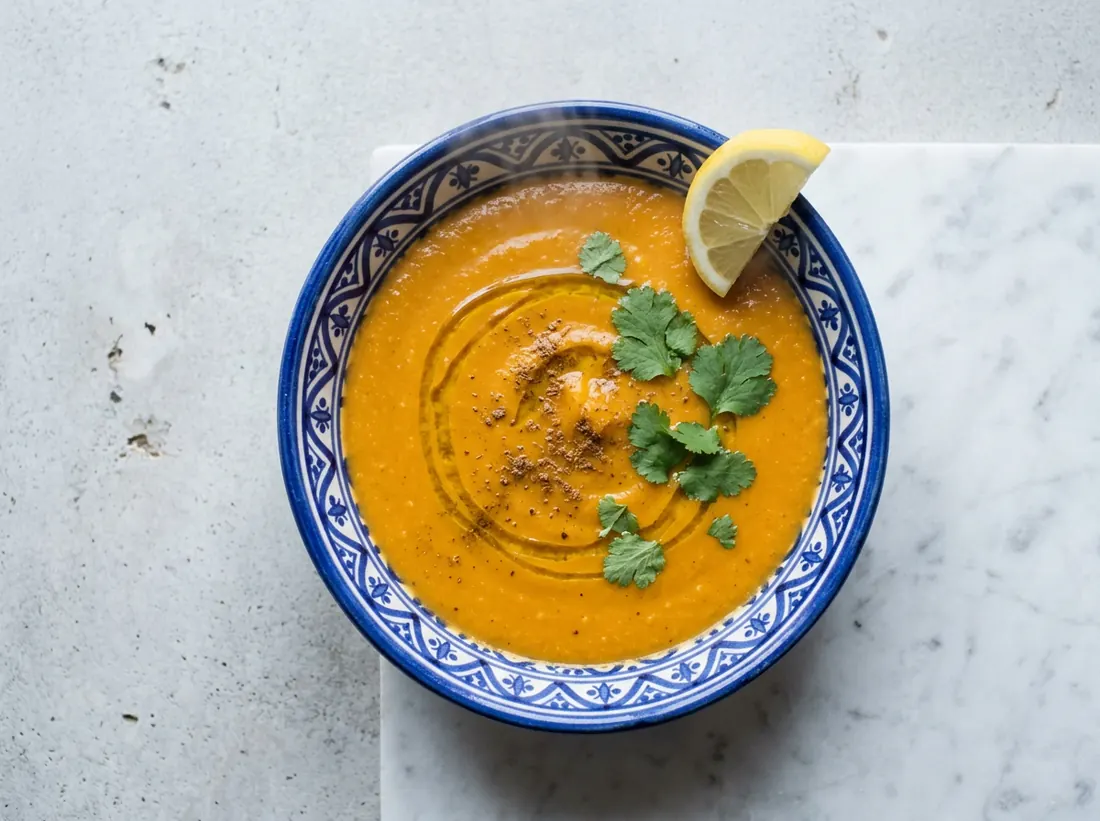
The best known lentil version is the Lebanese adas bi hamod, lentils in lemon: brown lentils, chard, potatoes, lemon and garlic fried with coriander. In Sephardi and Mizrahi homes in Israel, chard soup comes in many forms, with lentils, zucchini, chickpeas or pumpkin, and it is a winter soup, made when chard in the market is at its best.
What makes Swiss chard soup itself
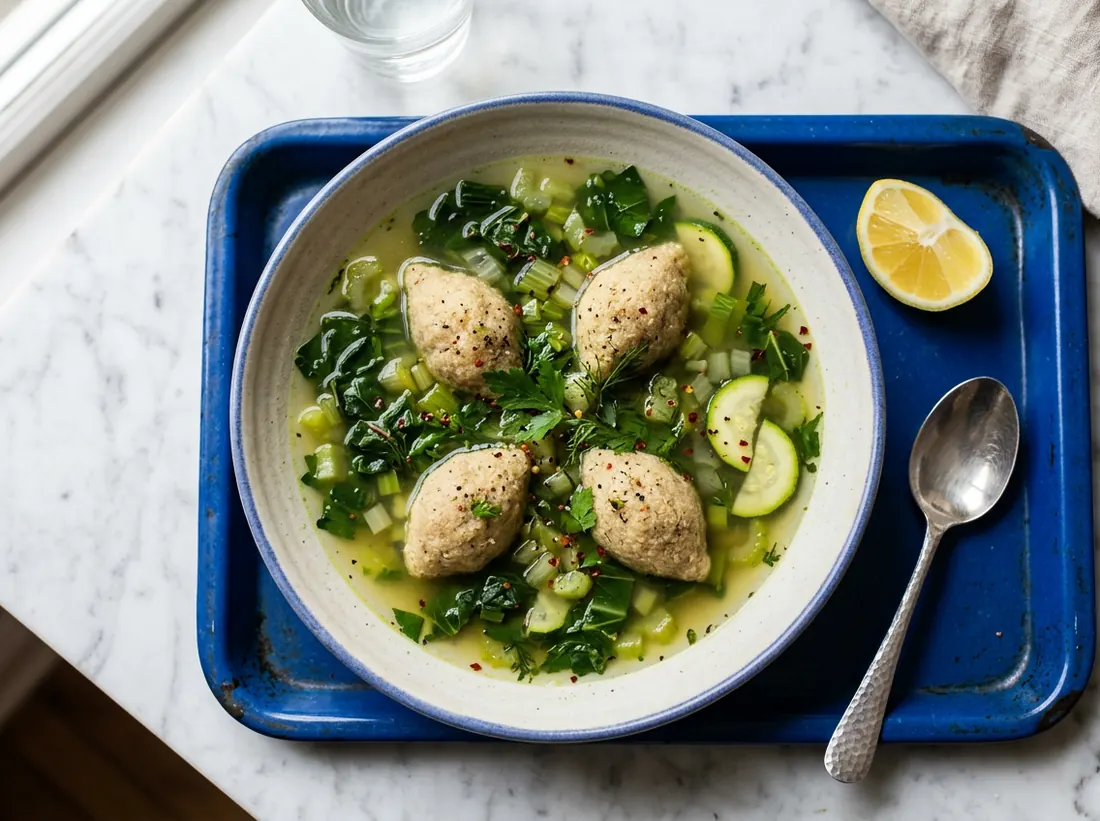
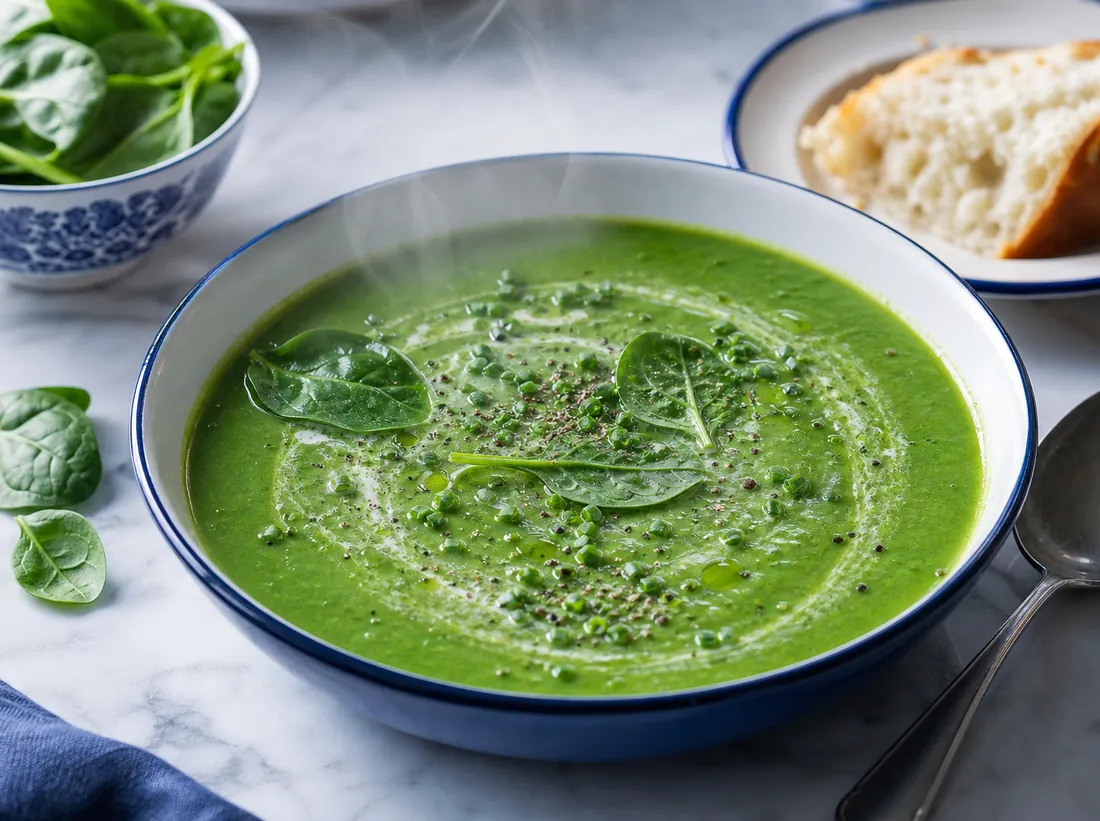
In chard soup nothing is thrown away and nothing goes in for no reason. The stalks, which most people discard, go in first and give the soup body; the leaves go in only at the end so they stay tender rather than mushy; and the potatoes thicken the liquid a little. The signature is the finish: garlic fried in olive oil until pale gold, coriander that joins it for half a minute, and lemon that goes in when the pot is almost done.