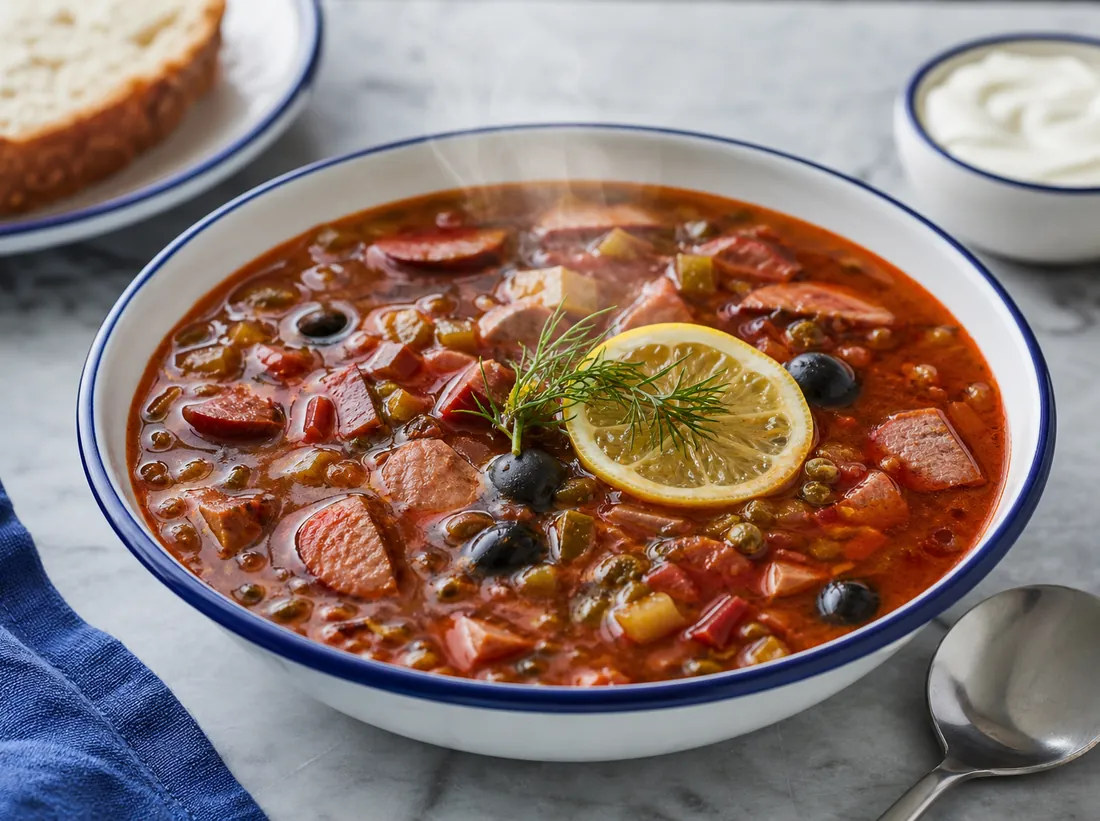
The story of Solyanka
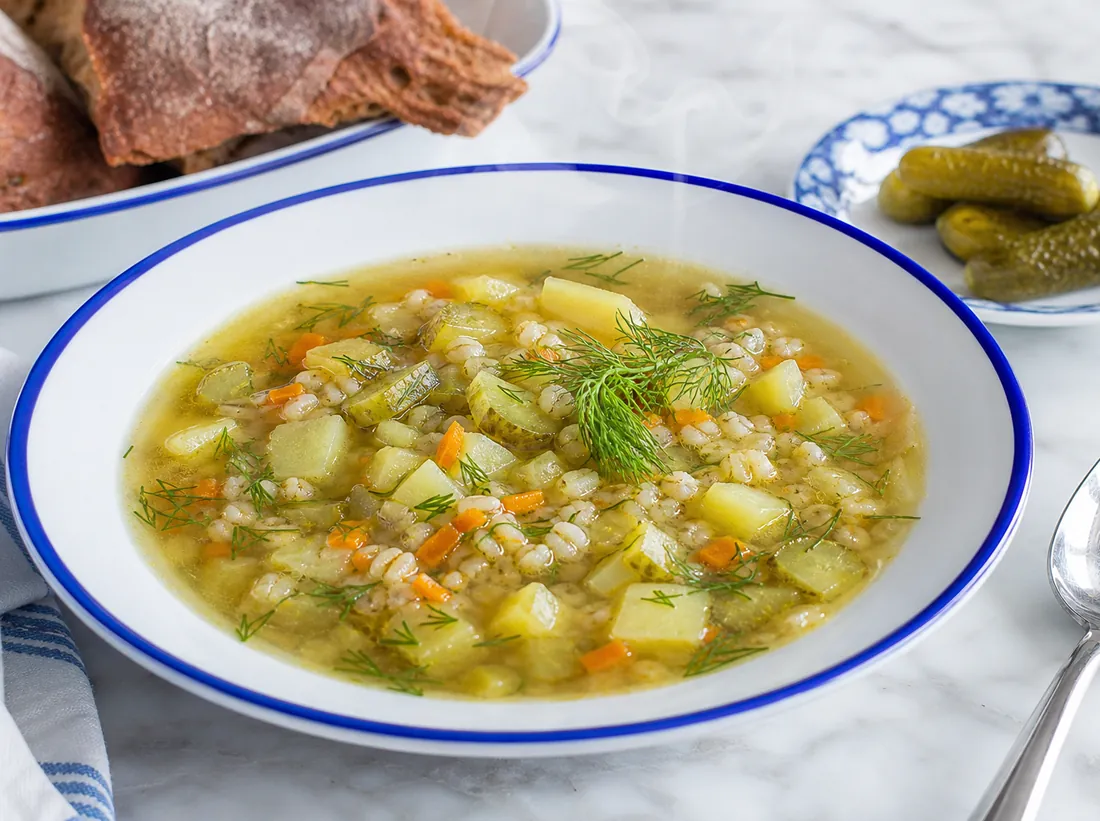
Solyanka belongs to Russian cooking and is known across the former Soviet Union, from Ukraine to Siberia. The name is usually linked to the Russian word for salt, though some say the older form was selyanka, from the word for village. Either way, this is a soup built on salt and sourness: pickles, brine, olives and capers. The meat version is called mixed solyanka, because several kinds of meat go into it together.
In the homes of olim from the former USSR in Israel, solyanka is a well-known way to finish what is left after a festive meal: a bit of sausage, a bit of smoked meat, half a jar of pickles. In a kosher kitchen it goes through one clear change. In Russia it is served with a spoonful of sour cream; in the kosher meat version the cream goes, and lemon and dill bring the sourness and the softness instead.
What makes Solyanka itself
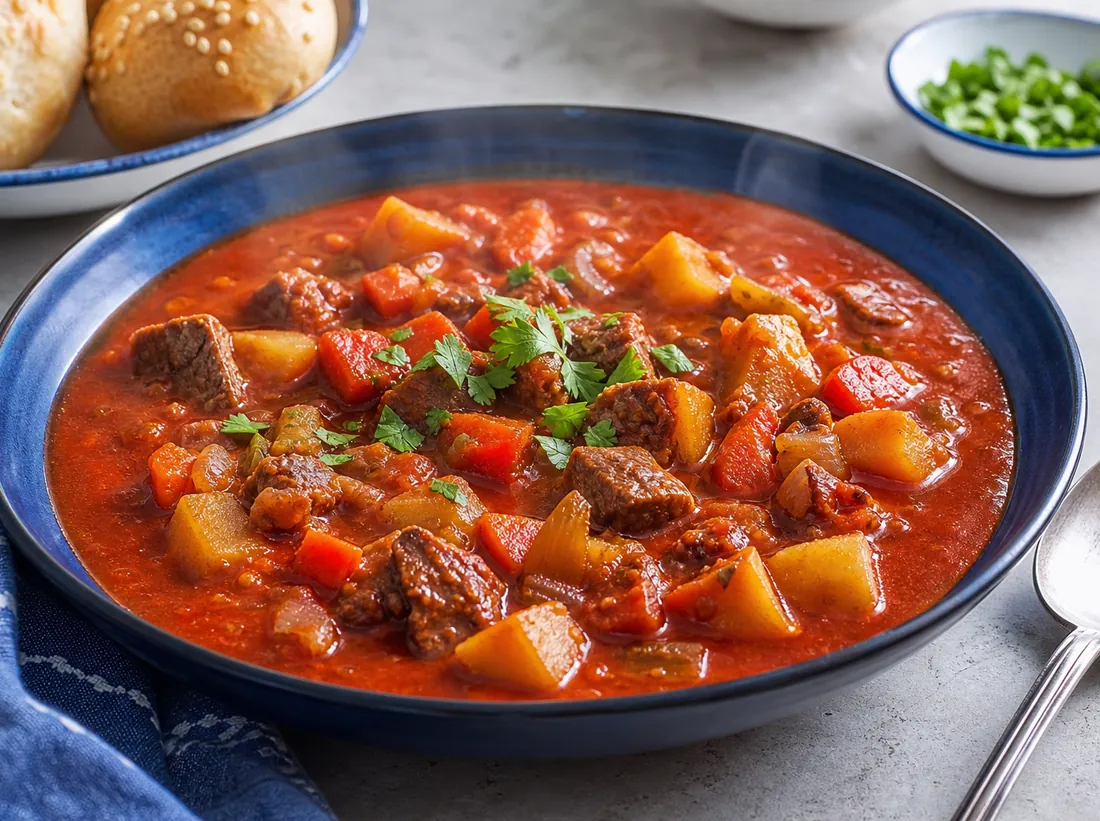
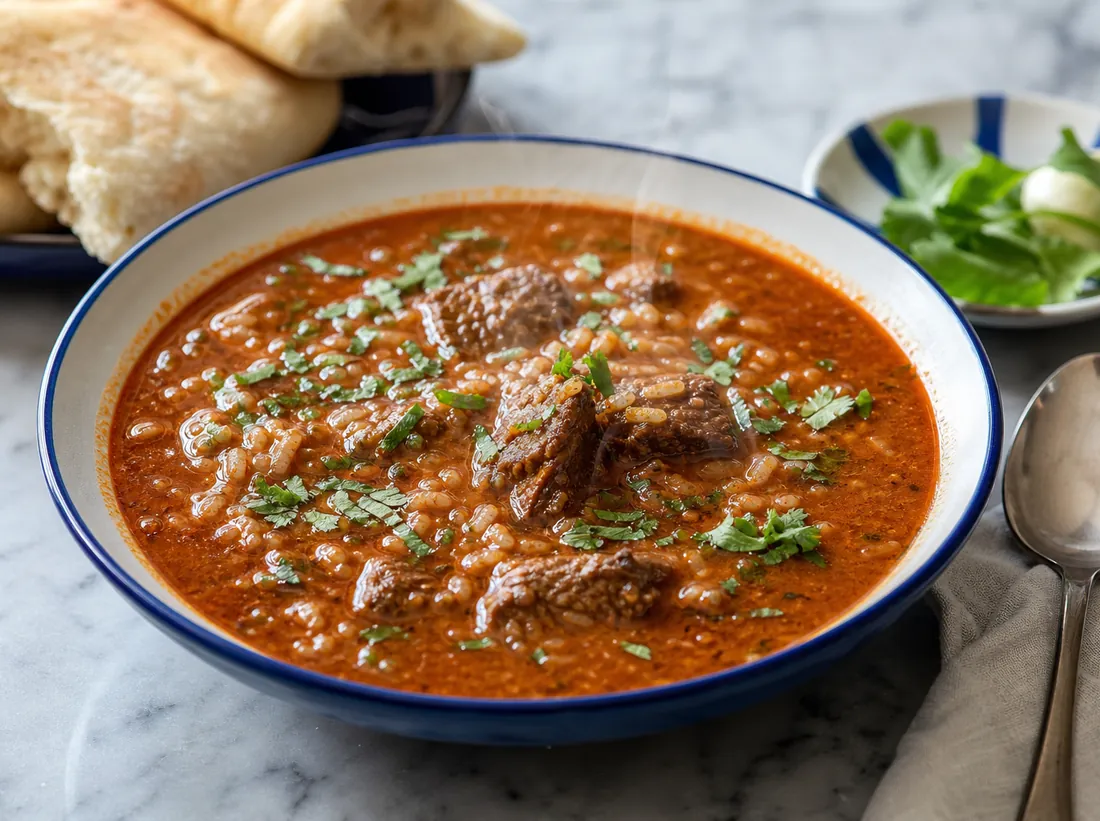
What makes solyanka itself is three strong tastes in one bowl: salty, sour and smoky. The base is a clear beef broth, and the body comes from several kinds of smoked meat cut into strips. The sourness arrives in three layers: pickled cucumbers, their brine, and lemon in the bowl. Olives and capers bring a different, sharper saltiness, and fried tomato paste gives an orange colour and depth. It is a soup that hardly needs salt, because every ingredient brings its own.