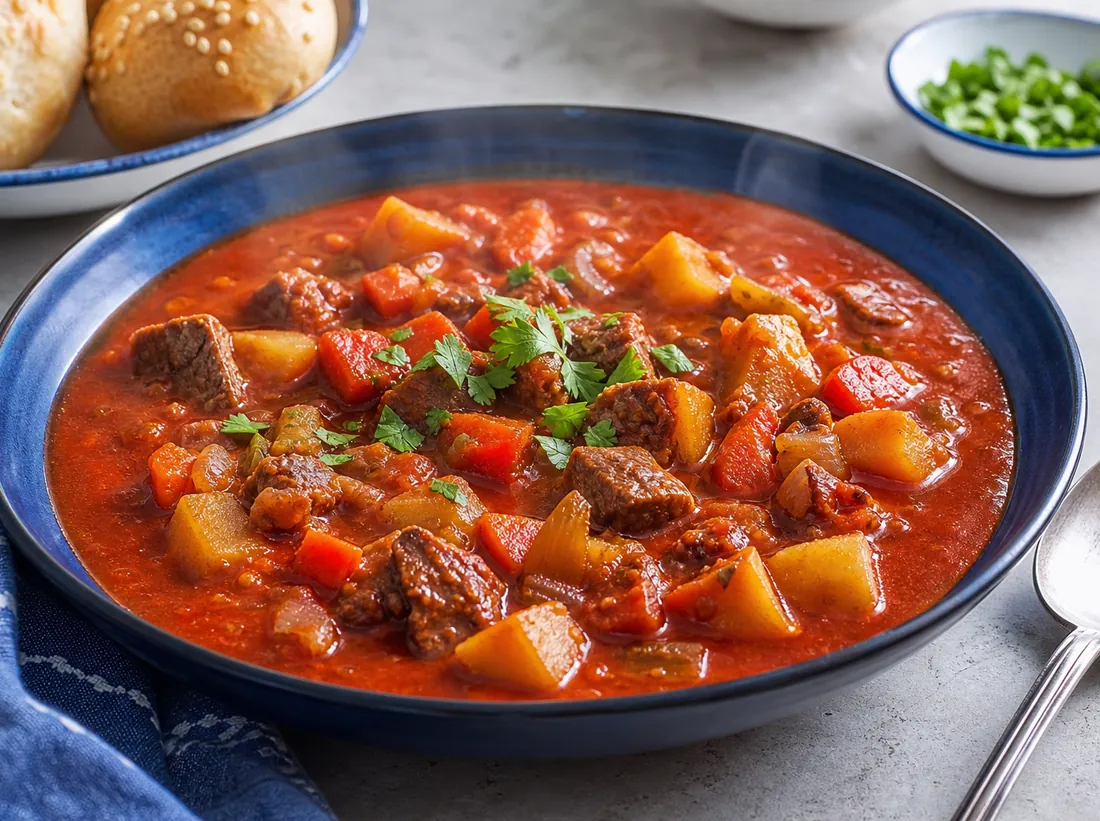
The story of Goulash soup
The name comes from the Hungarian word for a cattle herder. Herdsmen on the Hungarian plains cooked beef in an iron kettle over the fire, and that is where the dish began. In Hungary itself gulyás is a soup; the thick stew that the rest of the world calls goulash is known there as pörkölt. Paprika and potatoes only reached Europe in the 16th century, so the red goulash we know is much younger than the herdsmen.
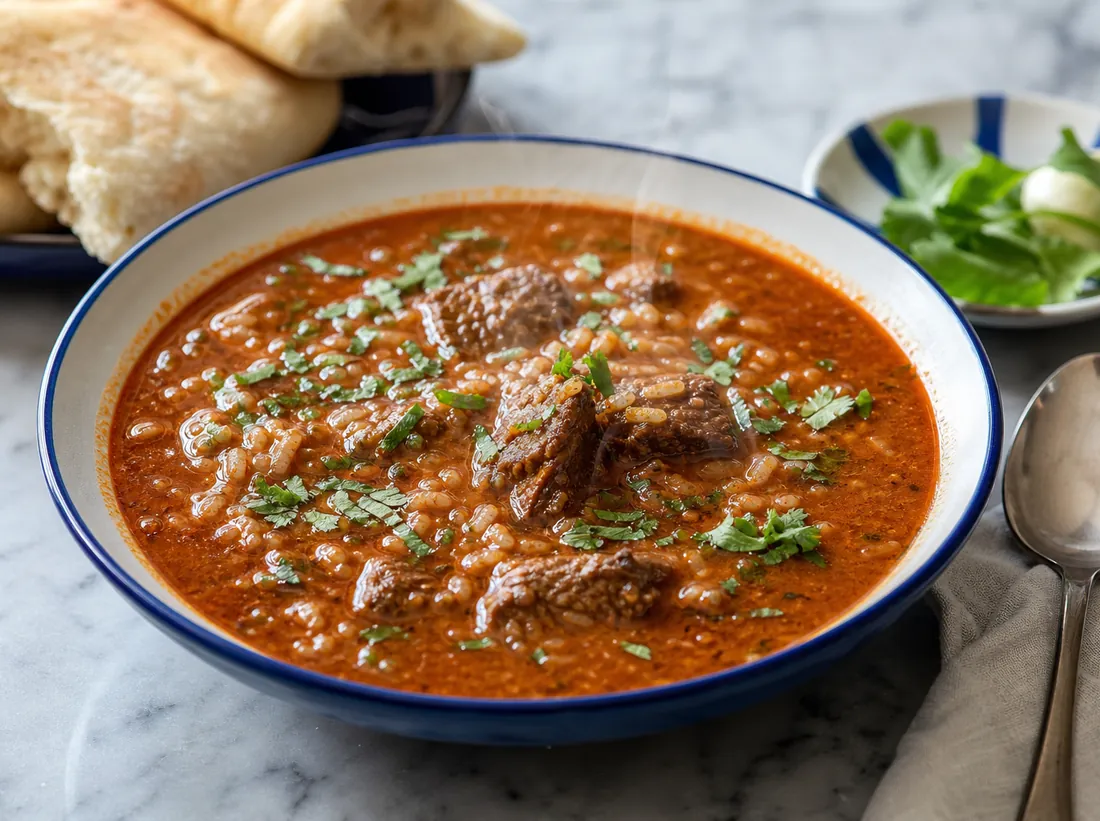
Hungarian Jews cooked it kosher: beef only, and goose fat or oil instead of lard. With immigrants from Hungary, and later with the great wave from the former Soviet Union, goulash entered the Israeli kitchen. In the homes of olim from the USSR, gulyash usually means a stew in gravy served with buckwheat or mashed potatoes, while the liquid version is called goulash soup. Today it is an Israeli winter soup in every sense, cooked in a big pot that lasts for days.
What makes Goulash soup itself
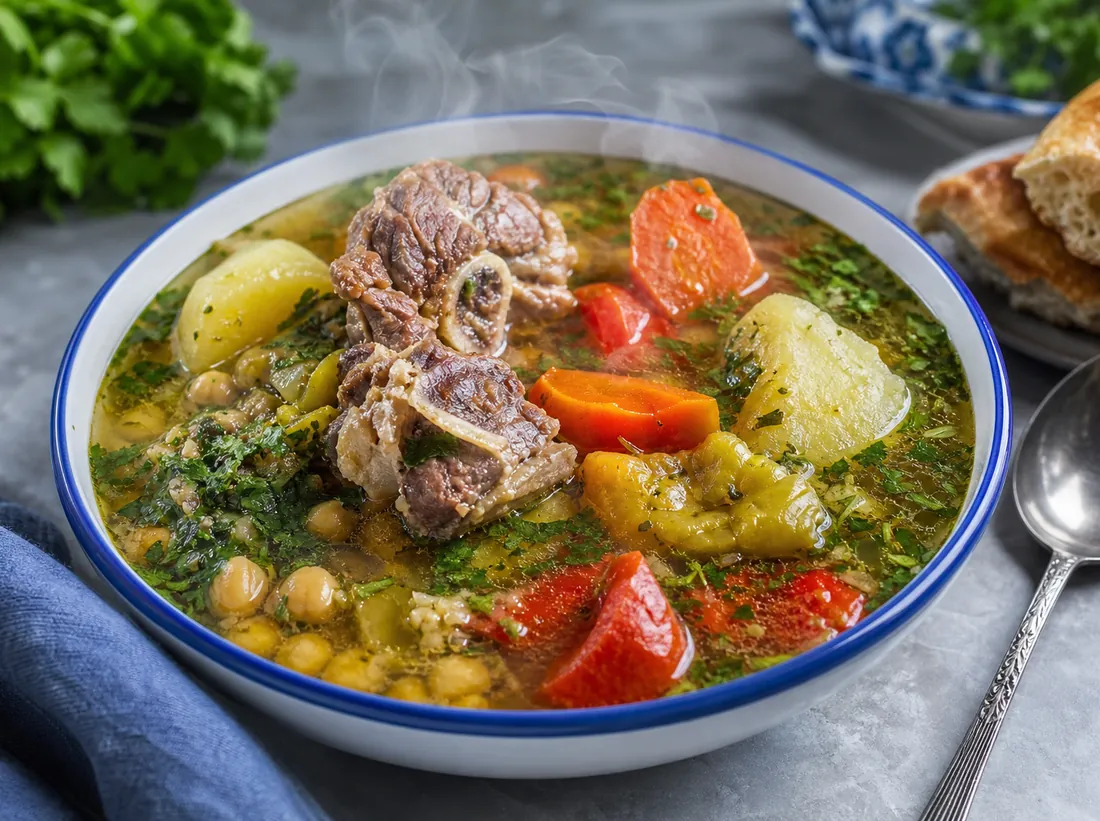
What makes goulash soup itself is the order of things. First the onion softens slowly in fat, then the beef cooks with almost no water, in its own juices and the onion's, and only then do the water and vegetables go in. There is no flour and no cream. The body comes from onion that melts into the sauce, gelatin from the meat and starch from the potatoes. Sweet paprika gives both the flavour and the colour, and caraway gives the familiar Hungarian smell. At the end, csipetke, tiny pinched dumplings of flour and egg, go into the pot.