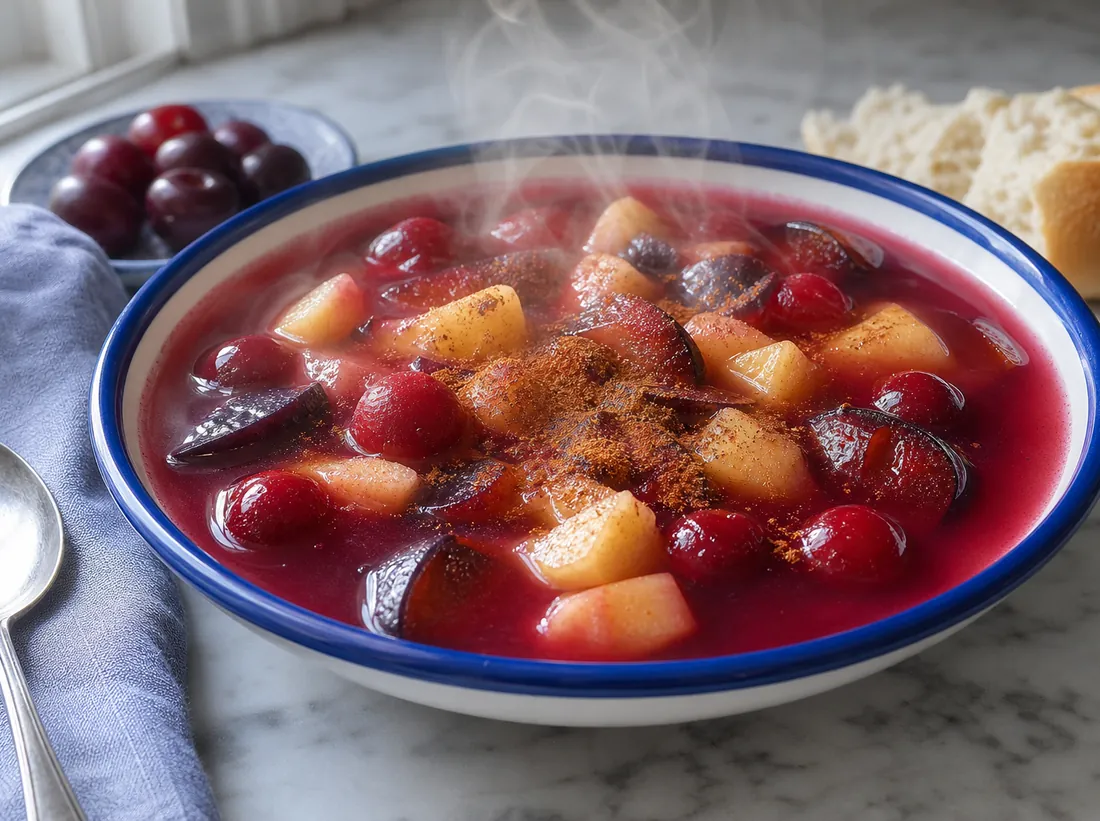
The story of Fruit soup
Cold fruit soups are known across Central and Eastern Europe, but Hungarians have a special fondness for them. Cold sour cherry soup is a fixture of summer there, and in the classic Hungarian version it gets sour cream and turns pink and velvety. It is spiced with cinnamon and cloves and sometimes a little red wine, and served at the start of the meal, before the main course.
In Ashkenazi homes and in the homes of immigrants from Central Europe and the former USSR, fruit soup is a way to use the fruit of the season, and in winter a hot version is made with dried fruit. In a kosher kitchen it has an advantage: the parve version, thickened with cornstarch instead of cream, can be served after a meat meal too. In Israel sour cherries are bought frozen in Russian shops and topped up with local plums and apples.
What makes Fruit soup itself
Fruit soup is where dessert meets soup. It is not as sweet as compote or as thick as jam: it has a clear sourness from the cherries, a round sweetness from the apples and plums, and a warm smell of cinnamon and cloves. The fruit cooks briefly so the pieces stay whole, and the liquid is thickened lightly, just enough to coat a spoon. It is served very cold, and in an Israeli summer that is the whole point.