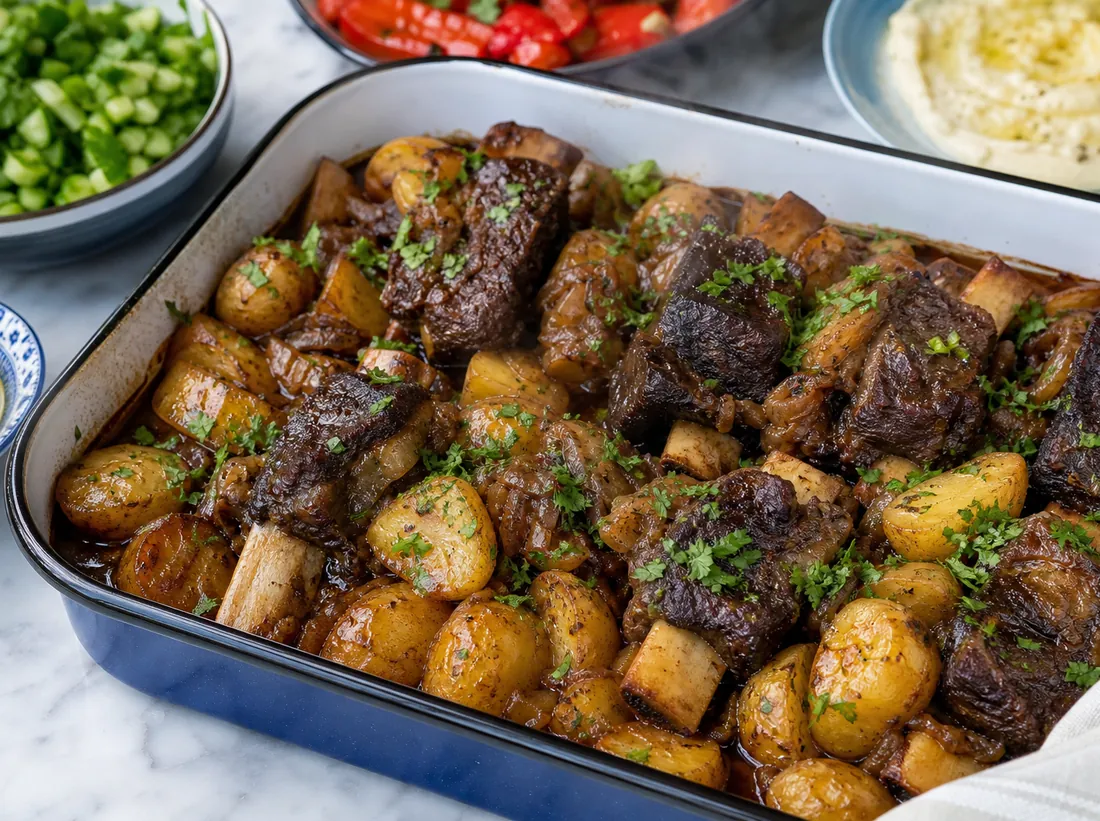
The story of Asado in the oven
In Argentina and Uruguay asado is not a cut but an occasion: a long barbecue of family and friends, wood embers, and meat cooked slowly with nothing but salt. One of its signature cuts is tira de asado, a strip of ribs cut across the bones. In Israel the word stuck to the cut itself: asado at the butcher is the strip of lower beef ribs, with bones, layers of meat and fat and rich connective tissue.
In the Ashkenazi Jewish home the same cut had another name, flanken: ribs cut across the bone and cooked in soup and cholent. In Israel asado moved from the grill to the oven and became a holiday dish: it cooks unattended for hours, suits Rosh Hashanah and Friday dinner, and only improves as it waits. The common home versions are red wine and onion, silan and mustard, and dark beer.
What makes Asado in the oven itself
Asado is a tough cut that turns tender. It has plenty of collagen, the connective tissue that holds the muscles to the bone, and fat running between the layers. Cooked fast, the collagen tightens and the meat is as tough as a shoe sole; cooked long and moist, with the meat held for hours around 90°C and above, the collagen melts into gelatin, the fibres separate and the fat renders into the sauce. So here you never shorten the time or raise the heat: a tightly sealed tray, 150°C, and patience.