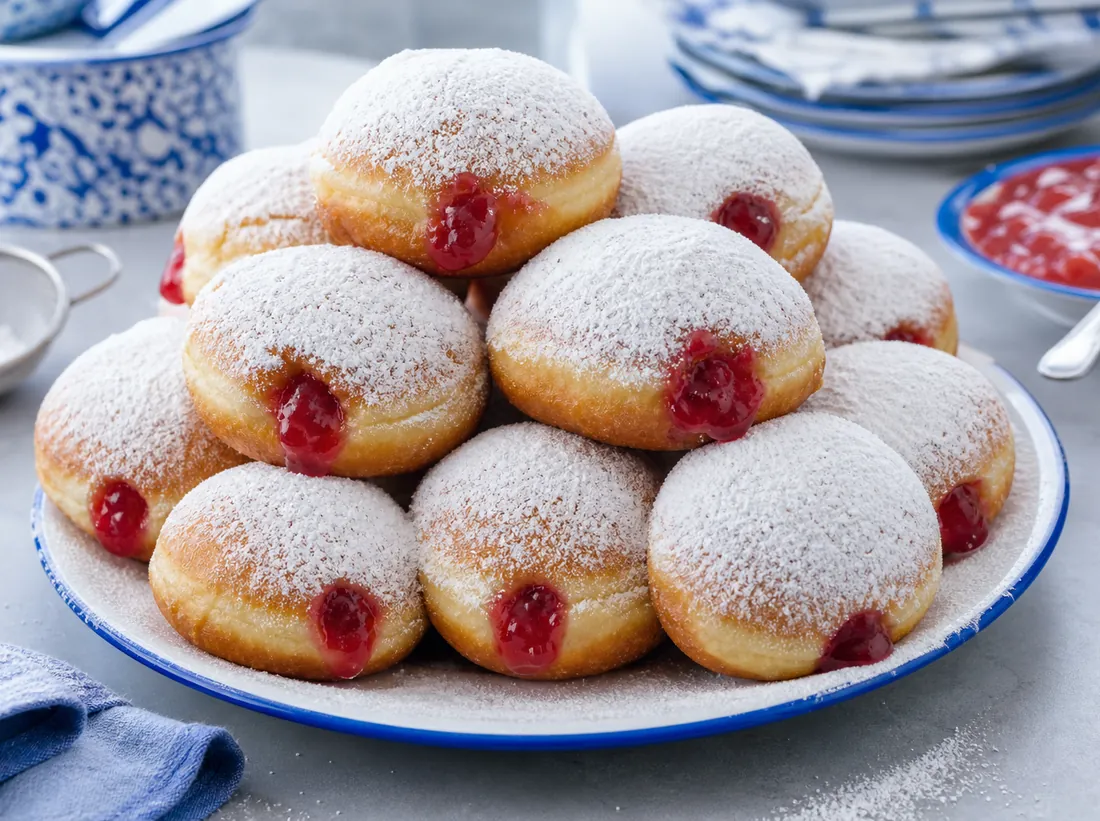
The story of Sufganiyot
The custom of eating fried food on Hanukkah, in memory of the miracle of the cruse of oil in the Temple, is very old. In the 12th century Rabbi Maimon, father of Maimonides, already wrote of the custom of eating sufganin, dough fried in oil, on Hanukkah. The name is tied to the Hebrew word for sponge: rabbinic literature mentions sufganin, a soft and spongy dough, and modern Hebrew made the sufganiyah from it.
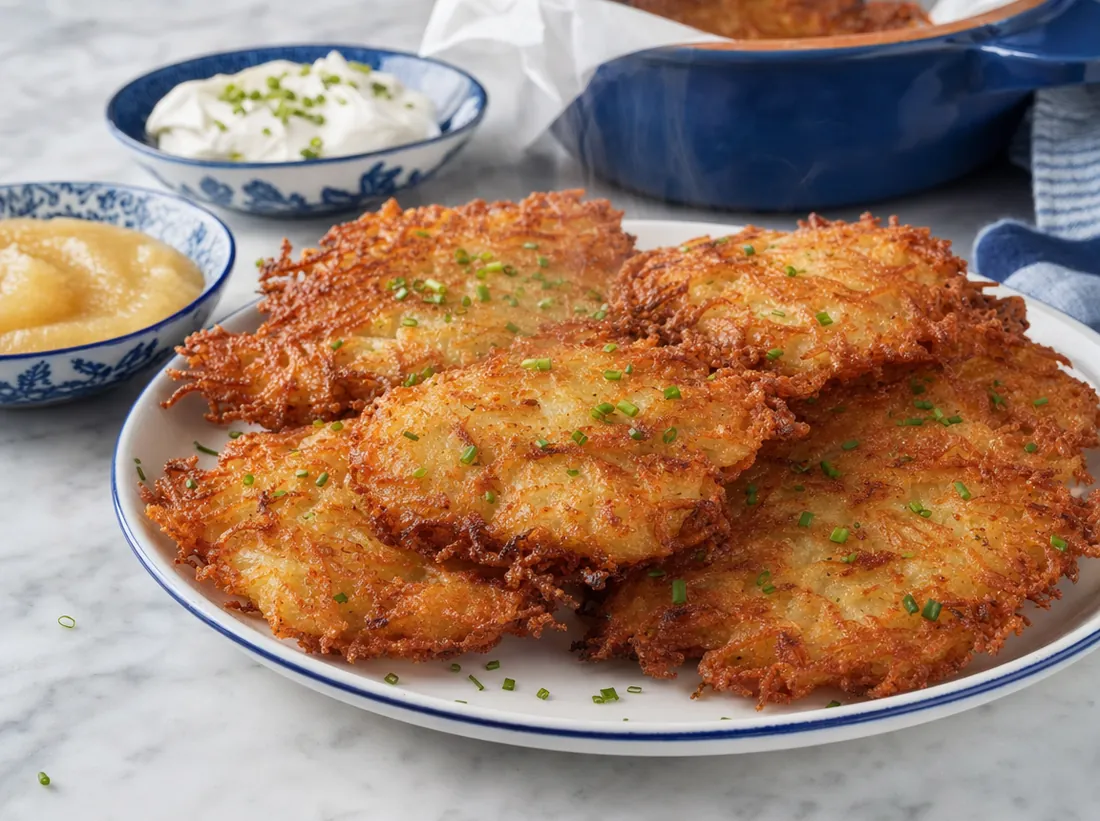
The jam doughnut we know came from Central Europe: German and Austrian Krapfen and Polish pączki, which Polish Jews called ponchiks and fried in schmaltz or oil to keep them kosher. Immigrants brought them along, and in Israel the sufganiyah pushed aside the latke to become the symbol of the festival: bakeries start frying weeks before Hanukkah, and every year brings new fillings.
What makes Sufganiyot itself
A good sufganiyah is light and not greasy, with a thin crust of deep gold and a white band around its middle. The dough is rich but very soft, so it asks for patience: long kneading until it stretches into a thin membrane, two rises, and gentle shaping that keeps the air in. This version is parve, with water and margarine instead of milk and butter, so it suits any meal, meat included, and a spoonful of brandy with orange zest gives it the smell of a bakery.