Kashk
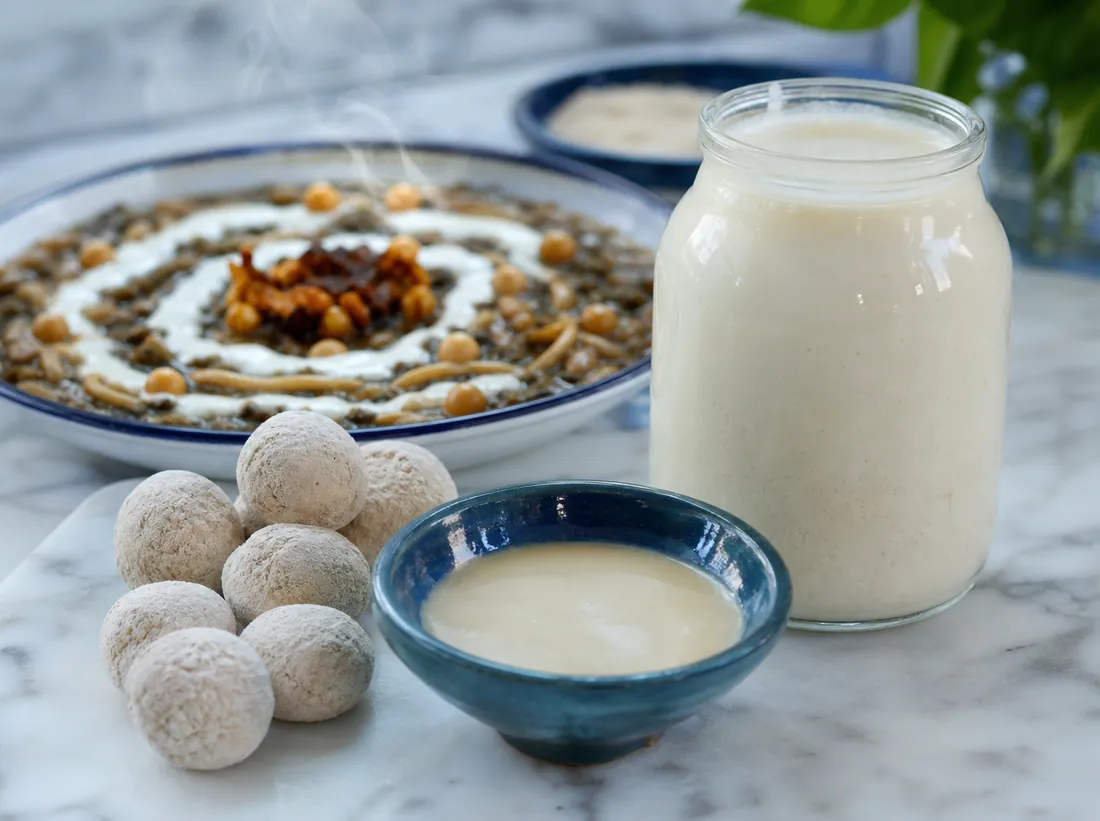
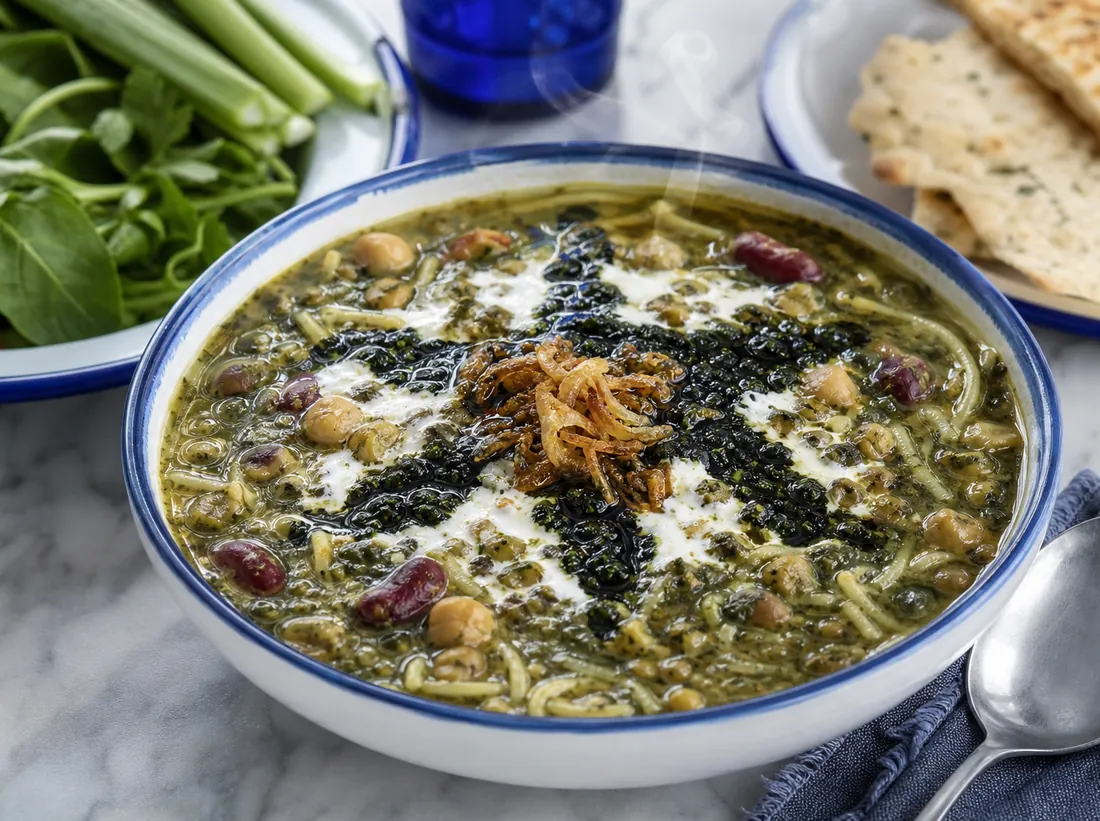
Kashk is a fermented, concentrated Persian dairy product, salty, tangy and deep like an aged cheese, sold as a liquid in jars or as dried balls. It is the white swirl on top of ash reshteh and the soul of kashke bademjan, the Persian aubergine dish.
 Illustration
What is Kashk
Kashk was once made from the sour milk left after churning butter from yogurt, and in many homes from sour yogurt too. It is cooked until it curdles, drained in cloth until the liquid runs out, salted and rolled into balls that dry in the sun. That is how the summer's surplus milk was kept through the winter. Today most kashk is sold ready made in jars, as a pourable paste.
The taste is strong: salty, sour, a little smoky, with a depth that recalls parmesan. In Iranian cooking it goes into ash reshteh and other thick soups, kashke bademjan and dips, usually alongside dried mint fried in oil, fried onion and walnuts. Kashk is dairy, so any dish that contains it is a dairy dish.
Price and where to buy
450 g jar
per kg
Where
Liquid and dried kashk are sold mainly at Persian and Kurdish grocers and at stalls selling Persian products in Hatikva Market and Levinsky Market in Tel Aviv. Israeli supermarket chains rarely stock it. Stock comes and goes, so it is worth asking ahead whether kashk is on the shelf and in which pack.
Shelf prices, October 2026, VAT included.
Kinds of Kashk
Liquid kashk
A thick white paste in a jar, ready to use. Thin it with a few spoonfuls of hot water, then add it to the pot or drizzle it on top.
Dried kashk balls
Hard, very salty balls that keep a long time without refrigeration. Soak them in hot water for a few hours, then mash or blend into a paste.
Qurut
Dried, salted yogurt balls from Central Asian cooking, very close to dried kashk. They can be used the same way.
Lebanese kishk, not the same
A powder of bulgur fermented with yogurt or milk and dried. The name is similar, but it is a different product for soups and pastries, and does not replace Persian kashk.
How to use Kashk
Ash reshteh
About 250 g of liquid kashk for a 6 litre pot. Thin it with a few spoonfuls of hot water, stir about a third into the soup once the heat is off, and drizzle the rest over each bowl.
Kashke bademjan
About half a cup of kashk for three roasted or fried and mashed aubergines, with fried onion and garlic. Warm together for a few minutes and top with dried mint in oil and walnuts.
Quick dip
Two tablespoons of kashk to a cup of thick yogurt, crushed garlic and dried mint. Serve with bread or vegetables.
On vegetable and lentil soups
A teaspoon of thinned kashk on a bowl of lentil soup or a thick vegetable soup just before serving, like sour cream with far more flavour.
How to choose Kashk
Liquid kashk should be an even white to cream colour and smooth, with no sharp spoiled smell.
Read the label: good kashk is dairy and salt, sometimes with a little preservative. Added starch and oil water down the taste.
Dried balls should be hard and clean, with no green or black spots.
Look for a kashrut mark on the jar and check the date, since not all stock turns over quickly.
What to use instead of Kashk
| Substitute | How, and what changes |
|---|---|
| Labneh with grated feta | Three parts labneh to one part grated feta in place of kashk, same amount. It is the closest match for sourness and salt. |
| Greek yogurt with lemon and salt | Same amount, with a teaspoon of lemon juice and a pinch of salt for every half cup. Milder, without the depth of kashk. |
| Sour cream | Same amount on top of the soup in the bowl. Less sour and less salty, so add a little salt. |
How to store Kashk
In the pantry
In the fridge
In the freezer
The science of Kashk
Where the depth comes from
Lactic acid bacteria turn milk sugar into acid, and the proteins set. During drying and ripening the casein proteins break down into peptides and amino acids, including glutamate, so kashk has umami like a hard aged cheese. The long cooking adds roasted notes from Maillard reactions too.
Why it goes in at the end
Strong heat together with acid tightens milk proteins into grains, and kashk can turn grainy instead of smooth. Add it once the pot is off the boil, and thin it first with hot water so it spreads evenly.
How a dried ball keeps without a fridge
Salt, acidity and near total drying leave bacteria and moulds very little available water. It is the same method that kept meat, fish and cheese before refrigerators existed.
Ask for Kashk
Looking for Kashk and cannot find it? Send a request and we will come back with a price and availability.
- Tell us how much you need and by when.
- We come back with a price, pack size and availability.
- Pick up at 99 Ibn Gabirol or delivery in Tel Aviv.
Frequently asked questions
What is kashk?
A fermented, concentrated and salty Persian dairy product, sold as a liquid in jars or as dried balls. It brings tang and depth to ash reshteh and kashke bademjan.
What is the difference between kashk and kishk?
Kashk is a Persian dairy product. Lebanese kishk is bulgur fermented with yogurt and dried to a powder. One does not replace the other.
What can I use instead of kashk?
Labneh with a little grated feta, three parts to one. Greek yogurt with lemon and salt also works, with a milder taste.
Is kashk dairy?
Yes. Kashk is a milk product, so a dish with kashk is a dairy dish and is not cooked with meat.
How do you use dried kashk?
Break the balls, soak them in hot water for a few hours, then mash or blend with a little of the water into a smooth paste.
Where can I buy kashk in Israel?
At Persian and Kurdish grocers and Persian stalls in Hatikva Market and Levinsky Market. Ask ahead, since stock changes.
The Complete99 pantry
Ingredients and kitchen gear, with prices and availability.
More from the pantry
Amba
Amba is a sour, spicy sauce of pickled green mango, yellow from turmeric with a strong smell of fenugreek. It…
Baharat
Baharat is a blend of warm, fragrant spices, and its name is simply the Arabic word for spices. In Iraqi,…
Bulgur
Bulgur is wheat that has been boiled, dried and cracked, so it is ready in minutes. Fine bulgur, which many…