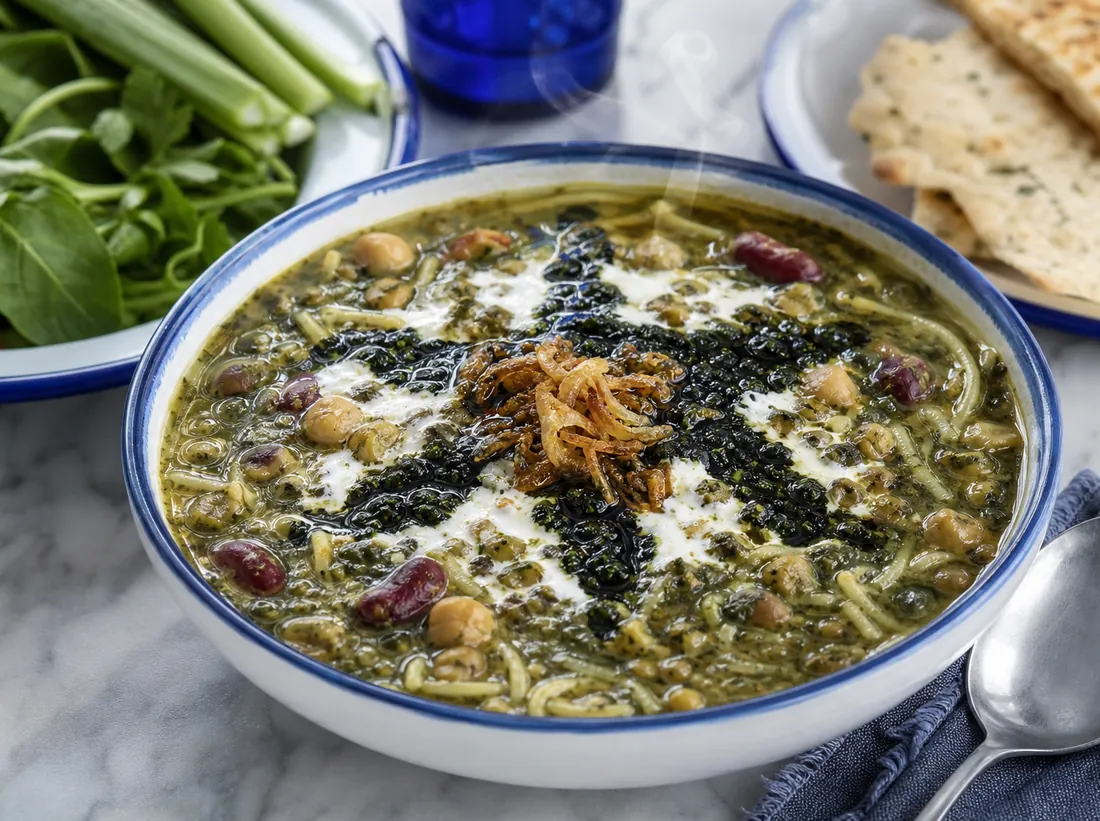
The story of Ash reshteh
In Persian, ash is the name for a whole family of thick soups, dozens of them, made with grains, legumes, herbs and sometimes fruit. The word matters so much in Iranian cooking that it gave Persian the word ashpaz, a cook, literally the one who cooks ash. Reshteh means threads, and refers to the thin noodles that give this soup its name.
Ash reshteh belongs to Nowruz, the Persian new year that falls on the spring equinox. It is cooked in the days before the holiday, especially on the eve of Chaharshanbe Suri, the night before the last Wednesday of the year, and the tangled noodles stand for the paths the new year opens. In the homes of Iranian immigrants in Israel it is also simply a winter soup, made in a big pot that lasts for days.
What makes Ash reshteh itself
Three things make ash reshteh. The first is the amount of herbs, close to a kilo per pot. The second is the noodles, which cook in the soup itself and thicken it with their starch. The third is the topping: kashk brings a deep, salty sourness, fried onion brings sweetness, and dried mint that touches hot oil for a few seconds brings a sharp scent. Without all three it is a good vegetable soup; with them it is ash.