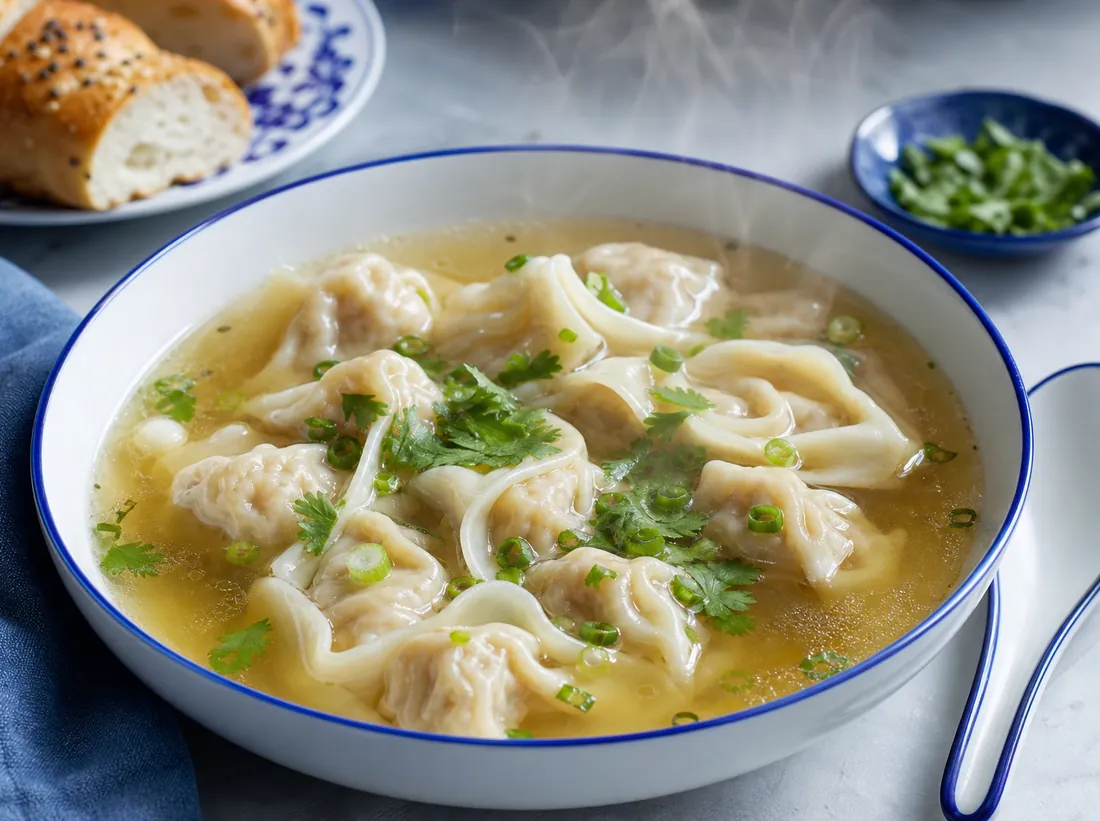
The story of Wonton soup
Wontons are among the oldest dumplings of Chinese cooking. In Mandarin they are called huntun, and the Cantonese name, written with characters that mean swallowing clouds, is usually explained by their look: thin dumplings floating in broth like little clouds. The Cantonese style, with extra thin wrappers and a delicate filling, spread around the world largely because many of the first Chinese emigrants came from southern China, and in its classic form the filling is pork and shrimp.
Ashkenazi cooking knows the idea well from kreplach: a filled dough cooked and served in chicken soup. The wonton is a Chinese relative, thinner and more delicate. In the kosher version the filling is ground chicken thigh with ginger, spring onion and a little sesame oil, and the wrappers are made of flour, egg and water, or bought ready made with kosher certification.
What makes Wonton soup itself
Good wonton soup is built from three parts cooked separately and joined only in the bowl. The broth is clear and gentle, with ginger, spring onion and white pepper, and does not compete with the dumplings. The filling is worked with salt until sticky, so it comes out springy and juicy rather than crumbly. And the dumplings cook in a separate pot of water, so the flour on them does not cloud the broth. In cooking, the thin edges of the wrapper turn into silky tails, and that is the whole beauty of it.