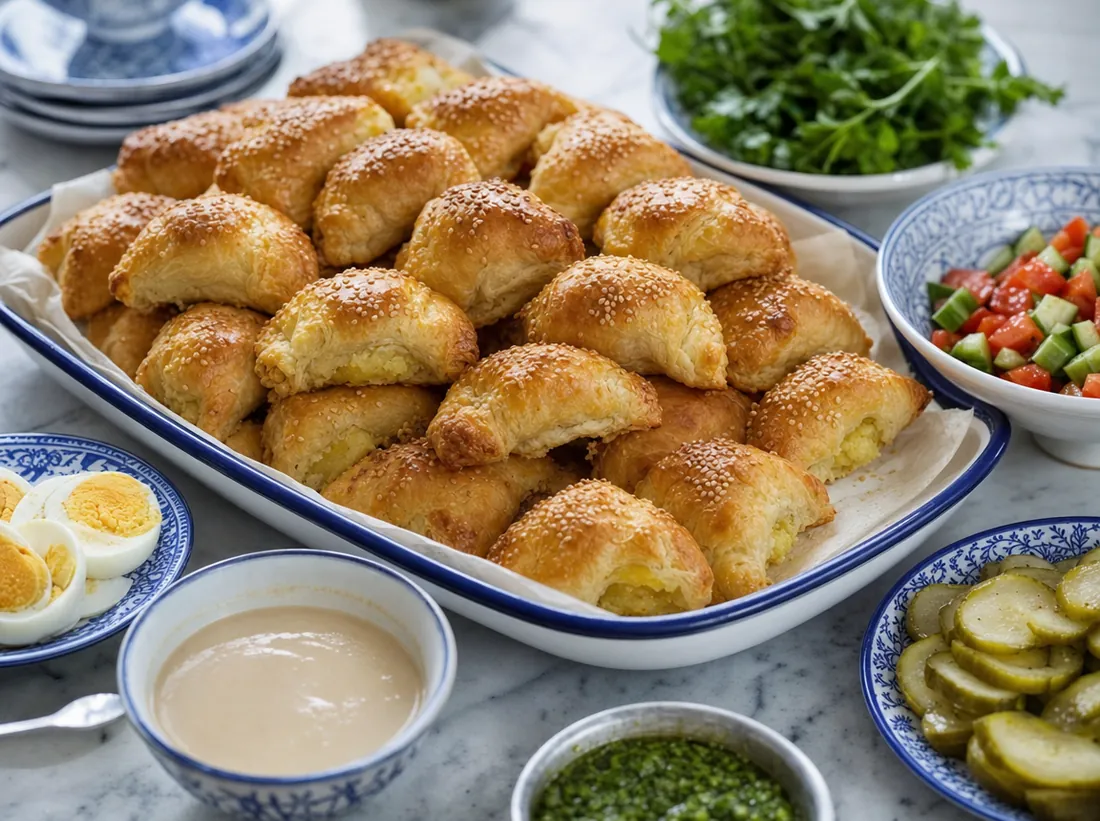
The story of Bourekas
The name comes from the Turkish börek, the filled pastry of the Ottoman Empire. Jews expelled from Spain in 1492 who settled in Istanbul, Izmir, Salonika and the cities of the Balkans adopted it, adapted it to kashrut and called it burekas in Ladino. In Sephardi homes it became a fixture of the Shabbat breakfast, next to haminados eggs and cheeses.
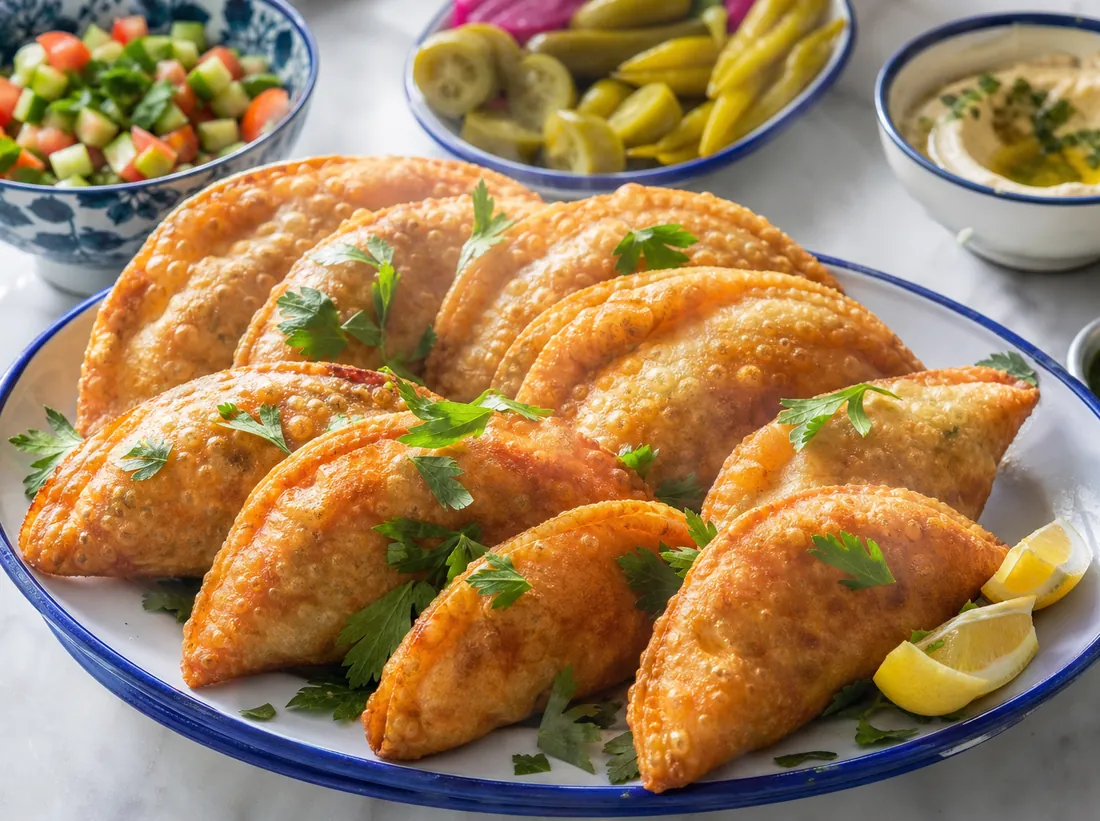
In the 1940s and 1950s, immigrants from Turkey, Bulgaria, Greece and Yugoslavia brought it to Israel and opened small bakeries. Ready made puff pastry replaced the home dough, kiosks turned bourekas into street food, and a language of shapes took hold: triangles for cheese and rectangles for potato, so you can tell from the outside what is dairy and what is parve. Bourekas became so Israeli that a whole genre of 1970s comedies is named after them, the bourekas films.
What makes Bourekas itself
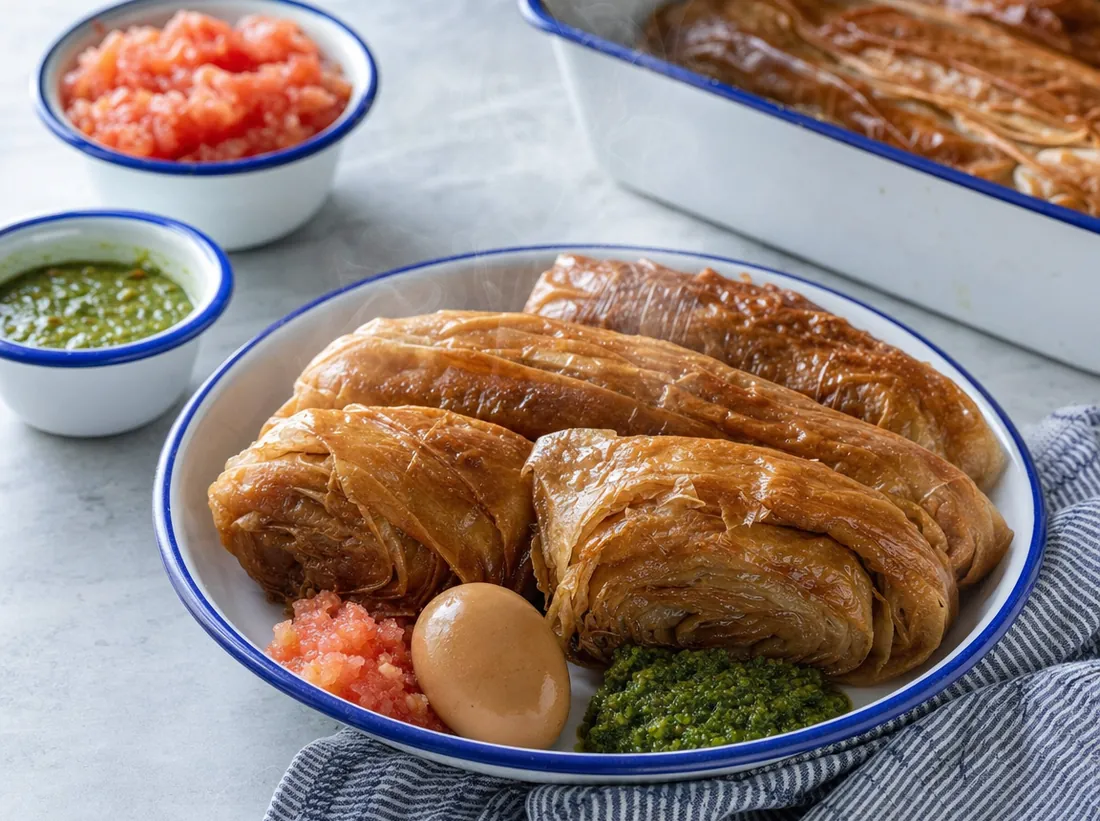
In kiosk bourekas the pastry is the star: hundreds of thin layers of dough and fat that puff in a hot oven into a crisp, flaky pillow, with no yeast. Potato and fried onion is the parve version, soft and sweet, which also works after a meat meal. They are eaten hot, next to a brown egg, grated tomato and a pickle, and that mix of rich pastry, egg and sourness is what turns them into a meal rather than a snack.