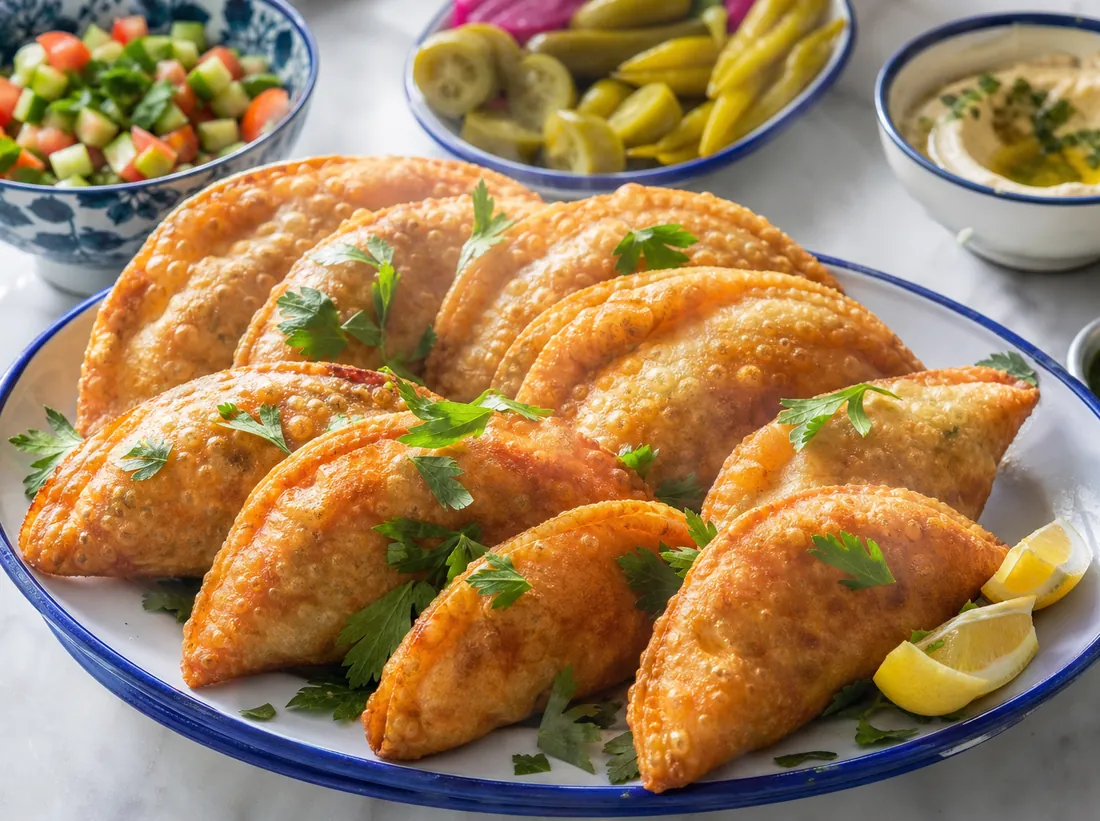
The story of Sambusak
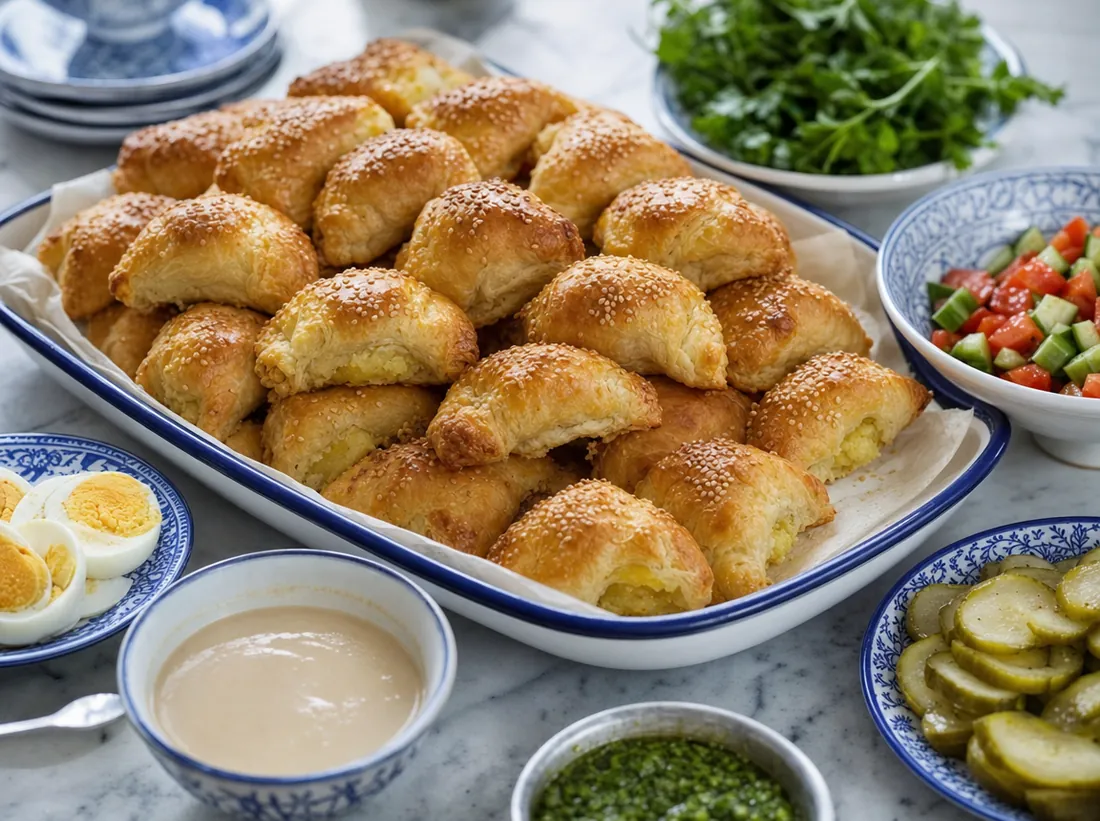
Filled pastries with closely related names, sanbusak and sambusa, already appear in medieval Arabic cookbooks from Baghdad, and from there a whole family of turnovers spread from Persia to India, where they are called samosa. In Jewish Baghdad sambusak became festive food: half moons of yeast or oil dough filled with chickpeas and fried onion, cheese or meat, served at Purim, on Shabbat and at celebrations.
With the great immigration from Iraq in 1950 and 1951, sambusak came to Israel, to the neighbourhoods and towns where Iraqi Jews settled, and from there to bakeries and kiosks all over the country. Along the way Israeli versions such as pizza sambusak were born, and families still argue about the right dough: soft yeast dough or crisp oil dough, fried in a pan or baked in the oven.
What makes Sambusak itself
In chickpea sambusak everything rests on the onion. Boiled chickpeas alone are mild and a little floury; only when they are crushed with plenty of slowly browned onion, cumin and turmeric do they become a sweetish, earthy filling. The dough is thin and soft, almost like pita dough, and frying in a pan gives it a crisp, blistered crust. The filling stays coarse, with half whole chickpeas, so it has some bite.