Kubaneh

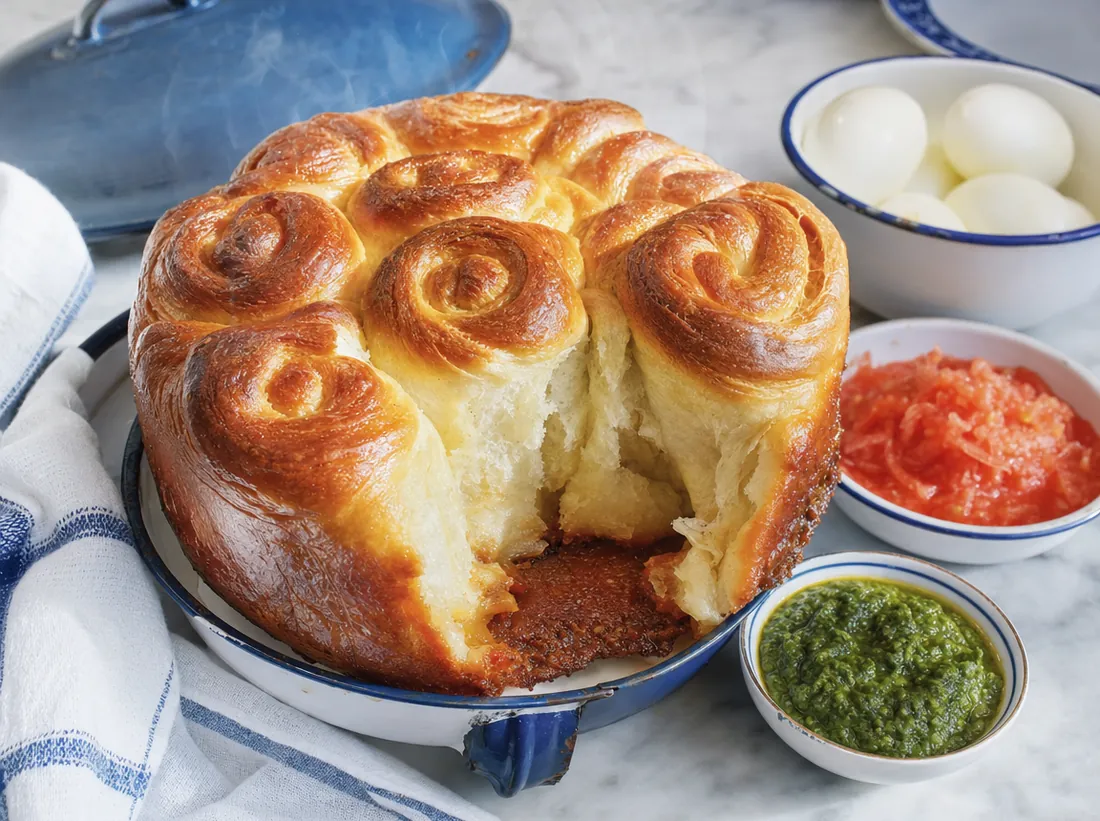
Kubaneh is the Yemenite yeast bread of Shabbat morning: a soft, sticky dough coiled into roses, brushed with margarine and baked overnight in a sealed pot until the inside is tender and tears into spirals and the bottom is deep brown and sweet. Kubaneh is not kubbeh: there is no filling, the names only sound alike.

Quantity calculatorOrder Kubaneh

VegetarianDairy freeParveAllergens:GlutenEggs

Updated

KubanehIllustration
Time13 h 30 minCook 10 h 45 min · + Soak 3 h
Amount10 portions2.8 kg
Per portion667 kcal20 g protein · a 280 g portion
Cost of the pot₪40for the pot, about ₪4 a bowl

The story of Kubaneh

Kubaneh is the Shabbat bread of the Jews of Sana'a and northern Yemen. On weekdays a similar bread was made from sorghum or corn flour, and for Shabbat and festivals from wheat flour. The dough went into a greased, tightly sealed pot on Friday, and the pot stayed by the embers or in the warm oven until morning, so hot bread waited for the family without lighting a fire on Shabbat.

In Israel kubaneh moved to the home oven and to the aluminium kubaneh pot, tall and with a snug lid, sold in markets and kitchenware shops. In most homes samneh gave way to margarine or butter, and kubaneh stayed a Shabbat breakfast next to jachnun. In recent years it has also appeared on restaurant menus in Israel and abroad, as a bread brought to the table in its own pot and torn by hand.

What makes Kubaneh itself

Kubaneh is not baked in an open oven; it cooks in its own steam. The dough is unusually wet, almost too sticky to handle, and every coil is coated in fat, so after a night in a sealed pot the bread tears by hand into soft, moist spirals. The bottom, which sits all night against the fat and the hot pot, becomes a dark brown, crisp crust with a toffee taste that the whole family fights over.
Kubaneh for any number of people

Change the number of people and the portion size, and every ingredient updates in grams, with the cost, calories and protein per portion.

Portion size
Units
2.8kg of food
4Pot to use, litres
₪40Cost of the pot
₪4.0per portion
667kcal per portion
20.0g protein per portion
IngredientAmountCost
The dough
Plain white flour1 kg₪5.9
Instant dried yeast12 g₪1.3
Sugar40 g₪0.2
Salt20 g₪0.0
Lukewarm water700 g
The fat
Margarine, melted and lukewarm200 g₪6.3
Canola oil, for hands and counter30 g₪0.5
Haminados eggs
Eggs in their shells, whole and uncracked600 g · 10 pcs₪15
Grated tomato
Very ripe tomatoes1 kg · 8 pcs₪7.9
Salt4 g₪0.0
Hilbeh
Ground fenugreek seeds25 g₪1.1
Water, for soaking and whipping300 g
Coriander30 g₪1.5
Garlic cloves10 g · 3 pcs₪0.4
Hot green chillies20 g · 2 pcs₪0.3
Fresh lemon juice30 g₪0.6
Salt3 g₪0.0
Send on WhatsApp

Shelf prices at a large Israeli chain and specialty shops, October 2026. Nutrition from the ingredients in grams, before cooking.

How many calories in Kubaneh? Nutrition facts and calorie calculator

Change the amount of any ingredient, drop one, or pick a lighter version, and the numbers per serving update at once: calories, fat, carbs, protein, sodium and fibre.

Kubaneh has 238 calories per 100 g. A 280 g serving made with our recipe has 667 calories: 20 g protein, 25.9 g fat and 82.4 g carbohydrates.

Lighter

Ingredients, for the whole recipe

  • 1,000 g364 kcal per serving
  • 12 g4 kcal per serving
  • 40 g15 kcal per serving
  • 20 g0 kcal per serving
  • 200 g144 kcal per serving
  • 30 ml24 kcal per serving
  • 10 pcs86 kcal per serving
  • 8 pcs18 kcal per serving
  • 4 g0 kcal per serving
  • 25 g8 kcal per serving
  • 30 g1 kcal per serving
  • 3 pcs1 kcal per serving
  • 2 pcs1 kcal per serving
  • 30 ml1 kcal per serving
  • 3 g0 kcal per serving

What each add-on adds to Kubaneh

Values for the amount in the row, from the national food database.

Add-onCaloriesProtein, gFat, g
One large egg837.35.5
A tablespoon of oil122013.8

How to make Kubaneh

In cook mode the screen stays on, tap a step when it is done, and the timers run next to each step.
  1. In a stand mixer with the dough hook, mix the flour, sugar and yeast. Add the water and knead for 3 minutes, add the salt and knead for another 8 minutes on medium speed, until the dough is very soft, elastic and pulls from the sides of the bowl in strands. Do not add flour.
  2. Move it to a greased bowl, cover and leave to rise for 1 to 1½ hours, until doubled.
  3. Melt the margarine and let it cool until lukewarm. Pour about a quarter of it into a kubaneh pot or a heavy 5 to 6 litre pot and spread it over the base and sides. Oil your hands and the work surface.
  4. Divide the dough into 12 pieces. Stretch each on the oiled surface into a thin rectangle of about 25 by 35 cm, brush with melted margarine, roll into a long rope and coil it into a rose.
  5. Pack the roses snugly into the pot in one or two layers and pour the remaining margarine over them. Set the rinsed eggs on top and press them gently into the dough.
  6. Close the lid and leave to rise again for 45 minutes while the oven heats to 180°C.
  7. Bake on the lower third of the oven for 45 minutes at 180°C, then lower to 100°C and bake for 9 to 10 hours without opening.
  8. Hilbeh: soak the ground fenugreek in water for 3 hours or overnight, pour off the water and the bitter foam, and whip in a food processor with 4 to 6 tablespoons of ice cold water until pale and fluffy. Add the coriander, garlic, chilli, lemon and salt and pulse briefly. In the morning grate the tomatoes and season with salt.
  9. Lift out the eggs, run a knife between the kubaneh and the pot and turn it out onto a board, browned bottom up. Serve hot and let everyone tear off a rose.

The science of Kubaneh

Kitchen science

What the yeast does in kubaneh

Yeast breaks down sugars from the flour and the added sugar into carbon dioxide and alcohol, and the gas is trapped in the gluten network and inflates the dough. A wet dough like kubaneh's lets the gas expand easily, so the crumb is airy. Yeast dies once the dough reaches 55 to 60°C, so the last burst of rise happens in the first hour at 180°C, which is why that hot start must not be skipped.

Kitchen science

How the brown bottom forms

Margarine and sugar from the dough collect at the base of the pot. During the first hour at 180°C the bottom dries and starts to brown, and through the night, once it is dry, the Maillard reaction carries on slowly even at 100°C. After 10 hours the result is a dark brown, crisp, sweetish crust.

Kitchen science

Why kubaneh is still soft after 10 hours

As bread cools, the starch molecules inside regroup into an ordered structure, a process called retrogradation, and that is what makes stale bread hard. In a hot sealed pot the kubaneh neither cools nor loses steam, so it stays soft until morning. Kubaneh that has cooled firms up, and reheating it in a covered pot above 60°C brings the softness back.

Kitchen science

Why the roses pull apart

The film of margarine on each coil stops the gluten networks of neighbouring coils from joining. So the kubaneh bakes as one loaf yet still tears by hand into separate spirals.

Kitchen science

How hilbeh turns into foam

Fenugreek seeds are rich in galactomannan, a soluble fibre that absorbs water and forms a gel. When soaked fenugreek is whipped with cold water, the gel traps air bubbles and becomes a pale foam. Some of the bitter compounds dissolve in water, which is why the soaking water is poured away.

Kubaneh in every kitchen

Sana'a style

The kubaneh of the Jews of Sana'a and northern Yemen, greased with samneh, a spiced clarified butter. On weekdays it was made from sorghum or corn flour, and for Shabbat from wheat.

Rich kubaneh for a dairy meal

A soft, airy dough with plenty of butter, sometimes honey or sugar, and sometimes nigella seeds on top. Served with laban and butter.

Kubaneh for a meat meal

A firmer dough with less fat and no butter. In winter some families buried a piece of meat or lamb tail fat inside it to cook all night with the bread.

Kubaniyot

Small coils baked in an open tin rather than a sealed pot. They come out like soft rolls with a pale crust and are easy to serve to a group.

Israeli, with margarine

White flour, sugar and margarine, so the kubaneh is parve and fits any meal. This is our recipe.

With olive oil

Olive oil instead of margarine gives a fruity scent and a gentler crust. Without the eggs the kubaneh is vegan.

Common Kubaneh problems and how to fix them

My kubaneh came out dense and heavy

The dough was too dry, under risen, or the margarine went in hot. Do not add flour to the sticky dough, wait for it to double, and pour in only lukewarm fat.

The kubaneh burned on the bottom

The hot stage was too long or the pot is thin. 45 minutes at 180°C is enough, and the pot belongs on the lower third, not on the oven floor.

The kubaneh will not come out of the pot

The sides were not greased enough or it was turned out too soon. Grease the sides well too, run a knife around, and wait 5 minutes before turning it out.

My kubaneh is pale, not brown

The hot hour was skipped or there is too little sugar. Without 45 minutes at 180°C at the start the bottom never begins to brown. A spoonful of sugar over the margarine in the base helps.

Kubaneh dough is too sticky to work with

That is the right dough. Oil your hands and the counter, work fast, and do not flour it.

The kubaneh is dry

The lid was not tight, or the night was spent above 110°C. Seal with foil under the lid and keep the oven at 100°C.

Storing, freezing and reheating

3 days, well wrapped

In the fridge

3 months, baked and wrapped

In the freezer

2+4

To cool

Bring it from 60 to 21 °C within two hours and down to 5 °C within four more. Split a big pot into shallow boxes.

75 °C

Reheating

Reheat in a covered pot, or wrapped in foil, in the oven at 150°C for 20 to 25 minutes. This softens the crumb again and keeps the bottom crisp.

Nutrition of Kubaneh

From our recipe, per bowl and per 100 g, next to the national food database.

ServingkcalProtein, gFat, gCarbs, gFibre, g
Our recipe, a 280 g portion66720.025.982.45.0
Our recipe, 100 g2387.19.329.41.8
Typical Kubaneh, 100 g3218.27.052.82.6
Typical Kubaneh, 100 g (2)3428.29.352.92.6
Typical Kubaneh, 100 g (3)3608.111.852.52.6

What the ingredients of Kubaneh cost

What each ingredient costs in one pot, and where to buy it.

IngredientPriceIn this potWhere to buy
Eggs in their shells, whole and uncracked₪1.4 each₪14Supermarket
Very ripe tomatoes₪7.9 per kg₪7.9Greengrocer
Margarine, melted and lukewarm₪32 per kg₪6.3Supermarket
Plain white flour₪5.9 per kg₪5.9Supermarket
Coriander₪4.9 each₪1.5Greengrocer
Instant dried yeast₪110 per kg₪1.3Supermarket
Ground fenugreek seeds₪45 per kg₪1.1Spice shop
Fresh lemon juice₪20 per litre₪0.6Supermarket
Canola oil, for hands and counter₪15 per litre₪0.4Supermarket
Garlic cloves₪34 per kg₪0.3Greengrocer
Hot green chillies₪13 per kg₪0.3Greengrocer
Sugar₪5.5 per kg₪0.2Supermarket
Salt₪2.1 per kg₪0.1Supermarket

Shelf prices at a large Israeli chain and specialty shops, October 2026, VAT included. Vegetable prices change with the season.

Kubaneh and its culture

On Shabbat morning in a Yemenite home, kubaneh is the centre of the table. The pot comes out of the oven after prayers, turning it out on the board is a small celebration, and everyone waits to see whether the bottom came out properly brown. It is torn by hand, never cut with a knife, dipped in tomato and hilbeh, and whoever gets the piece from the bottom knows they got the best one.

In Israel kubaneh has passed from home to home across communities, and abroad it has become a calling card of Yemenite cooking: Israeli bakeries and restaurants serve it hot in its own pot. For events and community Shabbat meals it is very practical: one pot feeds ten, several pots bake side by side in one oven, and it stays warm and soft for hours.

From the pantry: what Kubaneh needs

Pantry

Ground fenugreek seeds

Price and where to buy

Make Kubaneh a meal

Shabbat

Ready Shabbat food

Soup, hamin, mains and sides, with a quantity calculator and prices.

Plan Shabbat
Hosting

Hosting trays

9 trays to go with the soup, with a planner by number of guests.

Tray planner
Events

Catering

A whole menu in grams per guest, with a reheating table.

Menus

What to serve with Kubaneh

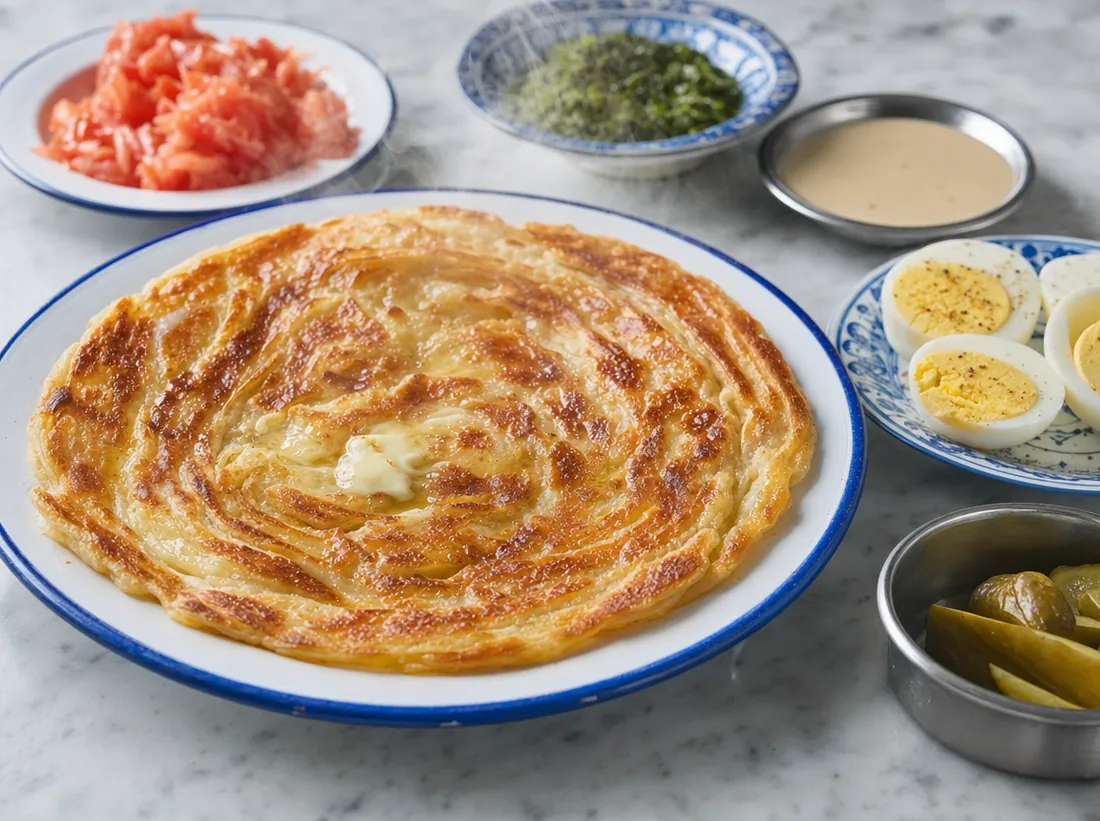
Serve kubaneh turned out on a board, browned bottom up, and let everyone tear off a rose by hand. Haminados eggs, grated tomato, hilbeh and schug go alongside, and in a dairy meal some laban.

The cuisine behind Kubaneh

Yemenite

Yemenite cuisine

Kubaneh is the Shabbat bread of the Jews of Sana'a and northern Yemen. On weekdays a similar bread was made from sorghum or corn flour, and…

Yemenite cuisine

Kubaneh in large quantities: events, offices and communities

How much of everything by number of guests, at a 280 g portion. For trays, catering and community kitchens.

Guestskg of food3 kg traysCost of ingredients
257.03₪101
50145₪202
1002810₪404
2005619₪809
50014047₪2,022

Every ingredient for any number of guests is in the calculator above: type the number of people.

Order Kubaneh

A ready pot for Shabbat, an event or the office, ordered ahead.

  • Cooked to order, for Shabbat, an event or the office.
  • Tell us how many people and when, and we send a quote.
  • Delivery in Tel Aviv from ₪35, free over ₪750.

Order Kubaneh for a large event

Large orders in Israel and abroad: events, offices, synagogues, communities and institutions.

  • In Israel: cooked in Tel Aviv and delivered to events in the area, and to large events anywhere in the country on a quote.
  • Abroad: for communities, events and restaurants. Tell us where, how many and when, and we come back with a quote and options.
  • Institutional quantities and a shopping list for any number of guests, in the calculator above.

Frequently asked questions

What is the difference between kubaneh and jachnun?

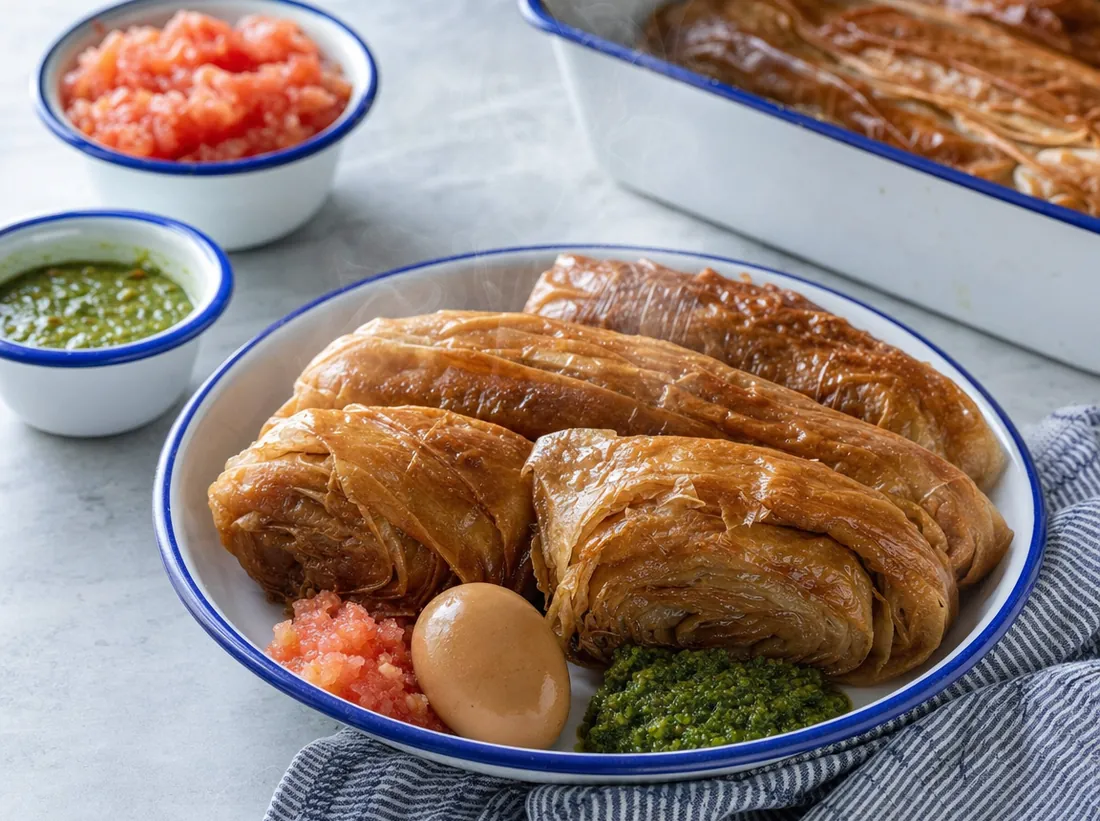
Kubaneh is a risen yeast bread, soft and airy, baked as one loaf in a pot. Jachnun is an unleavened dough stretched thin and rolled into layered logs. Both bake overnight and are served on Shabbat morning.

Is kubaneh the same as kubbeh?

No. Kubaneh is a Yemenite Shabbat bread, while kubbeh are meat filled dumplings from Iraqi and Kurdish cooking. The names only sound alike.

How long do you bake kubaneh?

45 minutes at 180°C and then 9 to 10 hours at 100°C, in a sealed pot. It can stay up to 12 hours, and the bottom will be darker.

What pot do you bake kubaneh in?

An aluminium kubaneh pot, tall with a snug lid, or any heavy ovenproof pot of 5 to 6 litres per kilo of flour. A pot that is too wide dries the dough.

Can kubaneh be baked without a whole night?

Yes, in a quick version: an hour at 180°C and another hour and a half at 150°C in a sealed pot. The bread is soft and good, with a paler bottom and a less deep flavour.

What do you eat with kubaneh?

Haminados eggs baked in the pot, grated tomato, hilbeh and schug. In a dairy home add laban or butter.

Can I freeze kubaneh?

Yes, baked and well wrapped, for up to 3 months. Thaw in the fridge and reheat in a covered pot in the oven at 150°C for 25 minutes.

How many calories are in Kubaneh?

A 280 g portion of Kubaneh made with our recipe has about 667 calories and 20 g of protein. Per 100 g: 238 calories.

How much does it cost to make Kubaneh at home?

A tray or pot of 10 portions costs about ₪40 at Israeli shelf prices in October 2026, about ₪4 a portion. The calculator above works it out for any number of people.

Every dish

Home dishes of every community, each with a calculator, a price list and the science.

All the dishes