Dried lime (loomi)
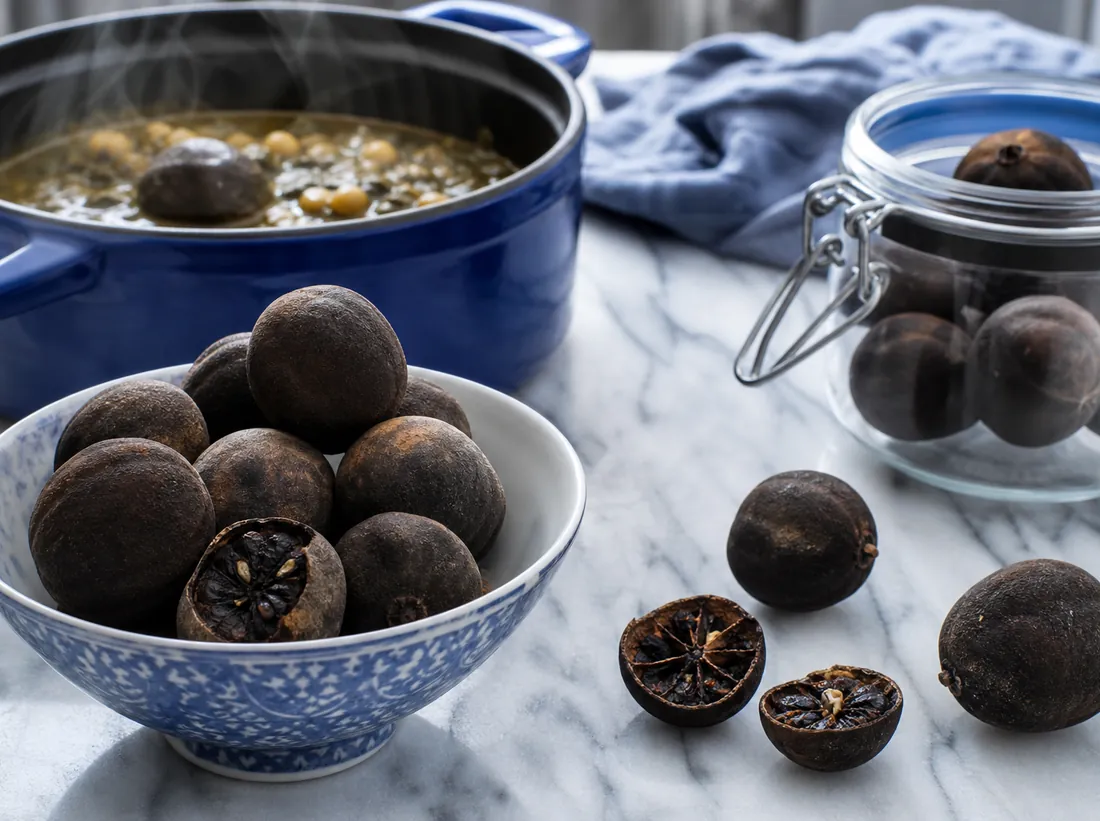
Dried lime, also called loomi, black lime or Persian lime, is a small lime dried whole until it is light, hard and dark. You pierce it and simmer it in the pot, and it gives ghormeh sabzi, abgoosht and Iraqi soups a deep, smoky sourness that fresh lemon cannot.
 Illustration
What is Dried lime
Dried lime is made from small round limes. The fruit is usually dipped briefly in boiling brine and then dried in the sun for weeks, until it has lost almost all its water and turns hollow and light. The longer it dries, the darker it gets, from light brown to black. In Persian it is called limoo amani, Omani lime, in Iraq noomi basra, and in the Gulf states loomi.
It tastes sour and smoky, with a light bitterness and a hint of dried fruit. In Persian cooking it goes into ghormeh sabzi, the herb and meat stew, into gheymeh, the meat and yellow split pea stew, and into abgoosht, and in Iraqi cooking into soups, stews and some kubbeh soups. In Israel it is known mostly from the homes of Persian and Iraqi Jews.
Price and where to buy
100 g, about 20 limes
per kg
Where
Dried lime is sold at the spice shops of Levinsky Market and Carmel Market, the spice stalls of Hatikva Market in Tel Aviv and Mahane Yehuda in Jerusalem, and at Persian and Iraqi grocers. At the market it is sold singly or by weight, and online spice shops sell 100 g packs. Ground dried lime is mostly at spice shops.
Shelf prices, October 2026, VAT included.
Kinds of Dried lime
Dark dried lime
Black or dark brown inside and out, after a long dry. Smokier and more bitter, for long meat stews such as ghormeh sabzi.
Light dried lime
Light brown to yellowish, sourer, fresher and less bitter. Good for soups, chicken, fish and rice.
Ground dried lime
A powder of dried limes, with no piercing and no waiting. Sprinkle it into rice and stews, spice blends and over chicken or fish before roasting. It loses its aroma faster than whole limes.
How to use Dried lime
Whole in the pot
Pierce each lime two or three times with a fork or the tip of a knife so the liquid can get in. Add for the last hour or hour and a half of cooking, three or four limes for a family pot, and at the end press them with a spoon against the side of the pot and lift them out.
Abgoosht
Four limes, about 20 g, for a pot with two and a half litres of water, 6 servings. They go in with the potatoes and tomatoes, once the chickpeas and beans are already soft, and cook for another hour and a half.
Ghormeh sabzi
Three or four pierced limes for a pot of meat, red kidney beans and plenty of fried herbs. Soak them first for a quarter of an hour in hot water so they sink into the stew instead of floating.
Iraqi kubbeh soup
Two or three pierced limes simmer in the sour soup before the kubbeh goes in. The sourness is deep and slightly bitter and replaces some of the lemon juice. Press them against the side of the pot before serving.
Ground, in rice and tea
Crack a lime, remove the seeds and grind the shell in a spice grinder. A teaspoon of powder for a pot of rice or a chicken rub, and in Iraq and the Gulf cracked dried lime is steeped with a little sugar for a sour tea.
Soups with Dried lime
 Illustration
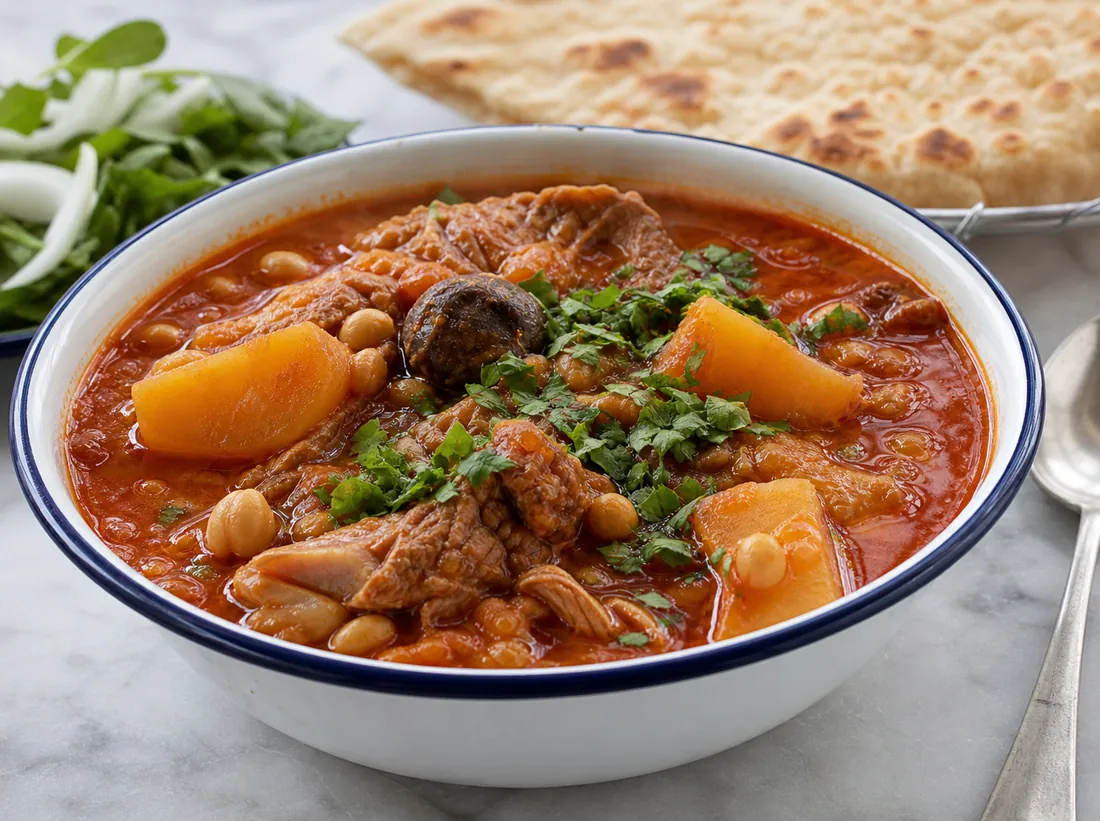
Dizi
Abgoosht is the hearty lamb soup of Iran, with chickpeas, white beans, potatoes, tomatoes and dried Persian…
 Illustration
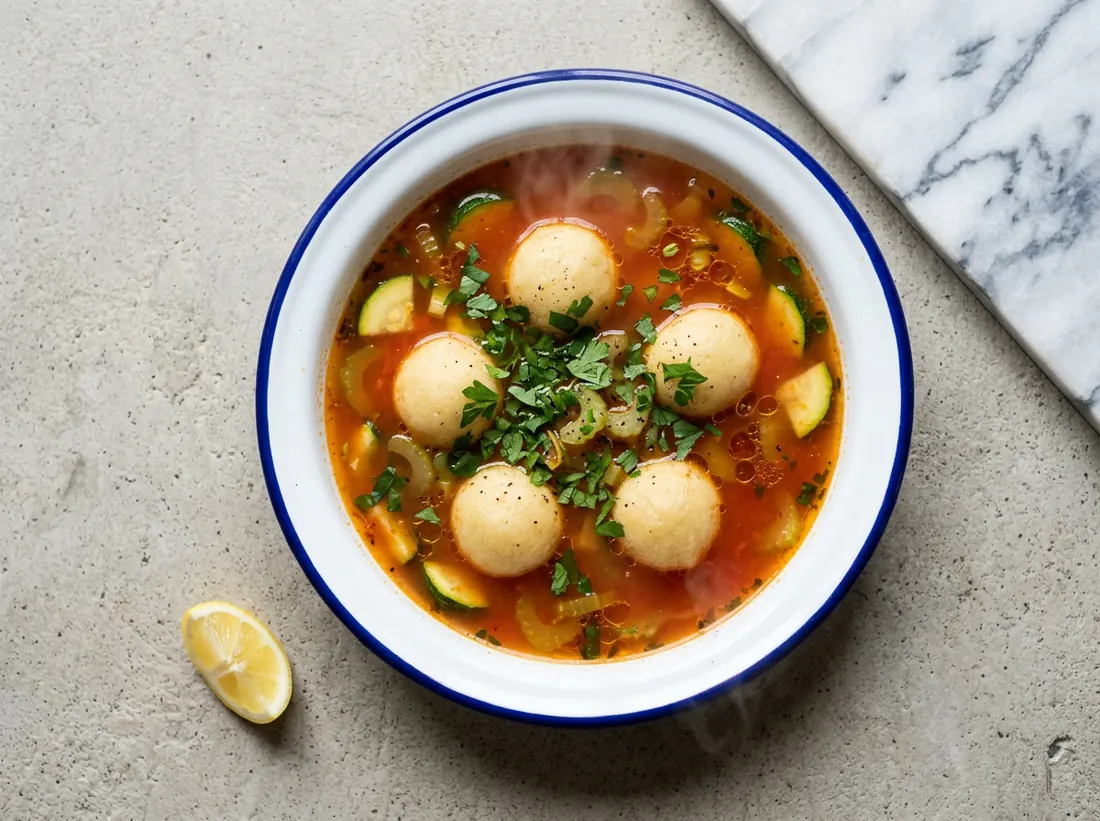
Red kubbeh
Red kubbeh is a kubbeh soup built on tomato paste and paprika, with zucchini, celery and carrot, and beef…
 Illustration
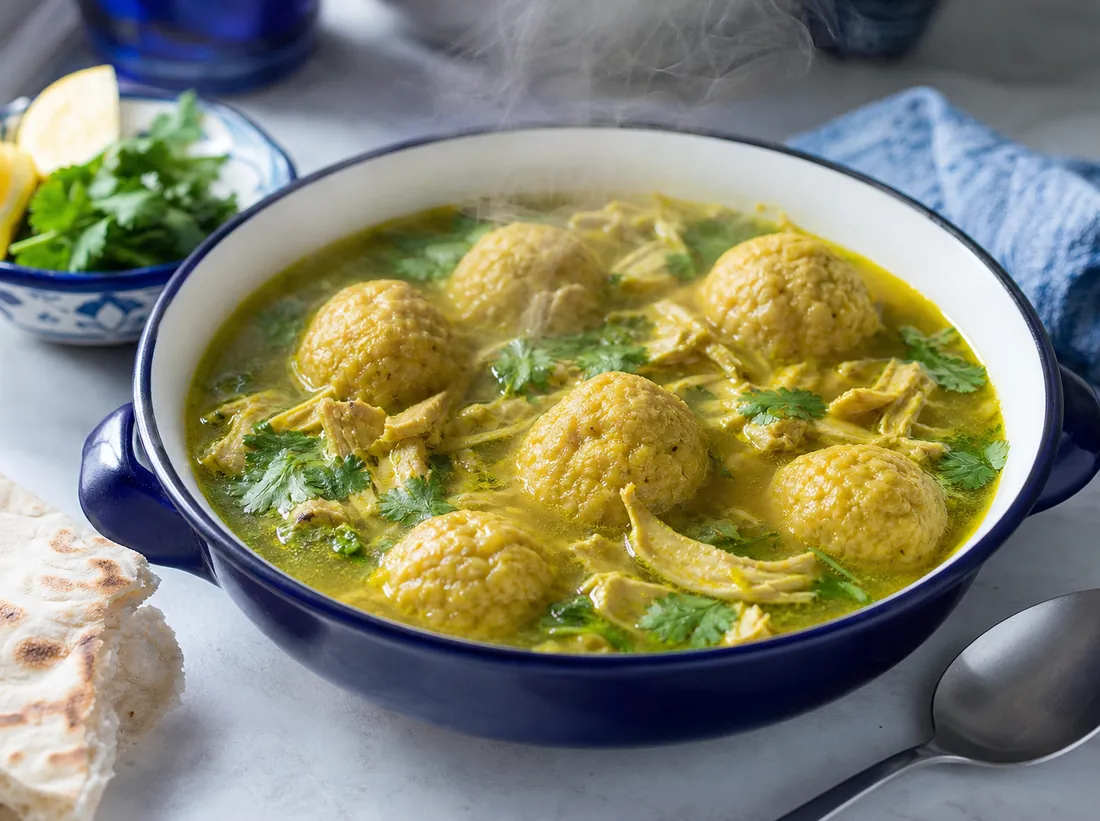
Gondi
Gondi are large dumplings of ground chicken and roasted chickpea flour, scented with cardamom and simmered…
How to choose Dried lime
Whole, hard limes that feel light, with no large cracks and no white or greenish spots of mould.
Crack one open at home: inside it should be dry, dark brown to black, with a strong sour smell. A musty smell or white powder inside means it has gone off.
Dark for long meat stews, light for soups and delicate dishes. At the market you can buy them singly and try before buying more.
For packed dried lime, look for a kashrut mark on the pack.
What to use instead of Dried lime
| Substitute | How, and what changes |
|---|---|
| Lemon juice and zest | A tablespoon of lemon juice and half a teaspoon of grated zest for each dried lime. Add at the end of cooking, since fresh lemon aroma does not last an hour in the pot. Fresher, and without the smoke. |
| Sumac | A teaspoon of sumac for each dried lime, in the last ten minutes. Sourness without liquid, with a reddish colour. |
| Ground dried lime | A teaspoon of powder for each whole lime, halfway through cooking. Quick and easy, though the sauce turns a little cloudy. |
| Tamarind | A teaspoon of tamarind concentrate for each lime, halfway through cooking. A deep, fruity sourness without bitterness, best in meat stews. |
How to store Dried lime
In the pantry
In the fridge
In the freezer
The science of Dried lime
Why it stays sour after an hour in the pot
A lime's sourness comes from citric acid, which does not evaporate during cooking. The scent of fresh lemon comes from volatile oils that vanish in the heat within minutes. In dried lime the acid is concentrated in the dried peel and pulp and is released slowly throughout cooking, which is why it suits a long stew.
Where the smoke and colour come from
During the long drying, the sugars and amino acids in the fruit react with each other in browning reactions, just as in dried fruit. They darken the lime and create flavours of caramel, smoke and dates, which is why a dark dried lime tastes deeper than a light one.
Why the stew turned bitter
The bitterness sits mostly in the seeds and the white layer of the peel. With too long a simmer, or when the limes break apart in the pot, it passes into the liquid. Take them out once the stew is sour enough, and remove the seeds before grinding your own powder.
Why it goes in after the pulses are soft
Acid strengthens the pectin in the cell walls of beans and chickpeas, so pulses cooked in a sour liquid soften very slowly. That is why in abgoosht the limes go in only once the chickpeas and beans are already soft.
Ask for Dried lime
Looking for Dried lime and cannot find it? Send a request and we will come back with a price and availability.
- Tell us how much you need and by when.
- We come back with a price, pack size and availability.
- Pick up at 99 Ibn Gabirol or delivery in Tel Aviv.
Frequently asked questions
What is dried lime?
A small lime dried whole until it is hard, light and dark. It is simmered in Persian and Iraqi stews and soups and gives a smoky sourness.
What is loomi?
The Gulf name for dried lime, used by many Israeli spice shops too. The same thing is called black lime, Persian lime and Omani lime.
How do I use dried lime?
Pierce it two or three times with a fork and add it to the pot for the last hour of cooking. You can also crack it, remove the seeds and grind it to a powder.
Do you eat the dried lime?
Usually not. Press it with a spoon to release the liquid and leave it at the side of the plate. Some people love to suck on it, and it is very sour and bitter.
Why did my stew with dried lime turn bitter?
The limes cooked too long or broke apart in the pot, and the seeds released bitterness. Next time take them out sooner, or use fewer limes.
What can I use instead of dried lime?
A tablespoon of lemon juice and half a teaspoon of grated zest for each dried lime, added at the end. A teaspoon of sumac also gives a similar sourness.
The Complete99 pantry
Ingredients and kitchen gear, with prices and availability.
More from the pantry
Amba
Amba is a sour, spicy sauce of pickled green mango, yellow from turmeric with a strong smell of fenugreek. It…
Baharat
Baharat is a blend of warm, fragrant spices, and its name is simply the Arabic word for spices. In Iraqi,…
Bulgur
Bulgur is wheat that has been boiled, dried and cracked, so it is ready in minutes. Fine bulgur, which many…