The story of Gyoza
Gyoza are the Japanese form of Chinese jiaozi, the dumplings of the Lunar New Year and of everyday meals in northern China, and the Japanese name comes from the same word. They became popular in Japan mainly after the Second World War, when Japanese returning from northeast China brought the taste home, and within a few decades they were one of the most common dishes in ramen shops and family kitchens.
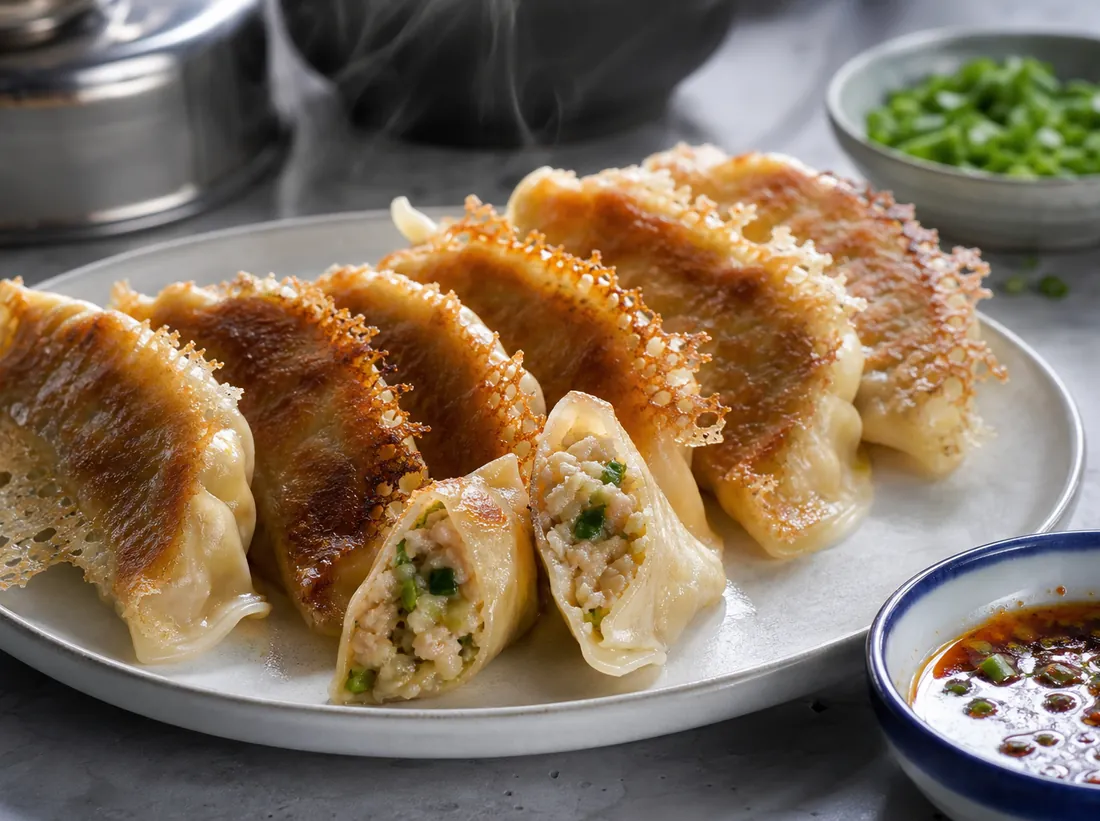
On the way they changed. In China most dumplings are boiled, with a fairly thick wrapper. In Japan the wrapper is thinner, the filling is minced very fine and seasoned with garlic and ginger, and the usual method is yaki gyoza: fried, steamed and fried again in the same pan. Cities such as Utsunomiya and Hamamatsu compete for the title of gyoza capital, and in Hamamatsu they are served in a circle with bean sprouts in the middle.
What makes Gyoza itself
A good gyoza is two textures in one bite: a golden base as crisp as a cracker and a soft, half translucent top that cooked in steam. Inside is a juicy filling that holds its own liquid, because the meat is worked with salt until sticky and the cabbage is salted and squeezed so it does not soak the wrapper. The dough is made with boiling water, so it is soft, does not spring back when rolled and stays thin. The pleats go on one side only, which gives each dumpling a flat back that stands steady in the pan.