Tamagoyaki

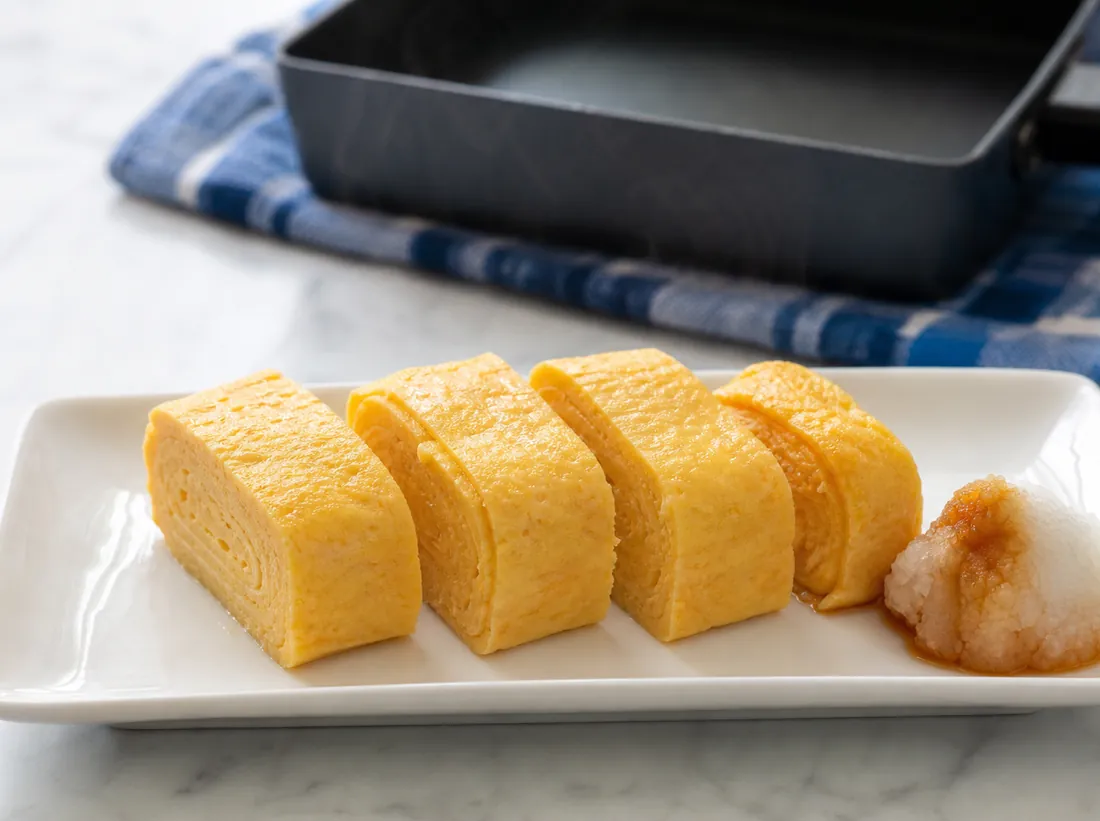
Tamagoyaki is a Japanese rolled omelette: beaten eggs with dashi, sugar, mirin and soy sauce, cooked in thin layers and rolled up one layer around the next into a juicy, gently sweet log that is cut into slices. Here the dashi is made with kombu, so the tamagoyaki is parve and vegetarian and fits any meal.

Quantity calculatorOrder Tamagoyaki

VegetarianDairy freeParveAllergens:EggsSoy

Updated

TamagoyakiIllustration
Time30 minCook 15 min · + Soak 1 h
Amount4 portions0.5 kg
Per portion173 kcal10.8 g protein · a 120 g portion
Cost of the pot₪11for the pot, about ₪2.7 a bowl

The story of Tamagoyaki

Tamago means egg, and yaki means grilled or cooked over heat. In Japan the rolled omelette is a fixture of breakfast and of the bento box, and it is made in a special rectangular pan in which the egg is rolled in several thin layers. Every family seasons it a little differently, and many Japanese remember their mother's tamagoyaki the way others remember a grandmother's omelette.

The two great regions of Japan differ here too. Tokyo and the Kanto region prefer a sweet omelette, with sugar and soy sauce, thick and golden. Osaka, Kyoto and the Kansai region make dashimaki tamago, with plenty of dashi and almost no sugar, so soft it nearly trembles. At sushi bars a thick, sweet slice of tamago sits on rice, and some say you can judge the chef by it.

What makes Tamagoyaki itself

Tamagoyaki is not a folded omelette but a roll of layers. Each thin layer cooks only until it has almost set and is then rolled around the previous roll, so the still moist egg glues the layers together. The result is a slice with fine rings, soft and juicy inside, with no hard crust. Dashi adds liquid and a deep savoury taste, sugar and mirin bring gentle sweetness, and light soy sauce seasons without darkening the yellow. It is eaten hot, at room temperature or cold, which makes it perfect lunchbox food.
Tamagoyaki for any number of people

Change the number of people and the portion size, and every ingredient updates in grams, with the cost, calories and protein per portion.

Portion size
Units
0.5kg of food
3Pot to use, litres
₪11Cost of the pot
₪2.7per portion
173kcal per portion
10.8g protein per portion
IngredientAmountCost
The dashi
Cold water60 g
Kombu, a 5 cm square3 g₪0.6
The eggs and seasoning
Large eggs330 g · 6 pcs₪8.0
Sugar20 g₪0.1
Mirin15 g₪0.9
Light soy sauce (usukuchi) or regular10 g₪0.4
Salt, a pinch1 g
For the pan and to serve
Canola oil, for wiping the pan10 g₪0.2
Daikon radish, grated, to serve80 g₪0.8
Send on WhatsApp

Shelf prices at a large Israeli chain and specialty shops, October 2026. Nutrition from the ingredients in grams, before cooking.

How many calories in Tamagoyaki? Nutrition facts and calorie calculator

Change the amount of any ingredient, drop one, or pick a lighter version, and the numbers per serving update at once: calories, fat, carbs, protein, sodium and fibre.

Tamagoyaki has 144 calories per 100 g. A 120 g serving made with our recipe has 173 calories: 10.8 g protein, 10.2 g fat and 7.9 g carbohydrates.

Lighter

Ingredients, for the whole recipe

  • 3 g0 kcal per serving
  • 6 pcs118 kcal per serving
  • 20 g19 kcal per serving
  • 15 ml10 kcal per serving
  • 10 ml2 kcal per serving
  • 1 g0 kcal per serving
  • 10 ml20 kcal per serving
  • 80 g3 kcal per serving

What each add-on adds to Tamagoyaki

Values for the amount in the row, from the national food database.

Add-onCaloriesProtein, gFat, g
One large egg837.35.5
A tablespoon of oil122013.8

How to make Tamagoyaki

In cook mode the screen stays on, tap a step when it is done, and the timers run next to each step.
  1. Steep the kombu in 60 ml cold water for at least an hour, or overnight in the fridge, then lift it out. That is the dashi.
  2. Stir the sugar, mirin, soy sauce and salt into the dashi until the sugar dissolves.
  3. Crack the eggs into a bowl and beat with chopsticks or a fork in side-to-side cutting strokes, without whisking in air, until no clumps of white remain. Add the dashi mixture, stir, and strain through a sieve if you want a perfectly smooth omelette.
  4. Heat a tamagoyaki pan or non-stick pan over medium heat. Dip a folded paper towel in oil and wipe it over the whole pan. A drop of egg should sizzle at once.
  5. Pour in about a fifth of the egg and tilt the pan to cover the base in a thin layer. Pop any bubbles with a chopstick. When the edges have set and the top is still slightly wet, after 30 to 40 seconds, roll it up from the far end towards you in 3 or 4 folds.
  6. Push the roll back to the far end, oil the empty part of the pan again and pour in another layer. Lift the roll a little so the egg flows underneath it too.
  7. When the layer has almost set, roll the log back towards you, wrapping it in the new layer. Repeat until the egg is used up, 5 or 6 layers. If the egg browns too fast, turn the heat down.
  8. Turn the roll out onto a bamboo mat or baking paper, wrap it tightly and leave for 5 minutes so it sets into a block.
  9. Cut into 8 slices 2 cm thick with a sharp knife. Serve with a small mound of grated daikon and a few drops of soy sauce.

The science of Tamagoyaki

Kitchen science

When egg sets

The proteins in egg white begin to set at around 62 °C and are fully firm at around 80 °C, while the yolk sets between 65 and 70 °C. In a thin layer over medium heat this happens within seconds, which is why you roll while the top is still moist. That moist egg sets as you roll and glues the layers together.

Kitchen science

What the sugar does

Sugar slips between the egg proteins and slows their bonding, so the omelette sets at a slightly higher temperature and stays tender and juicy. On the other hand sugar browns quickly through the Maillard reaction and caramelisation, so a sweet omelette needs lower heat.

Kitchen science

Why dashi makes it softer

Any liquid added to eggs dilutes the protein network that forms as they cook, and the water stays trapped between the strands. That is why dashimaki, with lots of dashi, is soft and dripping, but also more fragile and harder to roll. Kombu adds glutamate, which gives the egg a deep savoury taste without much salt.

Kitchen science

Why you beat without whisking

Air bubbles in the egg expand in the heat, leave holes in the layer and make it tear as you roll. Cutting strokes break up the stringy white evenly without beating in air, and straining removes any clumps left. That way every layer is smooth and even.

Tamagoyaki in every kitchen

Kanto style (Tokyo)

A sweeter omelette, with more sugar and soy sauce, thick and golden outside. The recipe here is close to it, and those with a sweet tooth can raise the sugar to 30 g.

Dashimaki tamago (Kansai)

An omelette with lots of dashi, up to 90 ml for 6 eggs, and little or no sugar. It is soft and juicy and drips dashi when pressed, and it is harder to roll. Served with grated daikon and soy sauce.

Sushi tamago

An especially thick, sweet block served on rice and held with a strip of nori. Some sushi bars blend white fish paste into the eggs and cook it slowly, so the tamago turns dense like a cake.

With nori

Lay half a sheet of nori on one of the layers before rolling, and when sliced a dark green spiral shows inside the yellow. Especially pretty in a bento box.

With scallions

Stir 2 tablespoons of finely chopped scallions into the eggs and halve the sugar. Saltier and fresher, a good breakfast version.

In a round pan

Without a rectangular pan, use a 20 cm non-stick frying pan. Roll the same way, and at the end shape the roll in a bamboo mat or baking paper into a straight block.

Common Tamagoyaki problems and how to fix them

My tamagoyaki tears when I roll it

The pan was too hot or the layer dried out completely before rolling. Work over medium heat, and roll while the top is still slightly moist.

The layers separate when I slice it

It was rolled too late, or the roll was not lifted so the egg could flow underneath. Roll while the top of the layer is still moist, and lift the roll for every new layer.

The omelette browned and burnt

Sugar plus high heat. Turn down to medium or low, wipe away excess oil, and go slower with a very sweet version.

The egg sticks to the pan

There was not enough oil or the pan was not non-stick. Wipe oil on with a paper towel before every layer, under the roll too, and heat the pan before the first layer.

My tamagoyaki is dry and rubbery

It was overcooked or the heat was too strong. Take it out while the last layer is still a little moist, because the heat left in the roll keeps cooking it.

There are holes and bubbles in it

The eggs were whisked with air. Beat with cutting strokes, strain, and pop bubbles with a chopstick as soon as each layer goes in.

Storing, freezing and reheating

2 days

In the fridge

1 month, sliced

In the freezer

2+4

To cool

Bring it from 60 to 21 °C within two hours and down to 5 °C within four more. Split a big pot into shallow boxes.

75 °C

Reheating

Tamagoyaki is eaten at room temperature or cold too. To serve it warm, give it 15 to 20 seconds in the microwave, covered, or a minute in a covered pan over low heat.

Nutrition of Tamagoyaki

From our recipe, per bowl and per 100 g, next to the national food database.

ServingkcalProtein, gFat, gCarbs, gFibre, g
Our recipe, a 120 g portion17310.810.27.90.3
Our recipe, 100 g1449.08.56.60.3
Typical Tamagoyaki, 100 g19313.514.70.80.0

What the ingredients of Tamagoyaki cost

What each ingredient costs in one pot, and where to buy it.

IngredientPriceIn this potWhere to buy
Large eggs₪1.4 each₪8Supermarket
Mirin₪60 per litre₪0.9Asian grocer
Daikon radish, grated, to serve₪9.9 per kg₪0.8Greengrocer
Kombu, a 5 cm square₪210 per kg₪0.6Asian grocer (hard to find)
Light soy sauce (usukuchi) or regular₪42 per litre₪0.4Supermarket
Canola oil, for wiping the pan₪15 per litre₪0.1Supermarket
Sugar₪5.5 per kg₪0.1Supermarket
Salt, a pinch₪2.1 per kg₪0Supermarket

Shelf prices at a large Israeli chain and specialty shops, October 2026, VAT included. Vegetable prices change with the season.

Tamagoyaki and its culture

In Japan tamagoyaki is the taste of home. It goes into the bento boxes parents pack for their children, into traditional breakfasts of rice, soup and fish, and onto holiday tables. In Tokyo, around the old fish market, long-established shops specialise in rolled omelettes, and at sushi bars the slice of tamago is seen as the dish that shows a chef's patience.

In Israel tamagoyaki is known mostly from sushi bars, but at home it is a new take on the omelette everyone already makes. It is parve when the dashi is made from kombu, so it suits a meat or a dairy meal. Make the dashi with bonito flakes and the omelette contains fish, and then it is not served alongside meat.

From the pantry: what Tamagoyaki needs

Pantry

Kombu, a 5 cm square

Pantry

Mirin

Pantry

Light soy sauce (usukuchi) or regular

Make Tamagoyaki a meal

Shabbat

Ready Shabbat food

Soup, hamin, mains and sides, with a quantity calculator and prices.

Plan Shabbat
Hosting

Hosting trays

9 trays to go with the soup, with a planner by number of guests.

Tray planner
Events

Catering

A whole menu in grams per guest, with a reheating table.

Menus

What to serve with Tamagoyaki

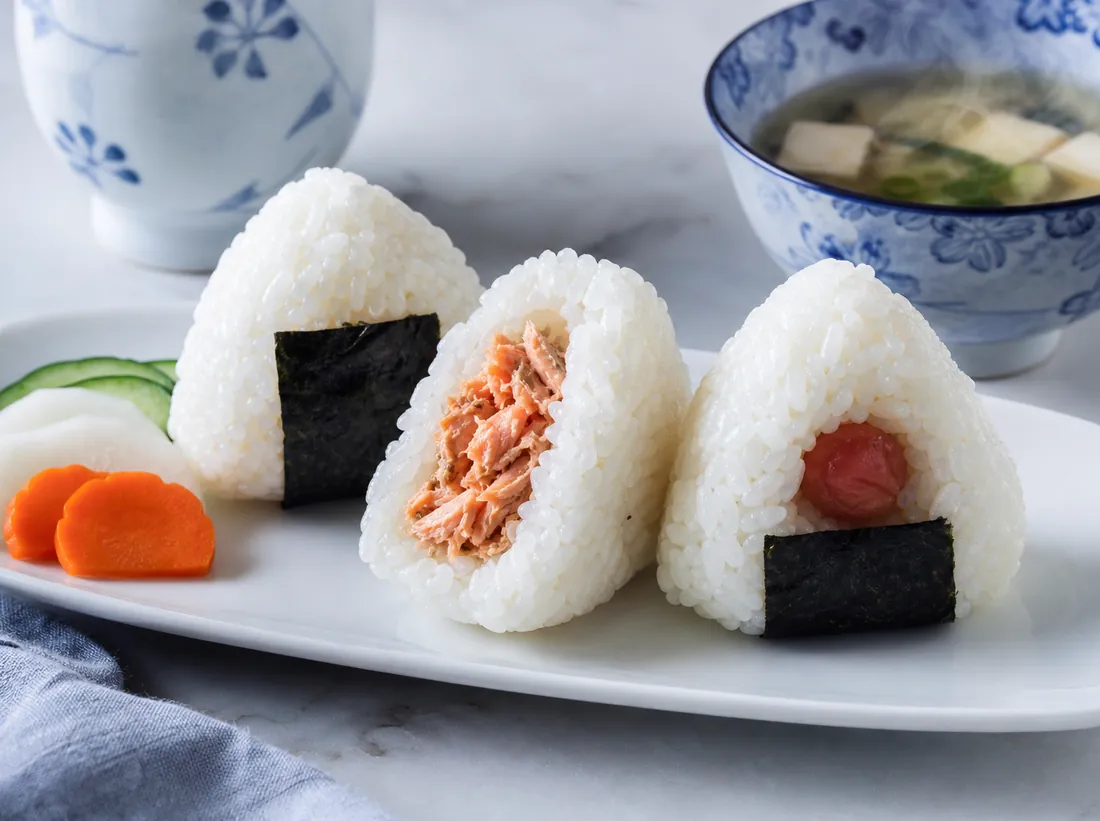
Serve with grated daikon and a few drops of soy sauce, next to white rice, miso soup and grilled fish for a Japanese breakfast. In a bento box, put 2 or 3 slices beside onigiri and vegetables.

The cuisine behind Tamagoyaki

Japanese

Japanese cuisine

Tamago means egg, and yaki means grilled or cooked over heat. In Japan the rolled omelette is a fixture of breakfast and of the bento box,…

Japanese cuisine

Tamagoyaki in large quantities: events, offices and communities

How much of everything by number of guests, at a 120 g portion. For trays, catering and community kitchens.

Guestskg of food3 kg traysCost of ingredients
253.01₪69
506.02₪137
100124₪274
200248₪549
5006020₪1,372

Every ingredient for any number of guests is in the calculator above: type the number of people.

Order Tamagoyaki

A ready pot for Shabbat, an event or the office, ordered ahead.

  • Cooked to order, for Shabbat, an event or the office.
  • Tell us how many people and when, and we send a quote.
  • Delivery in Tel Aviv from ₪35, free over ₪750.

Order Tamagoyaki for a large event

Large orders in Israel and abroad: events, offices, synagogues, communities and institutions.

  • In Israel: cooked in Tel Aviv and delivered to events in the area, and to large events anywhere in the country on a quote.
  • Abroad: for communities, events and restaurants. Tell us where, how many and when, and we come back with a quote and options.
  • Institutional quantities and a shopping list for any number of guests, in the calculator above.

Frequently asked questions

What is tamagoyaki?

Tamagoyaki is a Japanese omelette rolled in layers. Eggs with dashi, sugar, mirin and soy sauce are cooked in thin layers and rolled one around the next into a log, which is cut into slices.

Do you need a special pan for tamagoyaki?

No. A rectangular pan gives a straight block, but you can roll it in a 20 cm round non-stick pan and shape the roll at the end in a bamboo mat or baking paper.

Is tamagoyaki sweet or savoury?

Both. Tokyo prefers it sweet, with sugar and soy sauce, while the Kansai region makes dashimaki with lots of dashi and little sugar. Adjust the sugar to your own taste.

Can you make tamagoyaki without dashi?

Yes, with the same amount of water and an extra pinch of salt, though the taste is less deep. Kombu dashi is very simple: a square of kombu in cold water for an hour.

Is tamagoyaki parve?

Yes, when the dashi is made from kombu. If you use bonito dashi or a dashi powder with fish, the omelette is parve with fish, and it is not served together with meat.

What is the difference between tamagoyaki and a regular omelette?

A regular omelette cooks in one layer and is folded. Tamagoyaki is built from several thin layers rolled one onto another, seasoned with dashi, sugar and mirin, and it is eaten cold as well.

How do you keep tamagoyaki for a lunchbox?

Cool it completely, slice it and keep it in a closed box in the fridge for up to two days. You can also freeze slices for up to a month and pack them frozen in the morning; they thaw by lunchtime.

How many calories are in Tamagoyaki?

A 120 g portion of Tamagoyaki made with our recipe has about 173 calories and 10.8 g of protein. Per 100 g: 144 calories.

How much does it cost to make Tamagoyaki at home?

A tray or pot of 4 portions costs about ₪11 at Israeli shelf prices in October 2026, about ₪2.7 a portion. The calculator above works it out for any number of people.

Every dish

Home dishes of every community, each with a calculator, a price list and the science.

All the dishes