The story of Okonomiyaki
Before the Second World War, Japanese children spent small coins on a thin pancake of flour and water with scallions, brushed with sauce, called issen yoshoku, one sen Western food. After the war, when flour was easier to find than rice, that snack grew into a filling meal, loaded with cabbage and whatever else was in the house. In Hiroshima, in the years when the city was rebuilt, it became the city's soul food.
That is how the two great styles were born. In Osaka and the Kansai region everything is mixed into the batter and cooked as one thick pancake. In Hiroshima it is built in layers: a thin crepe, a mountain of cabbage and bean sprouts, meat, noodles and egg. Both cities have restaurants where every table is a hot griddle, and diners cook for themselves and flip with two spatulas.
What makes Okonomiyaki itself
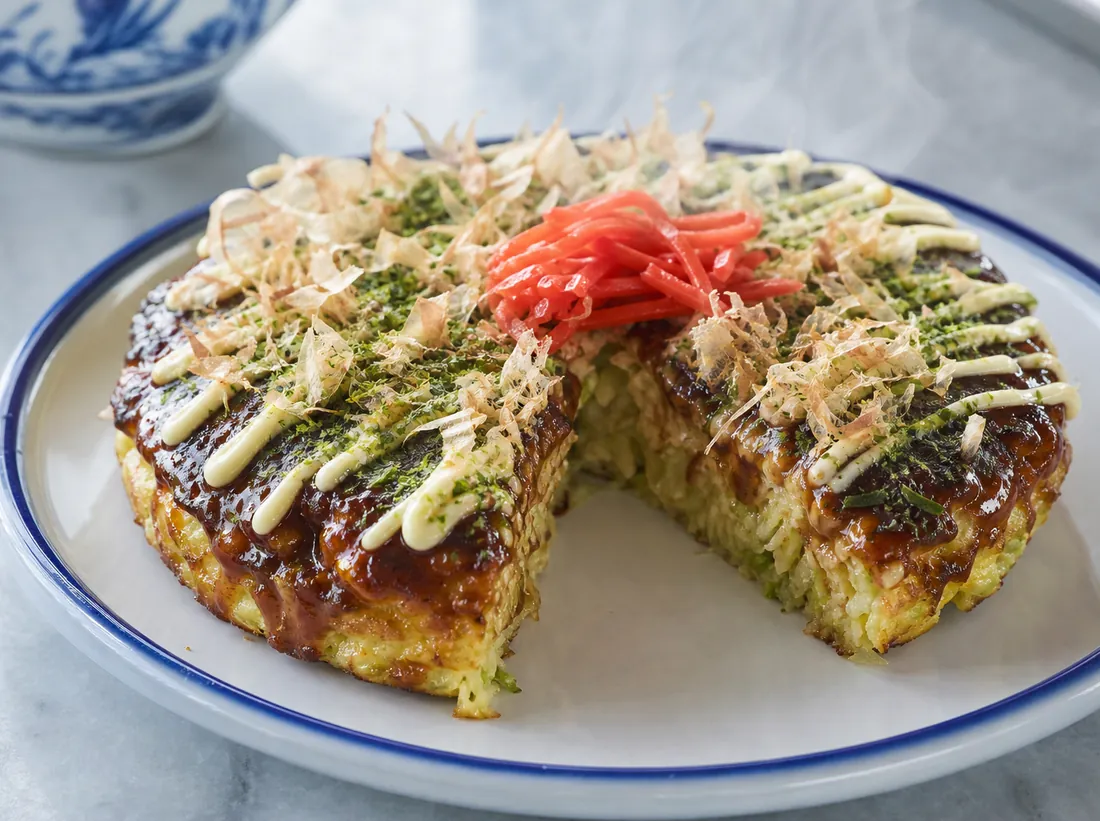
Okonomiyaki is really cabbage held together by a little batter. Most of its volume is finely shredded cabbage, and the batter of flour, dashi and egg only binds it. As the cabbage heats it releases steam that cooks the pancake from the inside, so it comes out light rather than dense. On top go the dark sweet sauce, stripes of mayonnaise and crumbled seaweed. In Japan bonito flakes are added too, dancing in the heat, but our meat version leaves them out because they are fish, and skips Worcestershire sauce, which contains anchovies. The sauce here is made from ketchup, soy sauce and date syrup.