The story of Onigiri
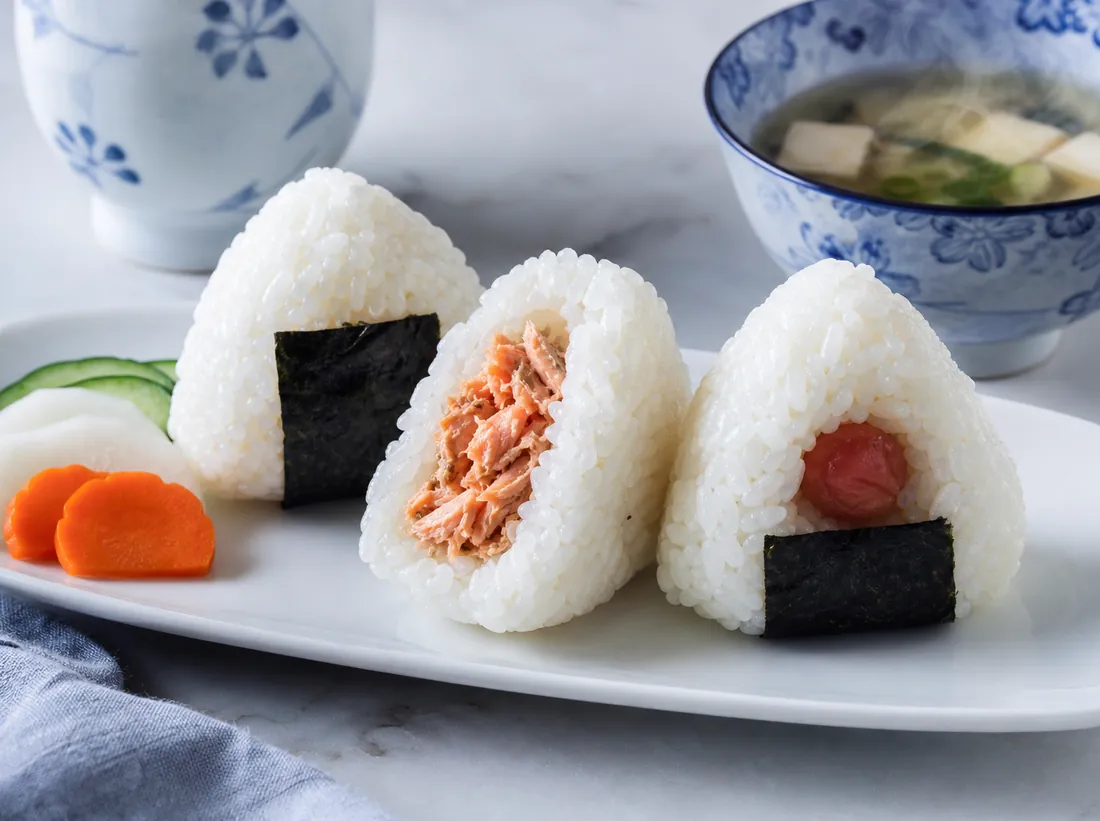
Onigiri, also called omusubi in Japan, is a ball or triangle of cooked rice pressed between the palms. The name comes from the verb nigiru, to grip or squeeze. Rice pressed into a ball has been travel and field food in Japan for centuries: soldiers, travellers and farmers carried it wrapped in a leaf or a cloth, because packed, salted rice keeps for a whole day without a plate or cutlery.
The nori that wraps it came later, once seaweed pressed into thin sheets became common. Today onigiri are the backbone of the bento, the Japanese lunchbox, of school trips and of picnics under the cherry blossom. Every convenience store in Japan stocks them around the clock, in a clever wrapper that keeps the nori dry and crisp until the moment you open it.
What makes Onigiri itself
What makes onigiri itself is how little is in it. The rice is not seasoned with vinegar and sugar as for sushi; there is only salt on the cook's hands and one salty filling in the middle. That filling has to be cooked, pickled or salted so the rice ball keeps for hours in a lunchbox: salted grilled salmon, tuna with mayonnaise, sour and salty umeboshi, or kombu simmered in soy sauce and mirin until glossy. The rice must be Japanese short grain, sticky enough to hold a shape but with whole grains that fall apart in the mouth. You press firmly enough that it holds together and gently enough that it never turns into a brick.