How to cook bulgur, ptitim, couscous and buckwheat
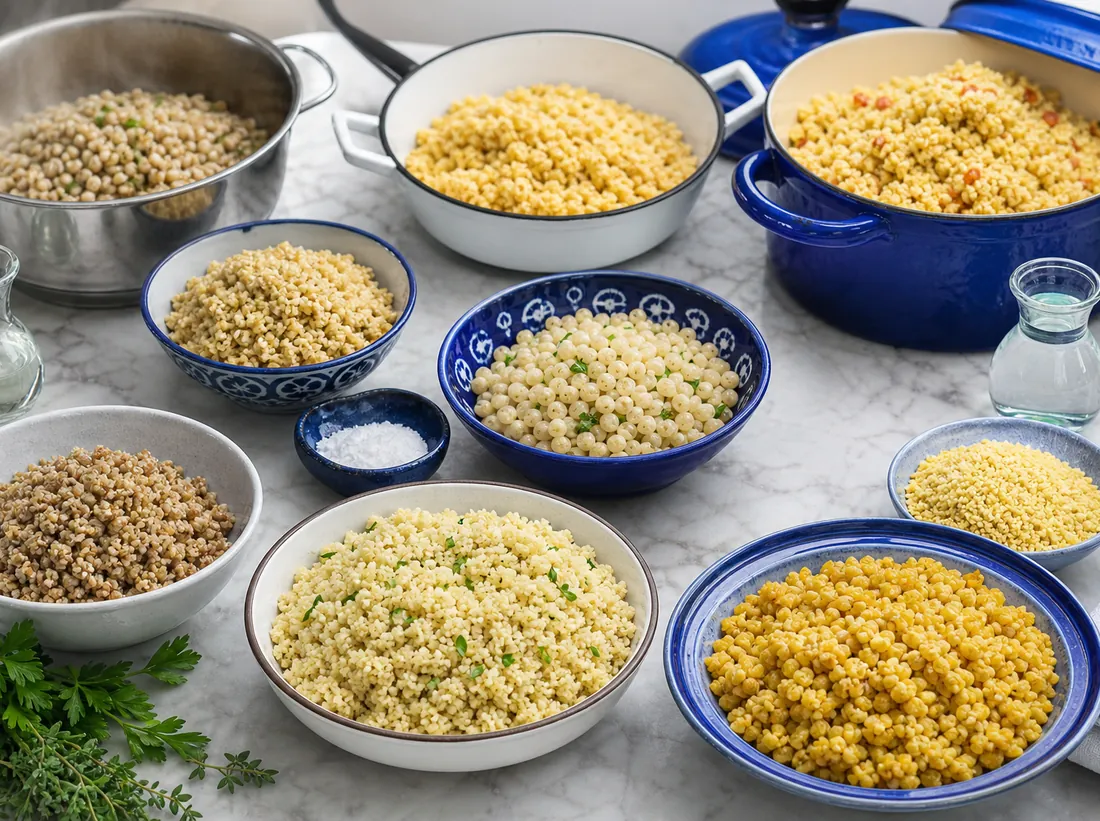
How to cook bulgur, ptitim and couscous so every grain stays separate: measure the liquid, toast a minute in oil, and rest in a closed pot. Here are the ratios and times for bulgur, couscous, ptitim, buckwheat, freekeh and pearl barley, the yield of each cup and how much you need per person and for a crowd.
 Illustration
How to cook bulgur, ptitim and couscous: two methods
Absorption
Most grains here cook by absorption: measured water, covered pot, low heat and a rest at the end. All the water goes into the grain and no flavour goes down the sink. Ratios are by volume, with one 240 ml measuring cup.
Soaking only
Fine bulgur and instant couscous were already cooked and dried at the mill. They only need boiling liquid and time: cover, wait 5 to 15 minutes and fluff. Cooking them on the heat turns them to porridge.
Toasting
A minute or two in oil before the water adds a nutty taste and a thin film of fat that stops grains from sticking. This is the step that makes ptitim and bulgur come out separate.
Stock instead of water
Swap the water for chicken or vegetable stock at the same ratio. Ready stock is salty, so halve the salt. For red bulgur, add a tablespoon of tomato paste to the liquid.
Water ratio and cooking time for every grain
Per dry cup (240 ml), covered pot on low heat
| Grain | Before cooking | Liquid per cup | Time | Rest | Cups cooked |
|---|---|---|---|---|---|
| Fine bulgur | No cooking | 1 cup boiling water | 10-15 minutes soaking, covered | None | 2.5 |
| Coarse bulgur | Brief toast in oil, optional | 2 cups | 12-15 minutes | 10 minutes | 3 |
| Instant couscous | No cooking | 1-1.25 cups boiling liquid | 5-10 minutes covered | None | 2.5-3 |
| Rice-shaped ptitim | Toast 2 minutes in oil | 1.25 cups | 7-8 minutes | 5 minutes | 2.5 |
| Ptitim balls and stars | Toast 2-3 minutes in oil | 1.5 cups | 10-12 minutes | 5 minutes | 2.5 |
| Toasted buckwheat | Rinse | 2 cups | 12-15 minutes | 10 minutes | 3 |
| Green buckwheat | Rinse | 1.5-1.75 cups | 10-15 minutes | 5 minutes | 2.5-3 |
| Cracked freekeh | Rinse | 2.5 cups | 20 minutes | 10 minutes | 3 |
| Whole freekeh | Rinse; soaking overnight saves 10 minutes | 2.5-3 cups | 35-45 minutes | 10 minutes | 3 |
| Pearl barley | Rinse | 3 cups, drain the excess | 30-40 minutes | 10 minutes | 3.5 |
| Pasta | 1 litre water and 10 g salt per 100 g | Plenty of water | Packet time, taste 2 minutes early | None | 2-2.5 times the weight |
A 1:2 ratio means one cup of grain to two cups of water. Old, dry grain sometimes needs another quarter cup.
Bulgur: which number for which dish
Bulgur is sold by grind, from fine (number 1) to extra coarse (number 4)
| Grind | Number | Preparation | Water ratio | Good for |
|---|---|---|---|---|
| Fine | 1 | Soak only: 10-15 minutes in boiling water, or 20-30 minutes in cold | 1:1 | Tabbouleh, bulgur kubbeh dough |
| Medium | 2 | Soak 20 minutes or simmer 8-10 minutes | 1:1.5 | Salads, stuffings, patties |
| Coarse | 3 | Simmer 12-15 minutes, rest 10 | 1:2 | A side instead of rice, bulgur majadra |
| Extra coarse | 4 | Simmer 15-20 minutes, rest 10 | 1:2.25 | Pilaf, stews, stuffed vegetables |
For kubbeh dough, squeeze the soaked fine bulgur so the dough is not too wet.
How to cook coarse bulgur like rice
- Onion
Fry a chopped onion in 2 tablespoons of oil for 5-7 minutes until soft and golden. Optional.
- Toast
Add 1 cup of coarse bulgur (about 150 g) and stir for 2 minutes, until it smells toasted.
- Liquid
2 cups of boiling water or stock and three quarters of a teaspoon of salt.
- Cook
Bring to the boil, cover and cook on low for 12-15 minutes, until the liquid is absorbed.
- Rest
10 minutes covered off the heat, with a towel under the lid.
- Serve
Fluff with a fork. One dry cup gives about 3 cups, a side for 4.
How to cook ptitim so they stay separate
- Toast
Toast 1 cup of ptitim (about 170 g) in a spoon of oil for 2-3 minutes until lightly golden. This keeps them apart.
- Boiling water
1.25 cups of boiling water for rice-shaped ptitim, 1.5 cups for balls and stars, and half a teaspoon of salt.
- Cook
Cover and cook on low: 7-8 minutes for rice shapes, 10-12 for balls. No stirring.
- Check
The water is gone and the ptitim are tender with a slight bite. If still hard, add 2-3 tablespoons of boiling water and give it 2 more minutes.
- Rest
5 minutes covered, then fluff with a fork.
Steamed couscous, the traditional way
- Moisten
Put 500 g of medium couscous in a wide bowl, sprinkle over a cup of water with a teaspoon of salt, rub between your palms and leave 10 minutes.
- Oil
Add 2-3 tablespoons of oil and rub out any lumps.
- First steaming
Move it to the top of the couscoussier over the soup or boiling water. Count 15-20 minutes from when steam comes through the grains.
- Separate
Tip into the bowl, sprinkle with half a cup of water and fluff with a fork or your hands as it cools a little.
- Second and third steaming
Steam twice more, 15 minutes each time. The grains swell to 3 times their volume and stay separate.
- Serve
In a big bowl with the soup, vegetables and meat or chickpeas around it.
What each grain is, and why it cooks the way it does
Bulgur
Whole wheat that was boiled, dried and cracked. Since it is already cooked, fine bulgur is only soaked and coarse bulgur needs a quarter of an hour.
Couscous
Small granules of wheat semolina rolled with water. Instant couscous was already steamed and dried, so boiling liquid is enough.
Ptitim
Small toasted pasta created in Israel in the 1950s, during the austerity years, as a stand-in for rice. Toasting gives the flavour and helps them stay separate.
Buckwheat
The seed of a plant that is neither a cereal nor related to wheat, and it has no gluten. Toasted buckwheat is brown and aromatic; green buckwheat is milder and softens fast.
Freekeh
Wheat harvested while still green and roasted over fire, which gives its smoky taste. Sold whole or cracked.
Pearl barley
Barley grains with the husk and outer layer polished off. They release starch and thicken soups such as krupnik.
Cooked yield, and how much per person
Weight of one dry cup (240 ml), gain after cooking and dry amounts per person
| Grain | One dry cup | Weight gain after cooking | Side per person (dry) | Main per person (dry) |
|---|---|---|---|---|
| Fine bulgur | about 150 g | 2.5 times | 40-50 g | 70 g |
| Coarse bulgur | about 150 g | 3-3.5 times | 50-60 g | 80-100 g |
| Instant couscous | about 175 g | 2.4-2.7 times | 50-60 g | 90-100 g |
| Steamed couscous | about 175 g | about 3 times | 60 g | 100-120 g |
| Ptitim | about 170 g | 2.5-2.8 times | 50-60 g | 80-100 g |
| Buckwheat | about 170 g | 3-3.3 times | 50-60 g | 80 g |
| Freekeh | about 160 g | about 3 times | 50-60 g | 80 g |
| Pearl barley | 200 g | 2.8-3 times | 50 g | 80 g |
| Pasta | Depends on shape | 2-2.5 times | 50-60 g | 80-100 g |
When two or more sides are on the table, cut each one by about a third.
Amounts for 10, 25 and 50 guests
Dry weight before cooking
| Dish | Dry g per person | 10 guests | 25 guests | 50 guests |
|---|---|---|---|---|
| Couscous as the main, with soup and vegetables | 100 | 1 kg | 2.5 kg | 5 kg |
| Ptitim as a side | 60 | 600 g | 1.5 kg | 3 kg |
| Coarse bulgur as a side | 60 | 600 g | 1.5 kg | 3 kg |
| Buckwheat as a side | 50 | 500 g | 1.25 kg | 2.5 kg |
| Tabbouleh, fine bulgur in salad | 20 | 200 g | 500 g | 1 kg |
| Barley in soup | 25 | 250 g | 625 g | 1.25 kg |
For big amounts, toast and cook in several wide pots rather than one deep pot, so the bottom layer is not crushed.
Storing, freezing and gluten
In the fridge
Cooked grains keep 3 to 5 days in a closed container. The rice cooling rule applies here too: cooked starch kept warm for hours suits bacteria, so refrigerate within one to two hours.
In the freezer
Cooked bulgur, buckwheat, freekeh and barley freeze well for up to two months. Couscous and ptitim come back softer, best used in a stew or a stuffing.
Dry in the pantry
In a closed jar in a cool, dry place. In summer, keep bulgur, buckwheat and freekeh in the fridge or freezer so pantry moths stay out.
Gluten
Bulgur, couscous, ptitim, freekeh, barley and pasta are made from wheat or barley and contain gluten. Buckwheat is not a cereal and has none.
Frequently asked questions
How much water for 1 cup of ptitim?
1.25 cups of boiling water for rice-shaped ptitim and 1.5 cups for balls or stars. Toast 2 minutes in oil first, cook covered 7-12 minutes and rest 5 minutes.
How do you cook bulgur?
Toast coarse bulgur in oil for 2 minutes, add 2 cups of boiling water and salt per cup, cook covered 12-15 minutes and rest 10. Fine bulgur is not cooked: soak it in a cup of boiling water for 10-15 minutes.
What is the bulgur to water ratio?
Fine 1:1, medium 1:1.5, coarse 1:2 and extra coarse 1:2.25, by volume with the same cup.
How long does buckwheat take to cook?
Toasted buckwheat takes 12-15 minutes in 2 cups of water per cup, plus 10 minutes rest. Green buckwheat is ready after 10-12 minutes and softens fast, so check early.
How do you make instant couscous?
Boil 1 to 1.25 cups of water or stock with a spoon of oil and half a teaspoon of salt, pour it over 1 cup of couscous, cover for 5-10 minutes and fluff. No cooking on the heat.
How do you keep ptitim from sticking?
Toast them in oil before the water, measure the water with no excess, do not stir while they cook, and rest them covered for 5 minutes before fluffing.
Do you need to soak bulgur?
Only fine bulgur, and soaking is all it needs: 10-15 minutes in boiling water, or 20-30 minutes in cold water for tabbouleh. Coarse bulgur is simmered without soaking.
How do you cook pearl barley?
Rinse 1 cup, simmer in 3 cups of water for 30-40 minutes until tender but chewy, and drain the excess. In soup, add it at the start and it thickens the pot.
How do you cook pasta?
1 litre of water and 10 g of salt per 100 g of pasta, a full boil and a stir in the first minute. If it will finish in a sauce, drain 1-2 minutes early and keep half a cup of the cooking water.
What is the difference between couscous and ptitim?
Couscous is rolled, steamed semolina and only needs boiling water. Ptitim are small toasted pasta made from wheat flour, so they simmer for a few minutes in the pot.
Order instead of cooking
Ready food for Shabbat, an event or the office, from our kitchen in Tel Aviv.
Where to go next
 Illustration
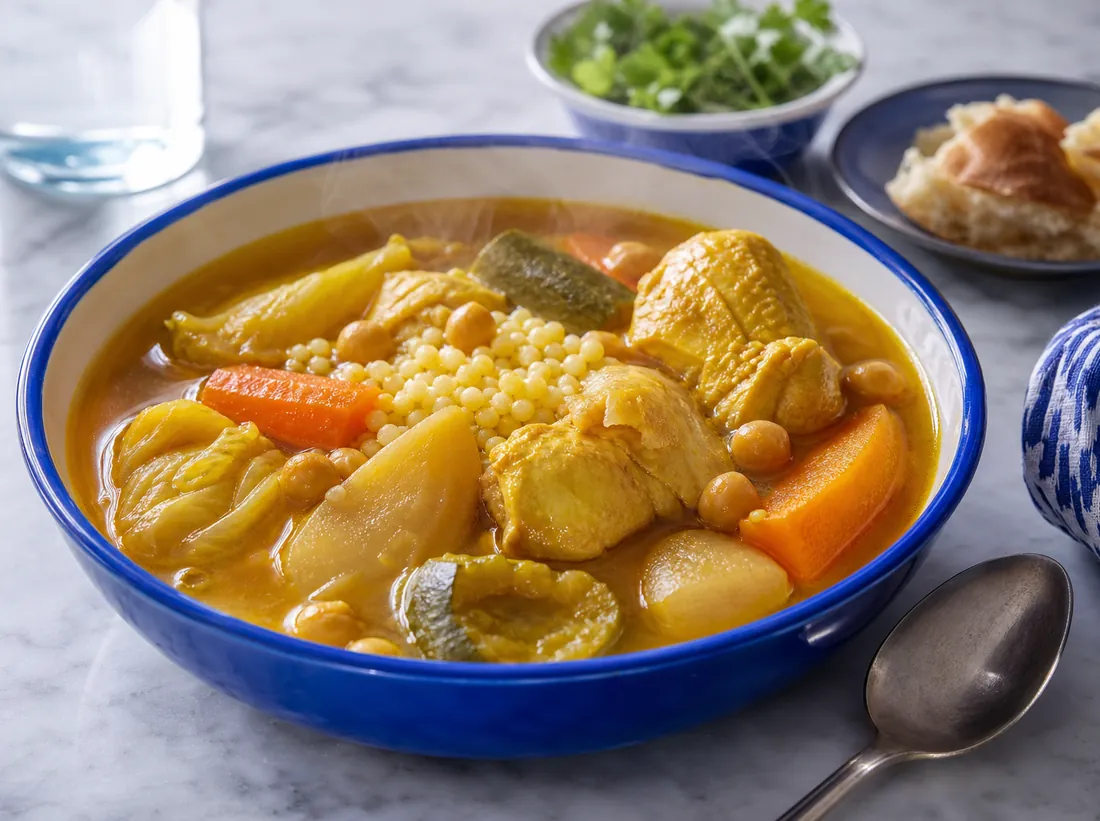
Couscous soup
Couscous soup is the yellow chicken and vegetable broth that Moroccan families ladle over couscous on Friday…
 Illustration
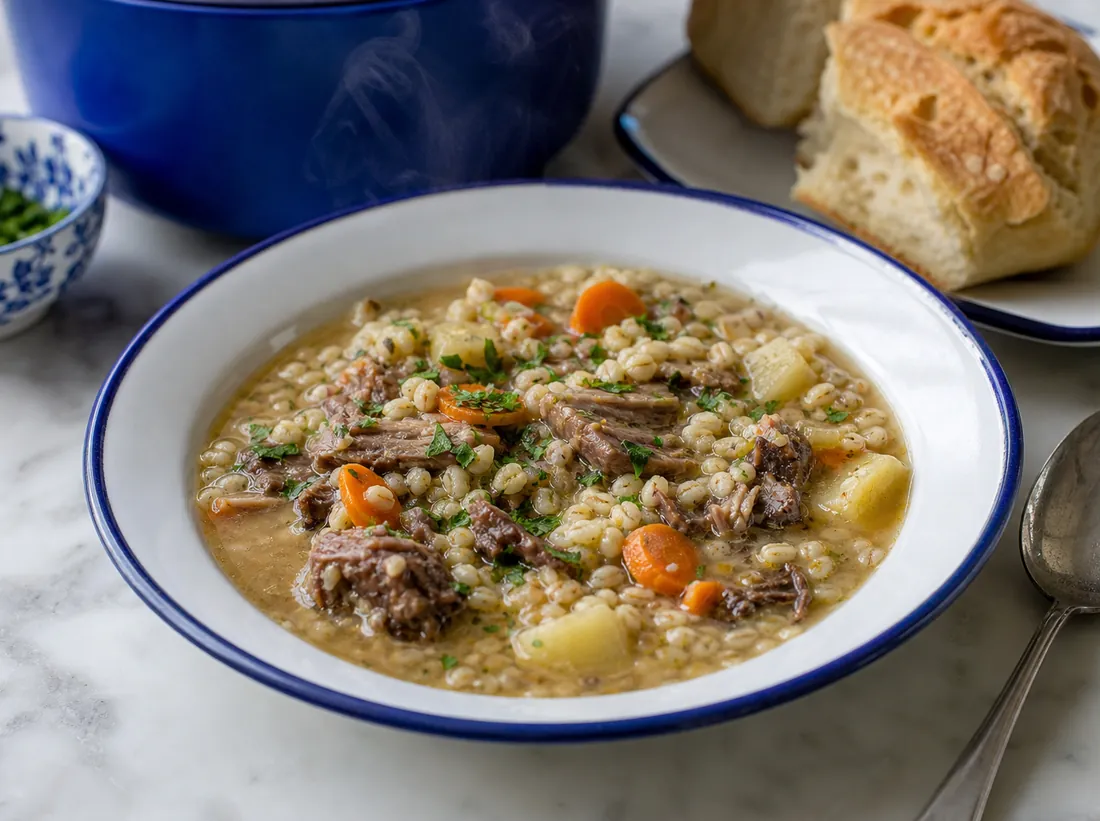
Krupnik (Polish barley soup)
Krupnik is the barley soup of Poland: meat broth, pearl barley, potatoes, root vegetables and dried…
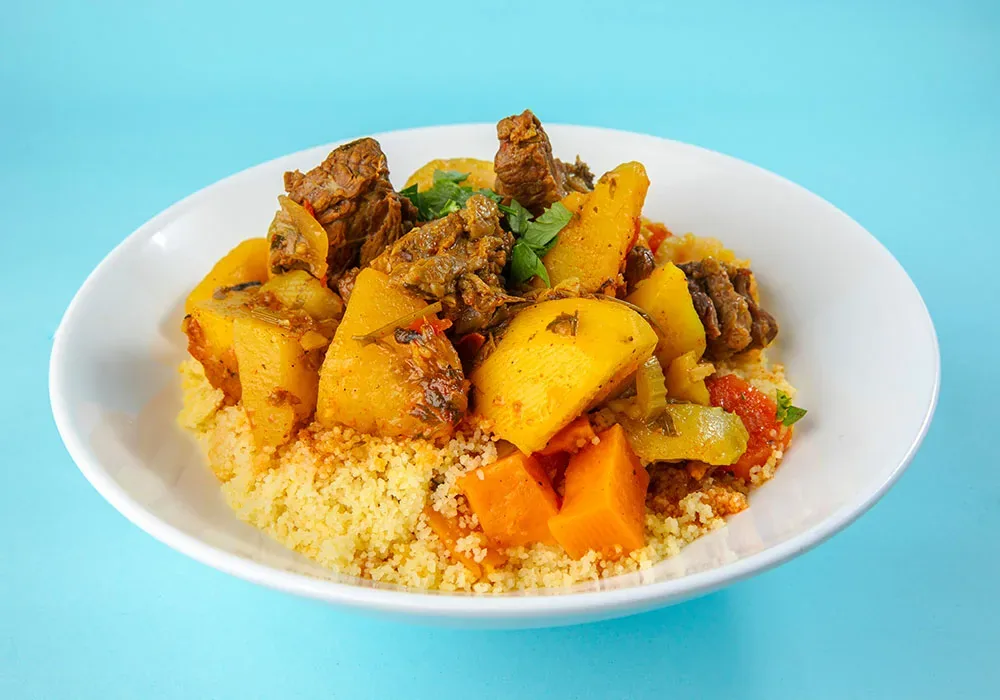
Couscous
Couscous is tiny grains of semolina rolled by hand with salted water and steamed three times, until they are…
 Illustration
Tabbouleh
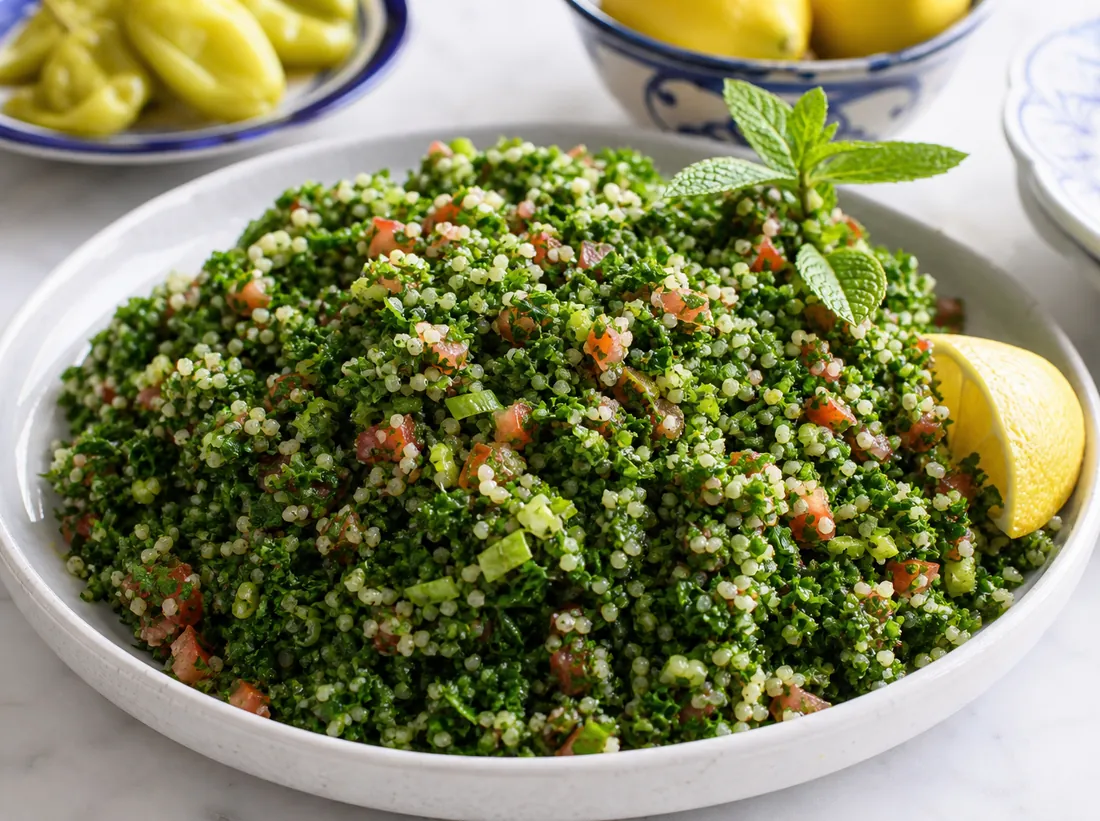
Tabbouleh is a green salad of finely cut parsley with a little fine bulgur, tomatoes, mint and spring onion,…
 Illustration
Mujaddara
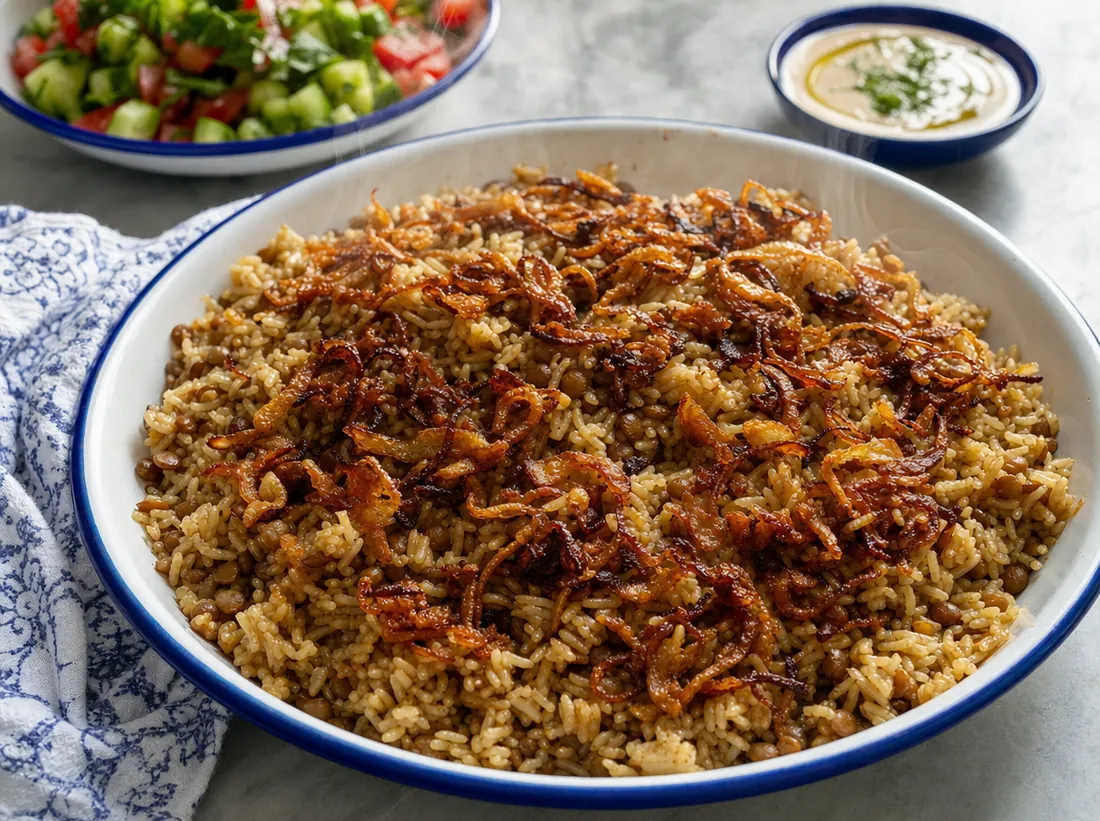
Mujaddara is rice and brown lentils cooked together in one pot and crowned with a heap of onions fried to a…
 Illustration
Bulgur
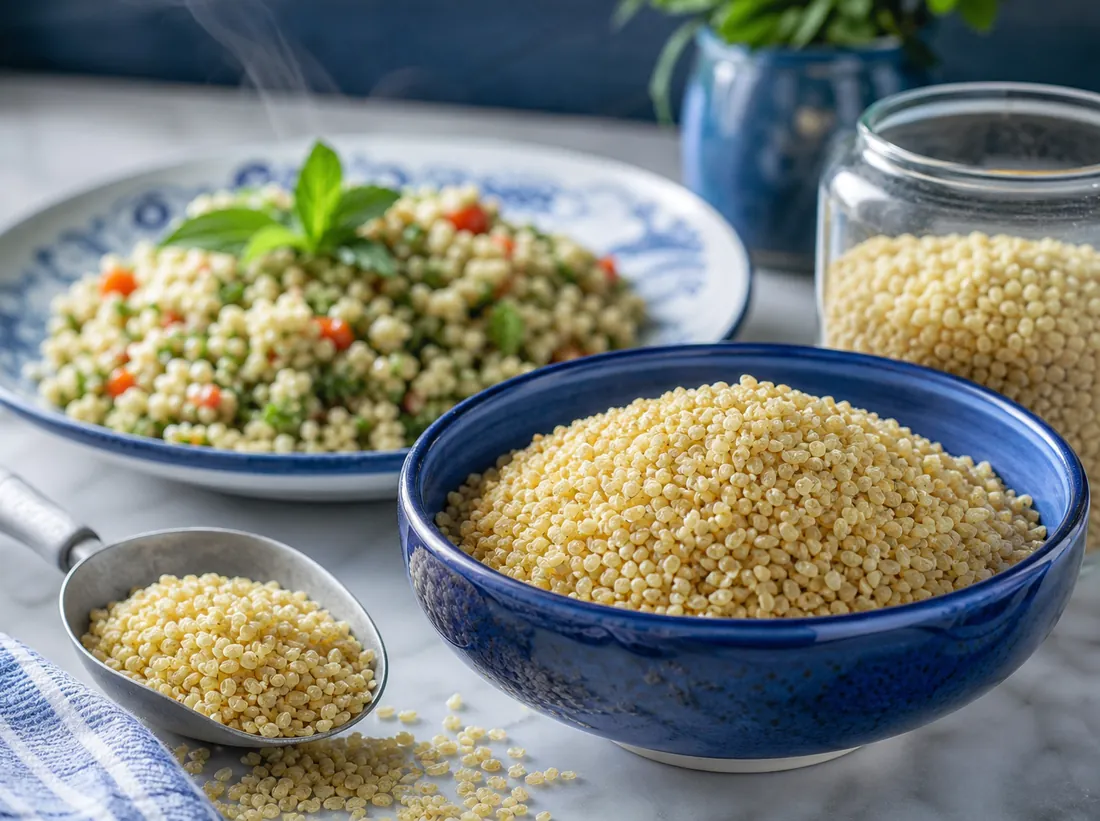
Bulgur is wheat that has been boiled, dried and cracked, so it is ready in minutes. Fine bulgur, which many…