The story of Couscous soup
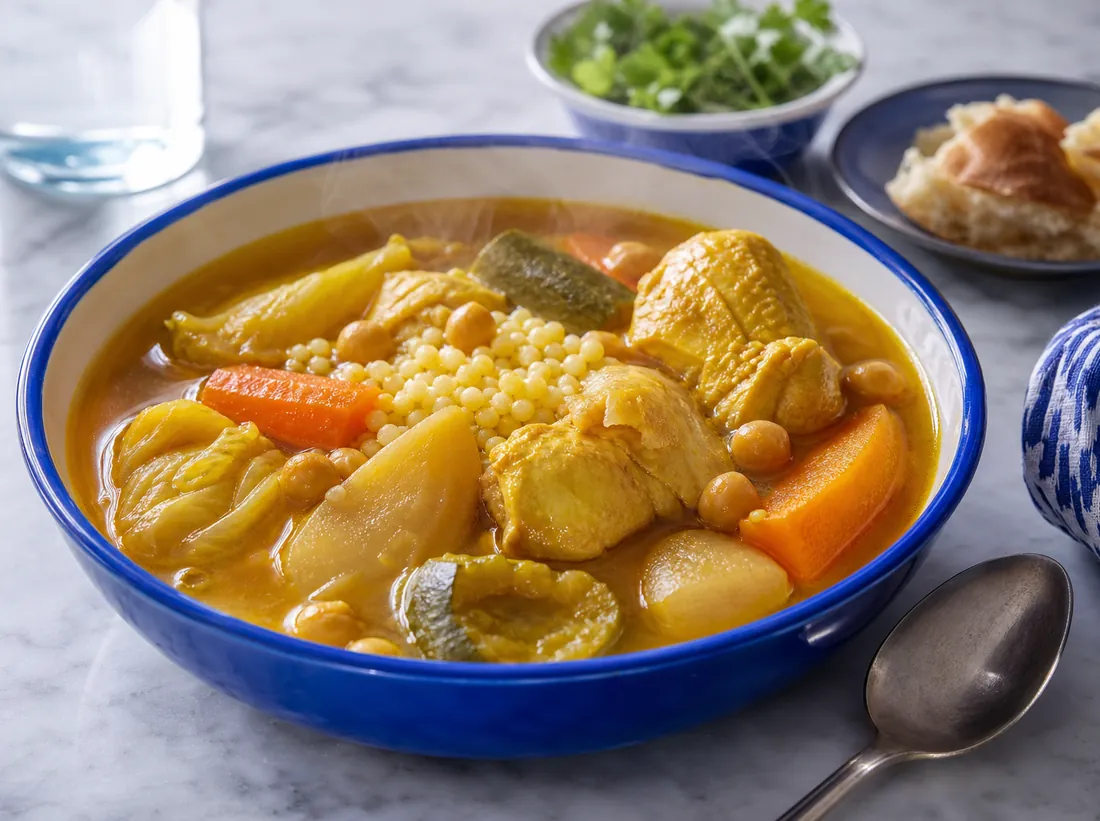
In the homes of Moroccan Jews, couscous is the Friday night dinner. Grandmothers rolled semolina by hand with a little water and oil until it formed grains, then steamed them in a keskas, the perforated basket that sits on top of the soup pot, so the steam from the chicken and vegetables passes right through the couscous. In Israel it has stayed a Friday ritual: a big pot on the stove from midday and the smell of turmeric in the stairwell.
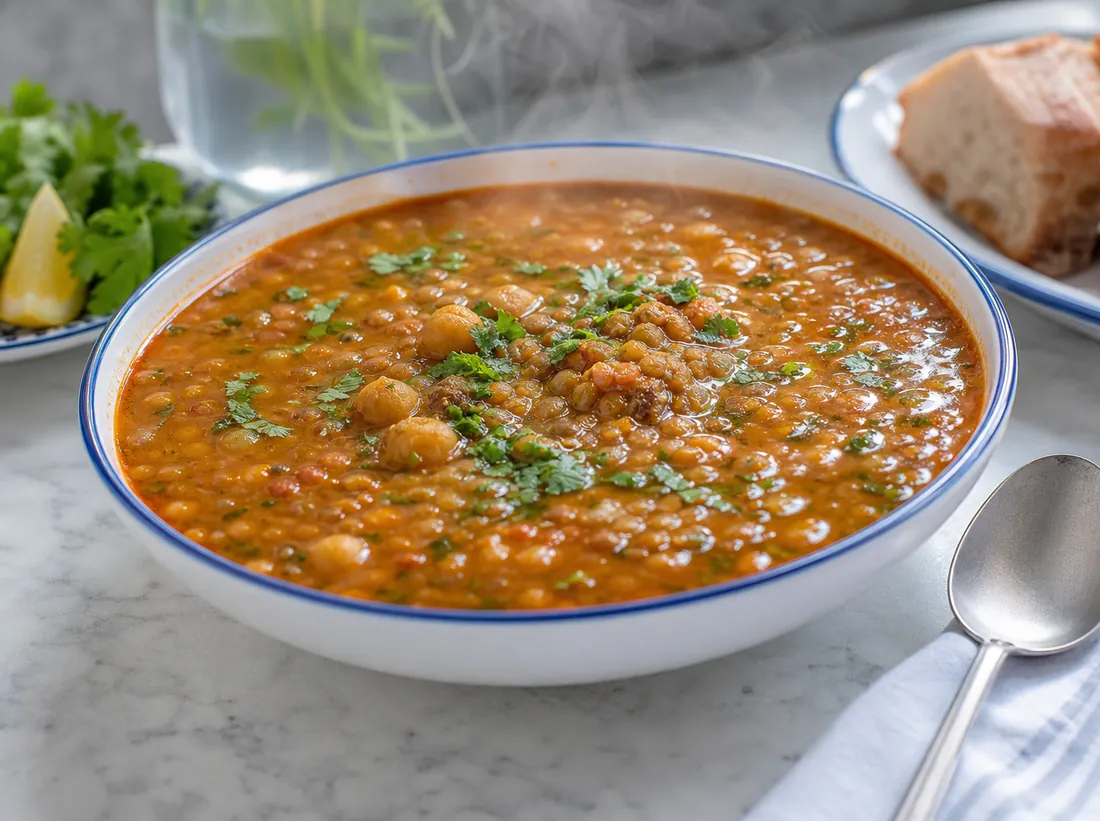
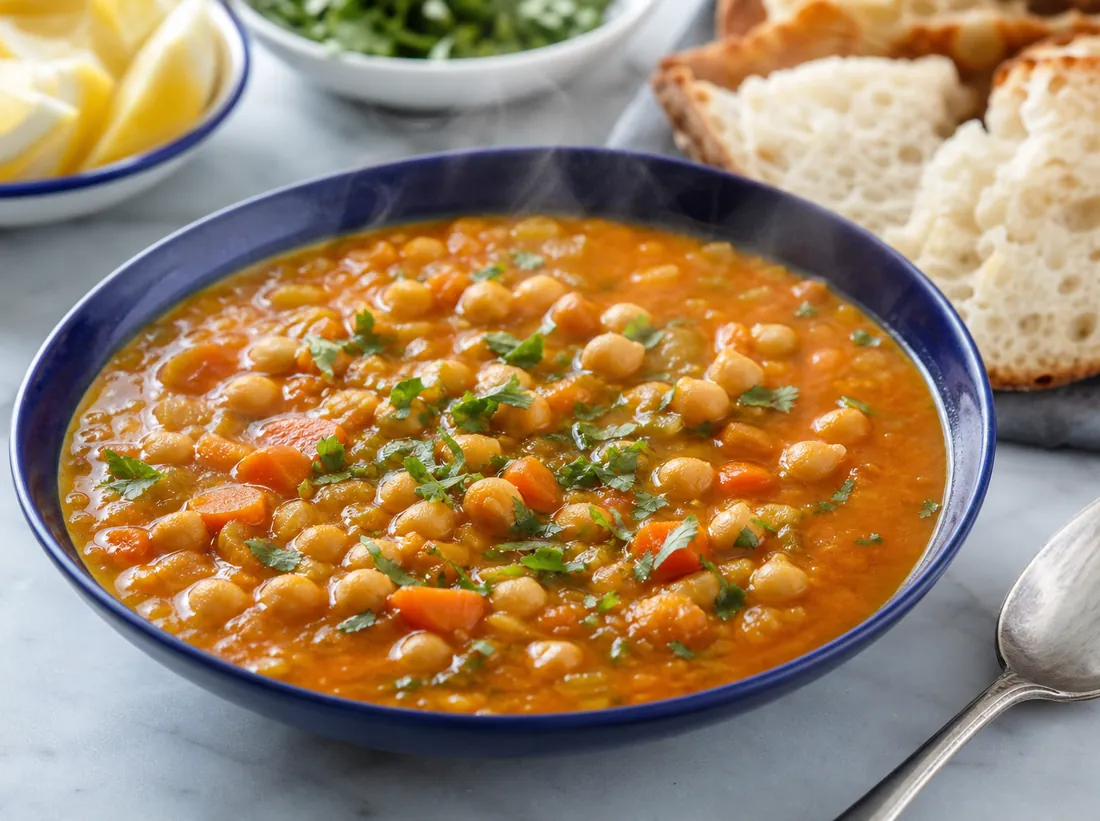
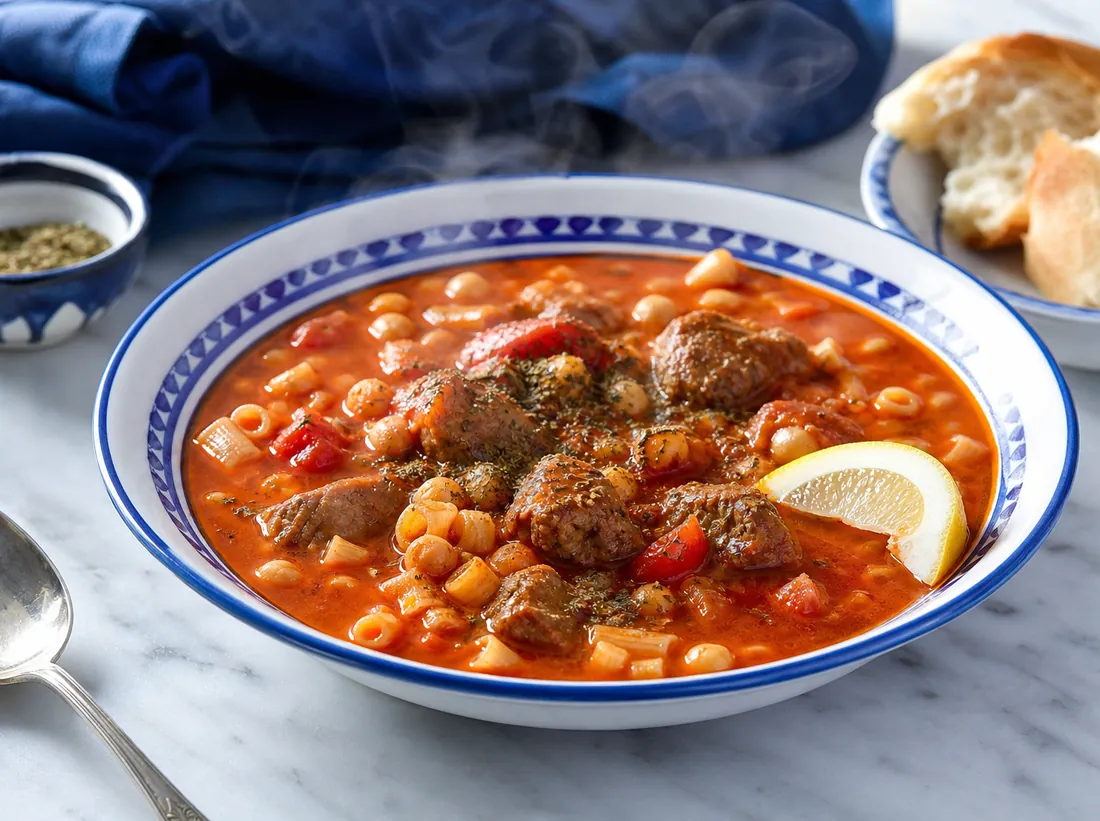
Every North African community has its own broth. In Morocco it is usually yellow, from turmeric and ginger, and sometimes red from tomato paste and paprika. Libyan Jews from Tripoli cook a red, spicy broth with beef, and in Tunisia the broth turns red with harissa. In Israel the communities mixed, so plenty of families cook yellow one Friday and red the next, and a meatless vegetable broth for couscous has become a common version in its own right.
What makes Couscous soup itself
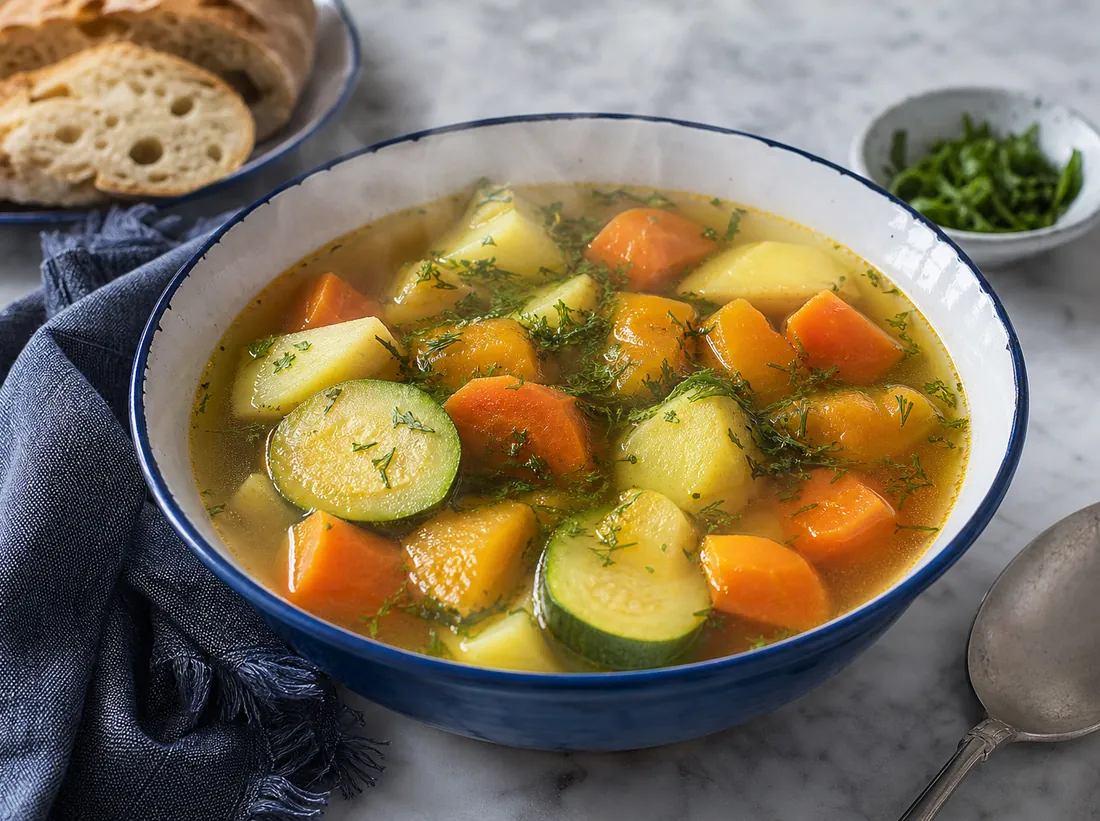
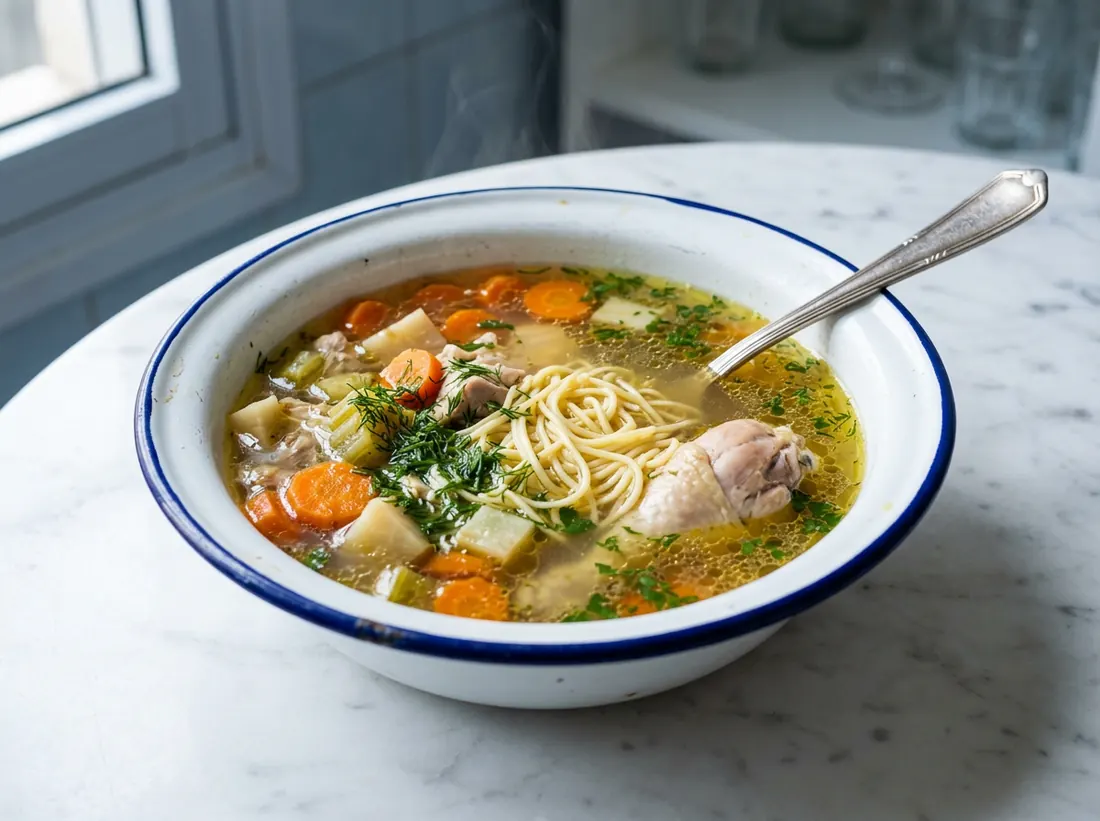
Couscous soup is cooked for the couscous, not for the bowl. The vegetables are cut big, half a zucchini, a wedge of cabbage, a 5 cm chunk of pumpkin, so they sit whole on the grains. The broth is thinner than an ordinary vegetable soup because the couscous soaks it up, and the flavour comes from turmeric, ginger and a tied bunch of coriander rather than stock powder. Everything goes in from hardest to softest: chickpeas and chicken, then carrot and turnip, then cabbage, zucchini and the pumpkin that sweetens the broth.