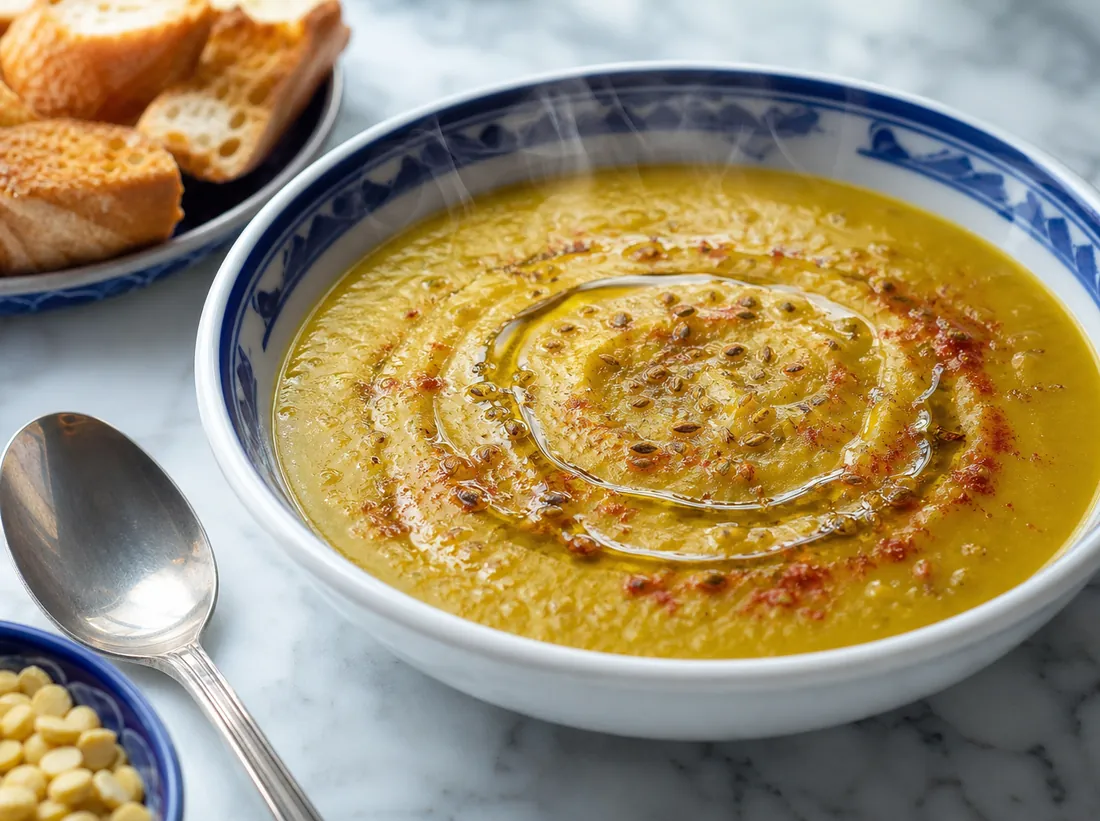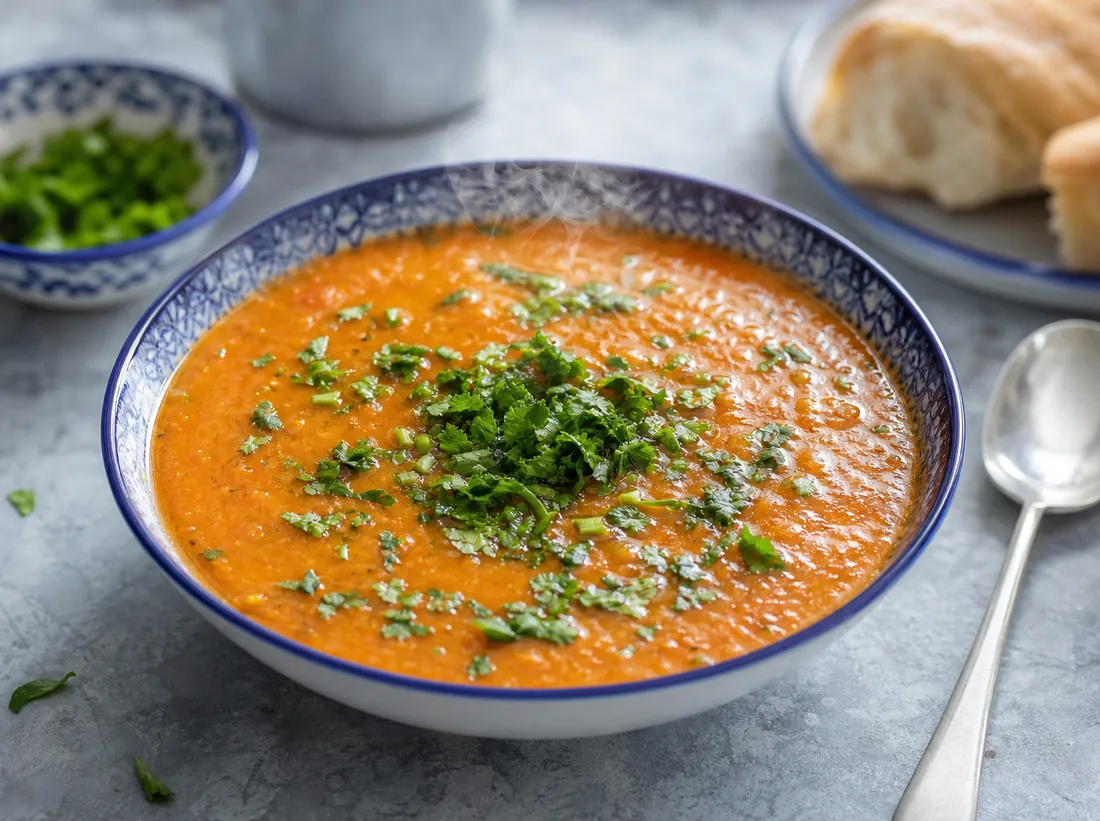
The story of Lahshu soup
Lahshu, or simply hshu in many homes, is a pantry soup: semolina, oil, garlic and coriander, with everything else optional. The name comes from the Arabic root meaning to sip, the same root as hasa, the word for soup in literary Arabic, and the l at the start is the definite article of Moroccan Arabic. In Morocco it belongs to a family of thick soups made from semolina or barley grits that appear on many tables in winter.
Moroccan Jews brought semolina soup to Israel and every family kept its own version. In some homes it is white and simple, semolina, garlic and coriander in 15 minutes; in others it is red with tomato, fenugreek, hot chilli and lots of lemon. Many grandmothers added a piece of chicken, or just some chicken skin, for depth. Plenty of families call it, with a smile, the Moroccan antibiotic, a nickname that is more about love than medicine: it is the soup you make when it rains.
What makes Lahshu soup itself
In lahshu the semolina is not an add-in, it is the soup. It goes into boiling water in a slow rain while you whisk, and releases starch that turns the water silky and thick without cream or flour. Fenugreek brings a deep, slightly sweet aroma, lemon brings a sourness that lifts the heaviness of the semolina, and the coriander and celery leaves go in only at the end so the soup tastes green and fresh.