Semolina
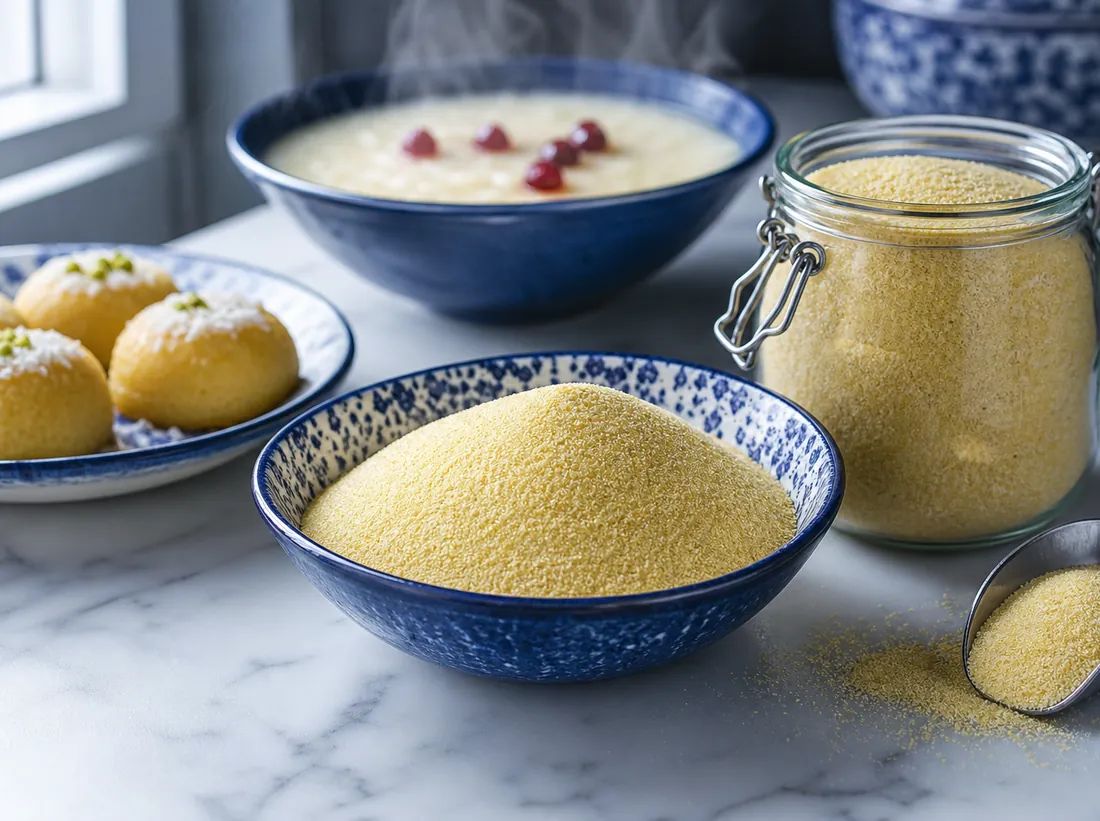
Semolina is the inner part of the wheat kernel, usually hard durum wheat, milled into small yellowish granules rather than powder. It is the base for kubbeh dough for soup, hot semolina porridge, semolina cakes in syrup and couscous, and each dish needs a different grind.
 Illustration
What is Semolina
When durum wheat is milled, the bran and germ are separated and the hard inner part of the kernel is broken into granules. Those granules are semolina. Milled further, they become fine durum flour for pasta and bread. The yellowish colour comes from the wheat's natural pigments, and the texture is a fine sand that does not vanish even after cooking.
In Iraqi and Kurdish cooking semolina is the dough of kubbeh hamusta, beet kubbeh, pumpkin kubbeh and okra kubbeh. In Morocco it becomes couscous and thick soups like lahshu, in Egypt and the Levant semolina cakes in syrup, and in Romania and Ashkenazi homes a hot milk porridge. In Israel it is sold in every supermarket, and large sacks of kubbeh semolina are at Iraqi and Kurdish grocers.
Price and where to buy
1 kg
per kg
Where
Regular and fine semolina are sold in every Israeli supermarket chain, on the flour and baking shelf, in one kilo bags. Coarse kubbeh semolina and large sacks are at Iraqi and Kurdish grocers and the grain and pulse shops of Hatikva Market and Levinsky Market in Tel Aviv, Mahane Yehuda in Jerusalem and Wadi Nisnas in Haifa. Twice milled semolina for pasta is at delis and baking supply shops.
Shelf prices, October 2026, VAT included.
Kinds of Semolina
Fine semolina
A small granule, almost like coarse flour. For porridge, soft cakes, cookies and lahshu soup, where it melts in without lumps.
Regular semolina
The semolina in most supermarket bags, a medium granule. Good for kubbeh dough, semolina cake in syrup and meatballs.
Coarse semolina
A larger, crunchier granule, sold mainly at Iraqi and Kurdish grocers. Some homes prefer it for kubbeh, since the dough comes out chewier, and some use it in semolina cakes and maamoul.
Twice milled semolina
Durum semolina milled twice until very fine, called semola rimacinata in Italian. For homemade pasta, bread and pizza.
How to use Semolina
Semolina kubbeh dough
450 g of semolina, 60 g of fine bulgur if you like, 6 g of salt and 330 ml of lukewarm water, for about 32 kubbeh. Knead for 5 minutes until smooth, cover and rest for 15 to 30 minutes. Work with wet hands, and if the dough cracks add a spoonful of water. In fried kubbeh of bulgur and semolina the balance is reversed, and some homes use two parts bulgur to one part semolina.
Semolina porridge
For every cup of milk, 250 ml, two to three tablespoons of fine semolina, about 25 g, and a tablespoon of sugar. Bring the milk to a gentle simmer, sprinkle in the semolina with one hand while whisking with the other, and cook for 3 to 5 minutes until thick. Top with cinnamon, silan or jam. The porridge is dairy.
Semolina cake in syrup
A semolina cake called basbousa, and in many Israeli homes harissa: two cups of semolina, a cup of sugar, a cup of yogurt, half a cup of oil or melted butter, half a cup of desiccated coconut and two teaspoons of baking powder. Bake in a 20 by 30 cm tin at 180°C for 30 to 35 minutes. For the syrup boil a cup and a half of sugar and a cup of water with a little lemon for 5 minutes, and pour the cold syrup over the hot cake.
Semolina and coconut cookies
A cup of semolina, a cup of desiccated coconut, half a cup of sugar, 100 g of soft butter or margarine, an egg and a teaspoon of baking powder. Knead to a soft dough, roll 3 cm balls and bake at 180°C for 12 to 15 minutes, until golden underneath.
Lahshu soup
170 g of fine semolina for a 5 litre pot. Sprinkle it slowly into the boiling soup with one hand while whisking with the other, then simmer gently for 25 minutes, stirring from the bottom, since semolina tends to stick.
Soups with Semolina
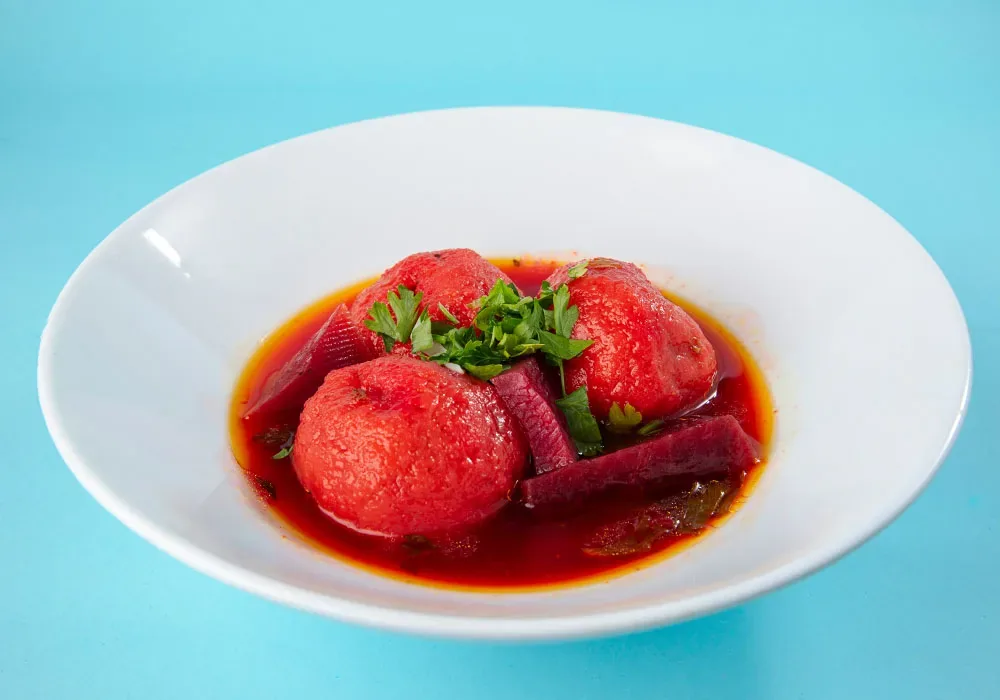
Beet kubbeh
Beet kubbeh is a red, sweet and sour beet soup with semolina dumplings stuffed with beef. It is the Friday…
 Illustration
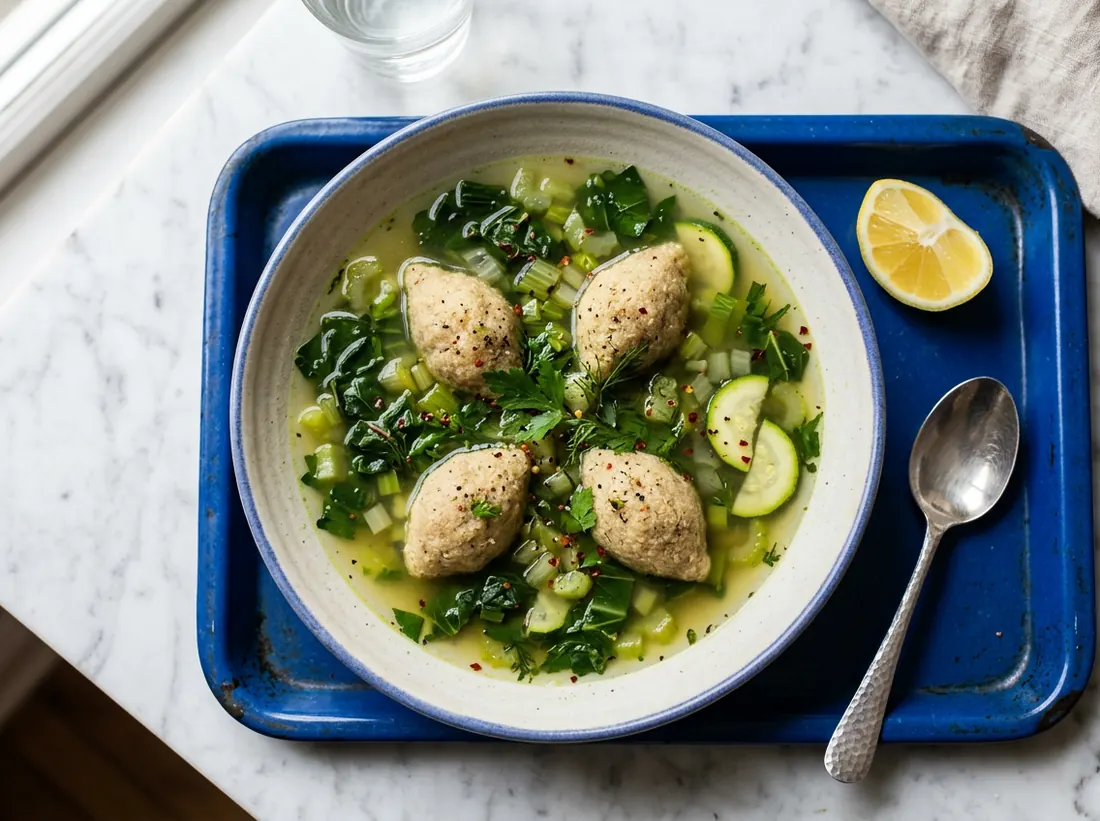
Kubbeh hamusta
Kubbeh hamusta is a very sour green soup of Swiss chard, zucchini and celery, with semolina dumplings stuffed…
 Illustration
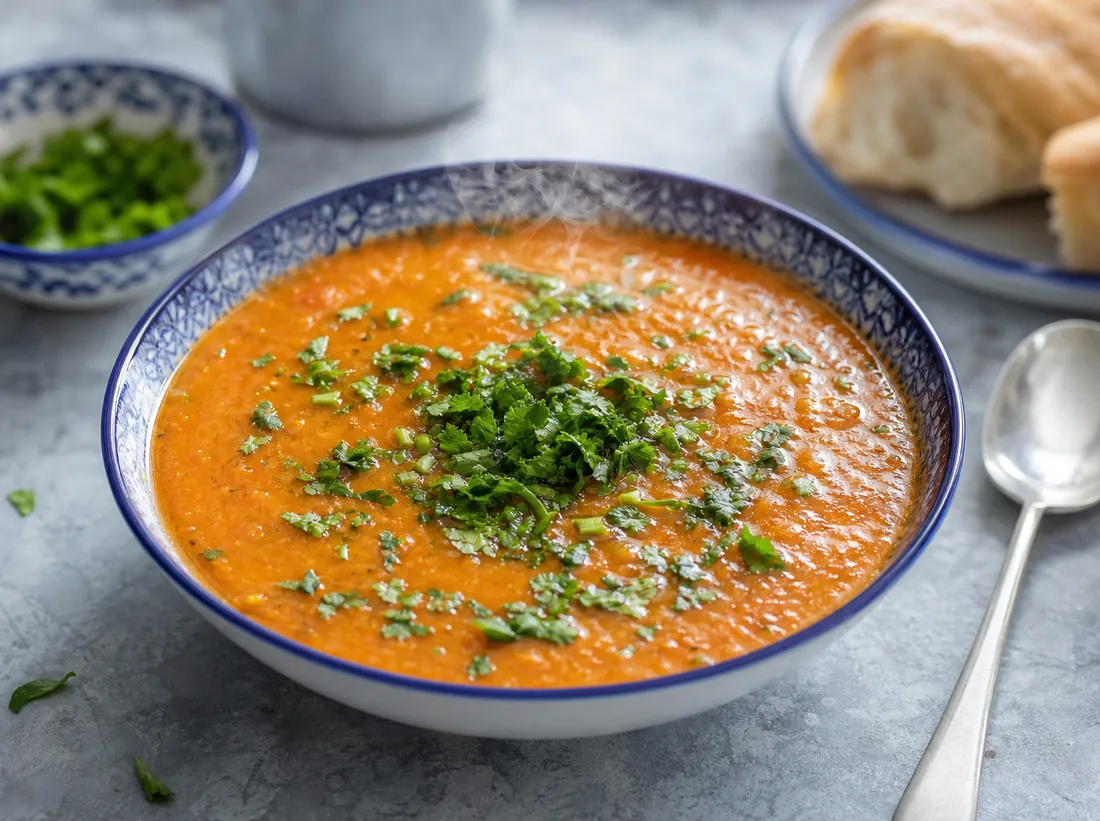
Lahshu soup
Lahshu soup is the Moroccan semolina soup: semolina simmered in water with olive oil, garlic, grated tomato…
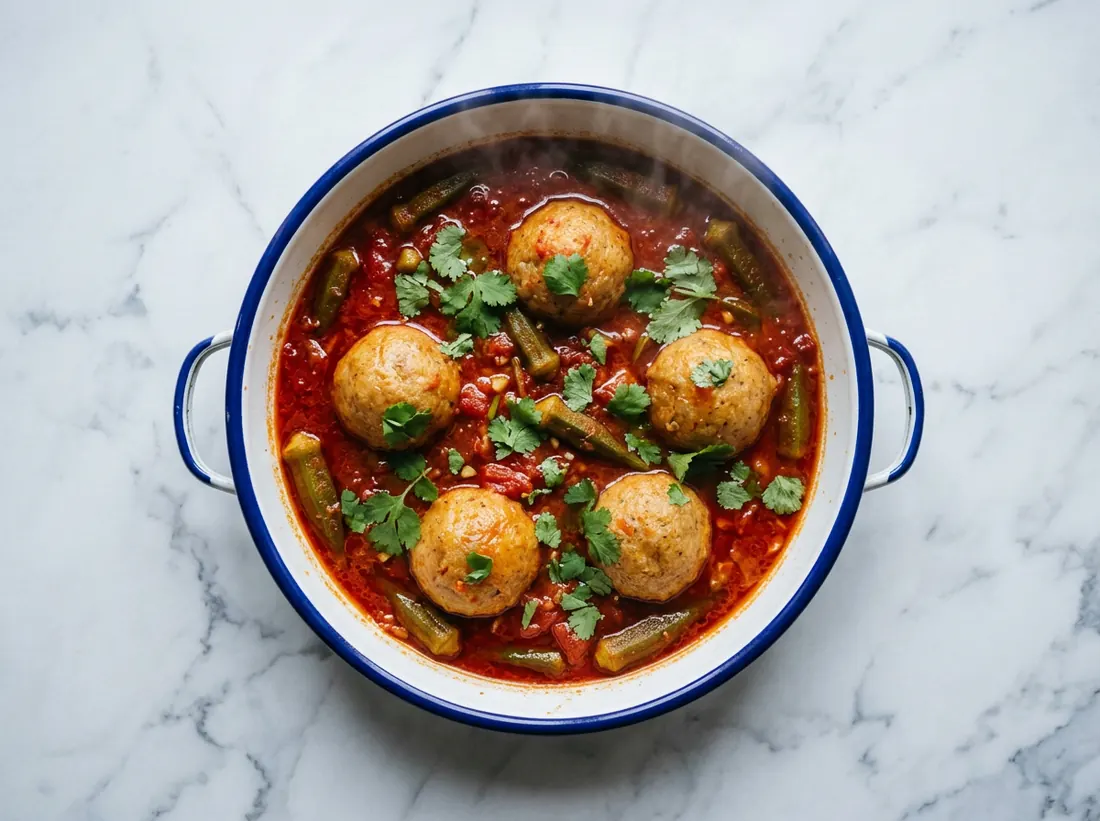 Illustration
Okra kubbeh
Okra kubbeh, kubbeh bamia, is an Iraqi stew of okra in a sweet and sour tomato sauce, with semolina dumplings…
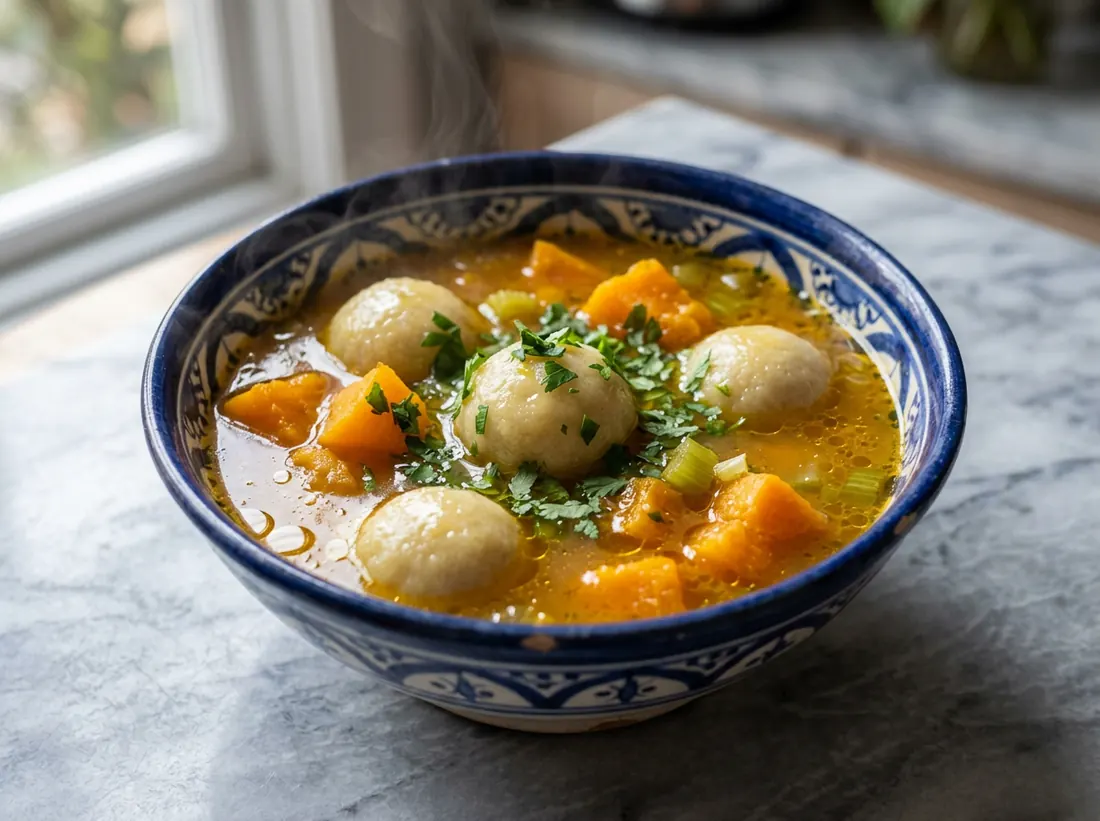 Illustration
Pumpkin kubbeh
Pumpkin kubbeh is an orange, sweet and sour pumpkin soup with semolina dumplings stuffed with beef. Iraqi…
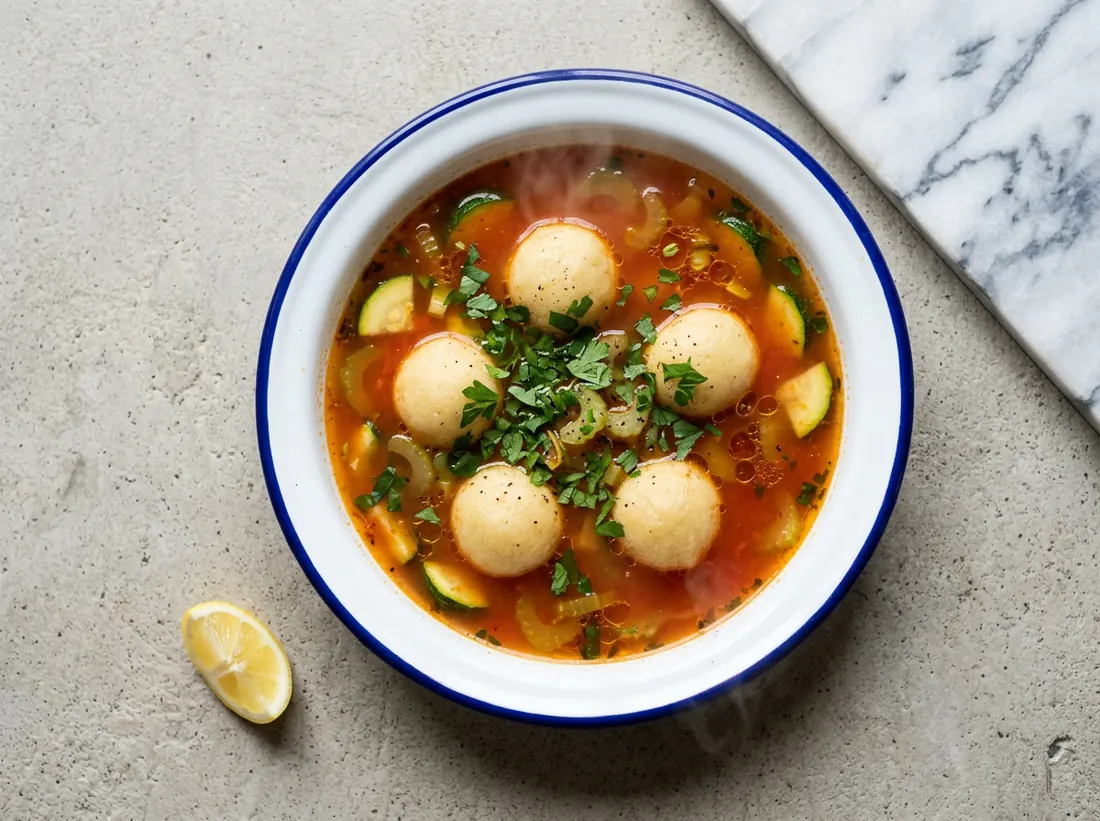 Illustration
Red kubbeh
Red kubbeh is a kubbeh soup built on tomato paste and paprika, with zucchini, celery and carrot, and beef…
How to choose Semolina
Buy the grind the dish needs: fine for porridge, cookies and lahshu, regular or coarse for kubbeh and semolina cake in syrup.
Even yellowish granules, no lumps, no musty smell and no sign of insects or webbing in the bag.
Semolina is not couscous and not flour: the pack says semolina or wheat semolina. For pasta look for twice milled semolina.
Look for a kashrut mark on the pack, and remember that semolina is wheat, so it is chametz at Passover and contains gluten.
What to use instead of Semolina
| Substitute | How, and what changes |
|---|---|
| Fine bulgur | In place of part of the semolina in kubbeh dough, or for fried kubbeh. The dough is grainier, nuttier and less smooth. |
| White flour | In cakes, in place of up to half the semolina, same amount. The cake turns softer and loses its sandy texture. It does not replace semolina in kubbeh. |
| Corn semolina | For porridge and cakes, same amount, gluten free. Yellow and coarser, with a sweet corn taste. It does not work for kubbeh dough. |
How to store Semolina
In the pantry
In the fridge
In the freezer
The science of Semolina
Why durum
In durum wheat the kernel is very hard and rich in protein, so it breaks into sharp granules rather than crumbling to powder. The granules absorb water slowly and keep their shape, which gives kubbeh its bite, semolina cake its sandy texture and couscous its separate grains.
Why kubbeh dough needs a rest
When semolina and water are mixed, the water first soaks the outer layer of each granule. Over a quarter to half an hour of rest it reaches the centre, the starch swells and the gluten links into a flexible network. The dough turns soft, does not crack when filled, and can be stretched into a thin shell.
Why semolina porridge turns lumpy
When dry semolina meets hot liquid all at once, the starch in the outer layer gelatinises instantly into a sticky gel that traps dry semolina inside. Sprinkling slowly while whisking constantly keeps the granules apart, so each one is wetted on its own.
Ask for Semolina
Looking for Semolina and cannot find it? Send a request and we will come back with a price and availability.
- Tell us how much you need and by when.
- We come back with a price, pack size and availability.
- Pick up at 99 Ibn Gabirol or delivery in Tel Aviv.
Frequently asked questions
What is semolina?
The inner part of the wheat kernel, usually durum, milled into small granules rather than flour. It is used for kubbeh, porridge, semolina cakes and couscous.
What is the difference between fine and coarse semolina?
Granule size. Fine semolina melts in quickly and suits porridge, cookies and soup, while coarse semolina keeps its bite in kubbeh and semolina cakes.
Which semolina do you buy for kubbeh?
Regular supermarket semolina works for kubbeh dough for soup. Some homes prefer coarse semolina from Iraqi and Kurdish grocers, for a chewier dough.
How do you make semolina porridge?
Bring a cup of milk to a gentle simmer, sprinkle in two to three tablespoons of fine semolina while whisking, add a tablespoon of sugar and cook for 3 to 5 minutes.
Can you replace semolina with flour?
In cakes up to half the semolina can be replaced with flour, and the cake will be softer. In kubbeh dough and porridge flour does not replace semolina.
Does semolina contain gluten?
Yes. Semolina is wheat. For gluten free porridge and cakes use corn semolina.
What is the difference between semolina and couscous?
Couscous is made from semolina: it is rolled with a little water into tiny balls, steamed and dried. Semolina is the raw material itself.
The Complete99 pantry
Ingredients and kitchen gear, with prices and availability.
More from the pantry
Amba
Amba is a sour, spicy sauce of pickled green mango, yellow from turmeric with a strong smell of fenugreek. It…
Baharat
Baharat is a blend of warm, fragrant spices, and its name is simply the Arabic word for spices. In Iraqi,…
Bulgur
Bulgur is wheat that has been boiled, dried and cracked, so it is ready in minutes. Fine bulgur, which many…