The story of Karaage
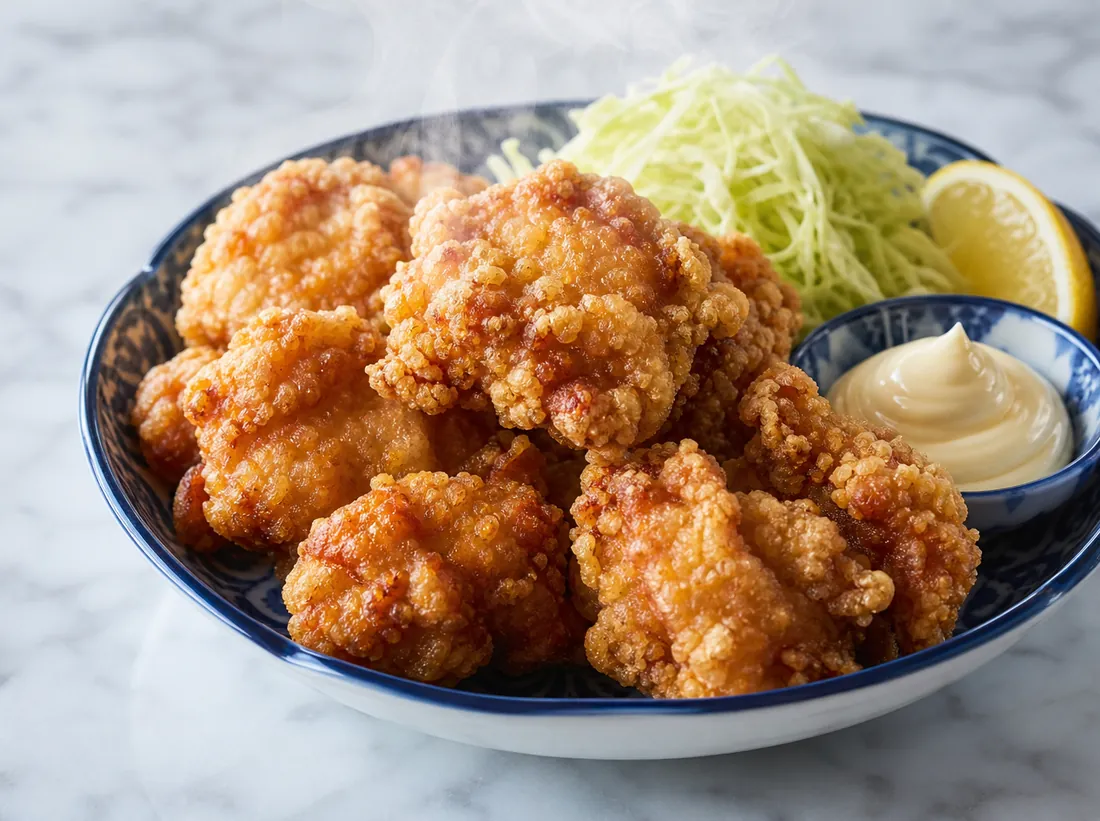
The word karaage describes a method rather than one dish: age means fried, and the character for kara has long been linked to Tang dynasty China, a hint of Chinese influence on the cooking. Fish and vegetables are fried this way in Japan too, but when people say karaage today they nearly always mean chicken, tori no karaage. It became common home cooking in the decades after the Second World War, as chicken turned into an everyday meat in Japan.
The city of Nakatsu in Oita prefecture, in the south of Japan, is known as a karaage town, with dozens of small shops that each guard their own marinade. Today karaage is everywhere: in children's bento boxes, at the hot counter of the convenience store, at the izakaya next to a glass of beer, and at the family dinner table with rice and miso soup.
What makes Karaage itself
Karaage differs from American fried chicken in a few ways. The pieces are small and boneless, cut from thigh meat that stays tender and juicy. The flavour goes in from the inside, from a short marinade of soy sauce, sake, ginger and garlic, rather than seasoning on the crust. The coating is potato starch, not a thick batter, so the crust is thin as glass with white patches here and there. And it is fried twice, once gently to cook and once hot to dry. American fried chicken is often soaked in buttermilk, which leaves no simple kosher version, while karaage has no dairy at all.