The story of Tempura
Frying in batter reached Japan in the 16th century with the Portuguese traders and missionaries who anchored at Nagasaki, and the name tempura is generally traced to a Portuguese word. In the Edo period, in the 18th and 19th centuries, tempura became street food in Edo, today's Tokyo: stalls fried small fish from the bay on skewers, and customers ate them standing up, dipped in sauce.
Over time tempura moved from the stall to the table. Today Tokyo has small restaurants where the chef fries piece after piece in front of the diners, following the season, and every home makes vegetable tempura for dinner or for topping udon and soba. On New Year's Eve the Japanese eat toshikoshi soba, buckwheat noodles, often with tempura on top.
What makes Tempura itself
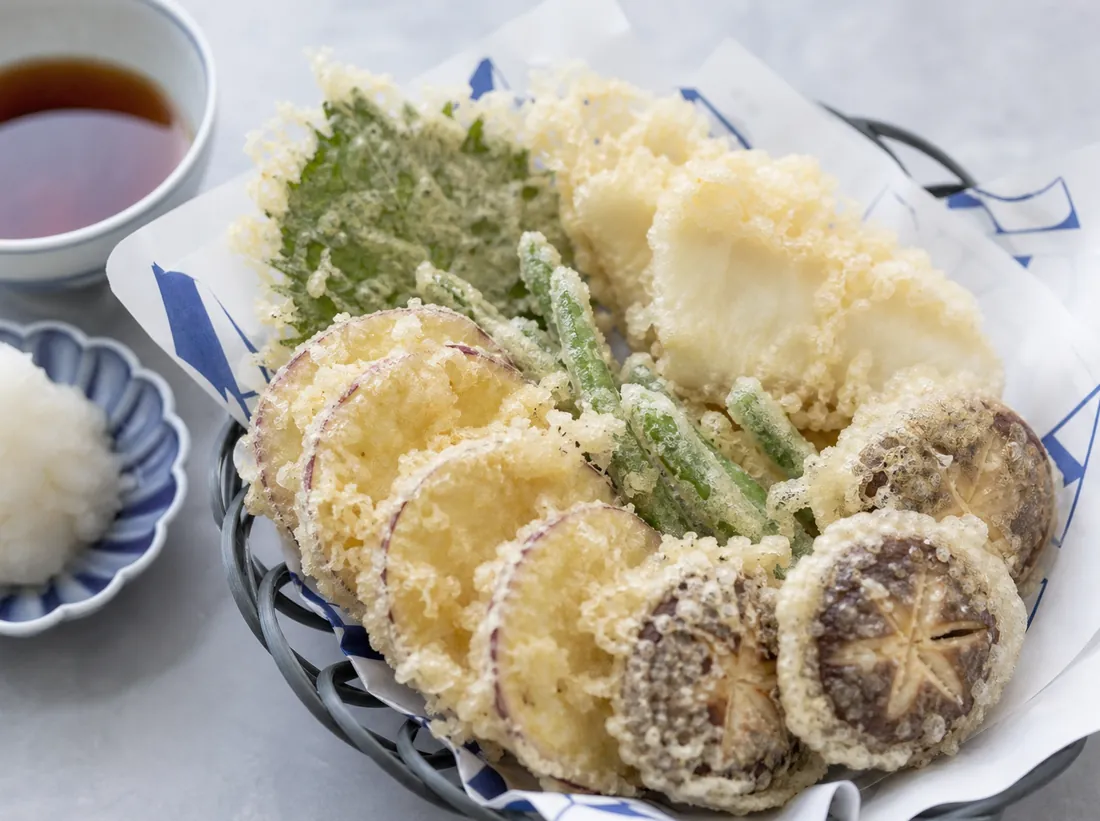
Good tempura barely feels fried. The batter is thin, cold and hardly mixed, so it develops almost no gluten, and it clings in a fine layer that puffs in the oil into a lacy, half-transparent crust through which you can see the colour of the vegetable. You fry a few pieces at a time, eat them straight away, and dip them in a sauce of dashi, soy sauce and mirin with grated daikon, or in salt. In a kosher kitchen two classics stay out: shrimp and sea eel, which are not kosher. In their place come fish with fins and scales, such as sea bass, cod, hake or salmon, and plenty of vegetables.