The story of Kleicha
In Iraq kleicha is counted as the national cookie, and almost every home bakes it before a holiday, by the dozen and by the hundred. Muslims bake it for the feast at the end of Ramadan and for Eid al-Adha, Christians for Christmas and Easter, and in Jewish homes in Iraq it stood on the tea tray beside other sweets. In the north of Iraq Kurdish homes bake similar date cookies too.
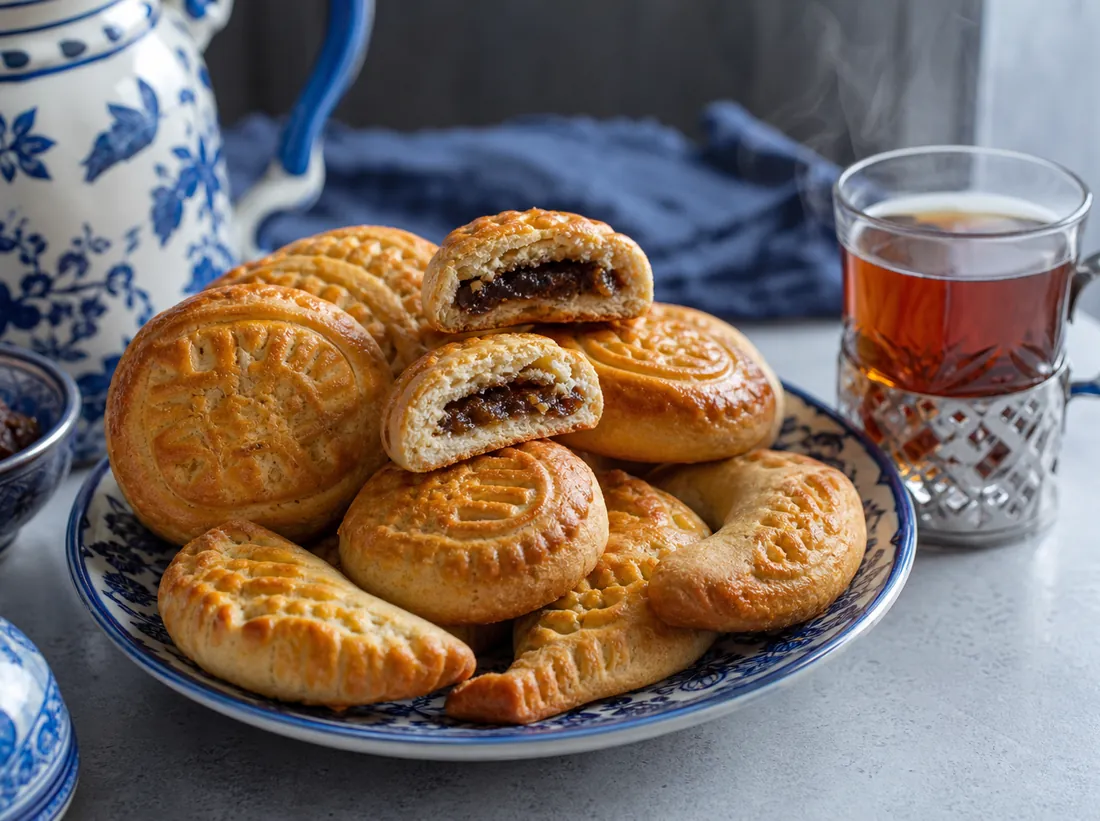
The name is spelled several ways, kleicha, klecha and kleija, and the cookie comes in several forms: round decorated discs, rolled logs sliced into spirals, and crescents. The Qassim region of Saudi Arabia has its own local version, and Iraqi Jewish homes in Israel also know ba'abe b'tamer, a round yeasted cookie filled with dates and coated in sesame, a close relative of kleicha.
What makes Kleicha itself
Kleicha rests on two things: cardamom and dates. Cardamom goes into both the dough and the filling, and it gives the cookie the scent that anyone who grew up in an Iraqi home knows from the kitchen. The dough is rich in fat and very low in sugar, because the sweetness comes from the dates, so it bakes up short and tender, not sweet like an ordinary cookie. A little yeast keeps it light, and the yolk on top gives a golden shine. In Iraq the dough is usually made with butter or ghee; our kosher version is parve, with margarine or oil.