The story of Mochi
Traditional mochi is made from glutinous rice, mochigome, steamed and then pounded in a large wooden mortar with heavy mallets until the grains disappear and a smooth, glossy, stretchy mass is left. For centuries mochi was food for festivals and shrines: offered to the gods, eaten at ceremonies, and above all made for the New Year.
The pounding, mochitsuki, is a family and community event at the end of December, and two people work it in rhythm: one swings the mallet, the other turns the dough with a wet hand between blows. In today's home kitchens most people make mochi from glutinous rice flour, shiratamako or mochiko, cooked in the microwave or a steamer, and get nearly the same texture in minutes.
What makes Mochi itself
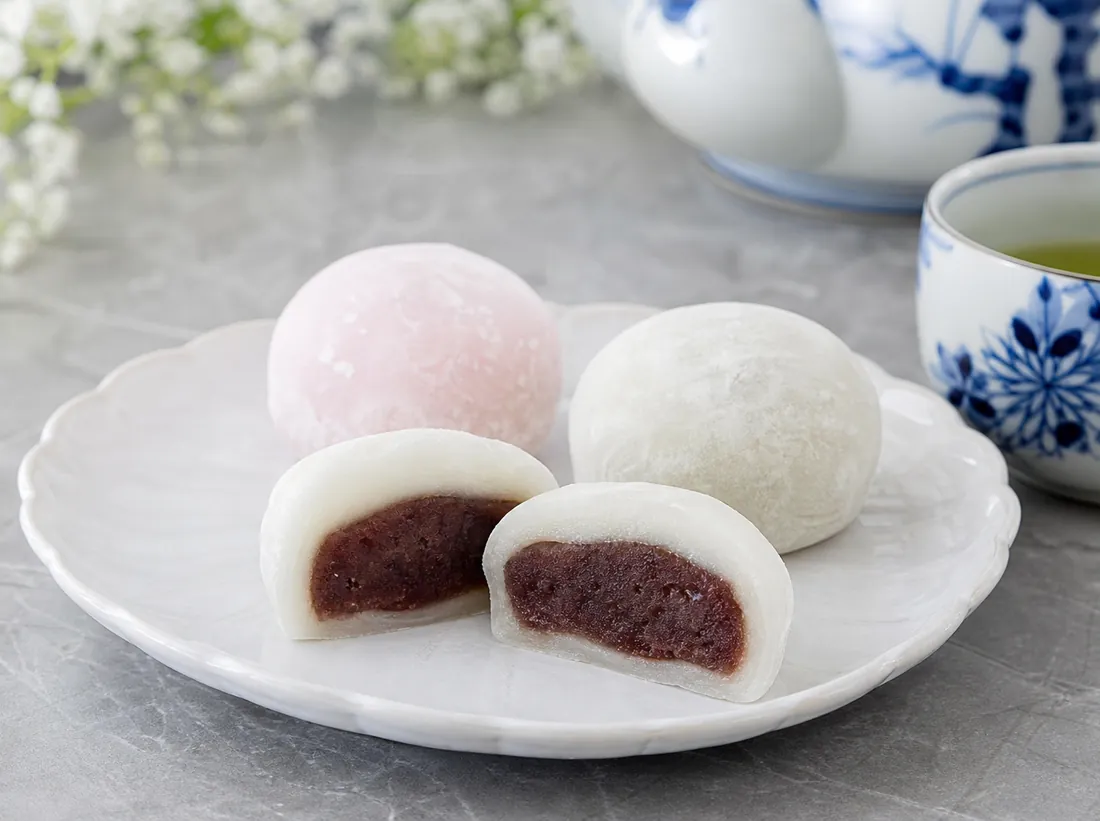
The Japanese describe the texture of mochi as mochi mochi: soft, bouncy and stretchy, giving way to the teeth and springing back. It comes from glutinous rice, whose starch is almost all amylopectin, not from ordinary rice flour, which makes a crumbly paste. Despite the name, glutinous rice contains no gluten at all. In daifuku the mochi wraps anko, a paste of azuki beans cooked with sugar until thick, sweet but not cloying. Everything is parve and vegan, and all you need is glutinous rice flour and beans with a kosher mark.