The story of Stuffed onions
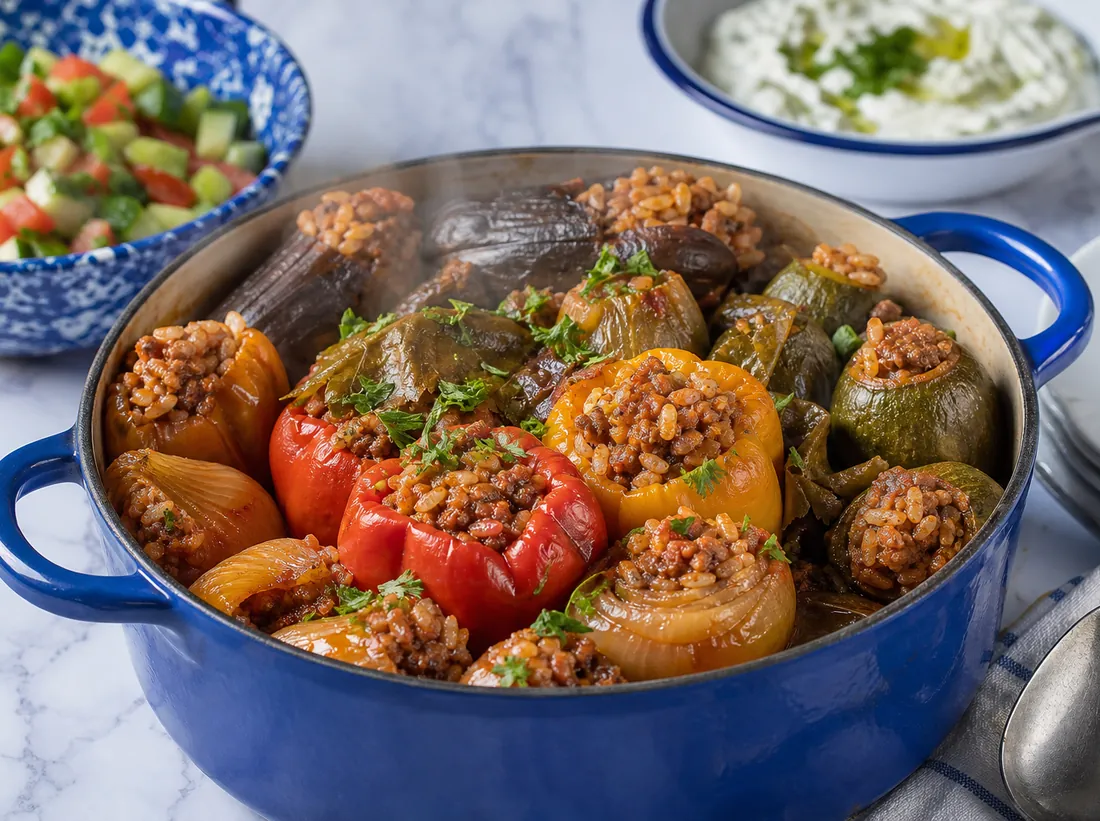
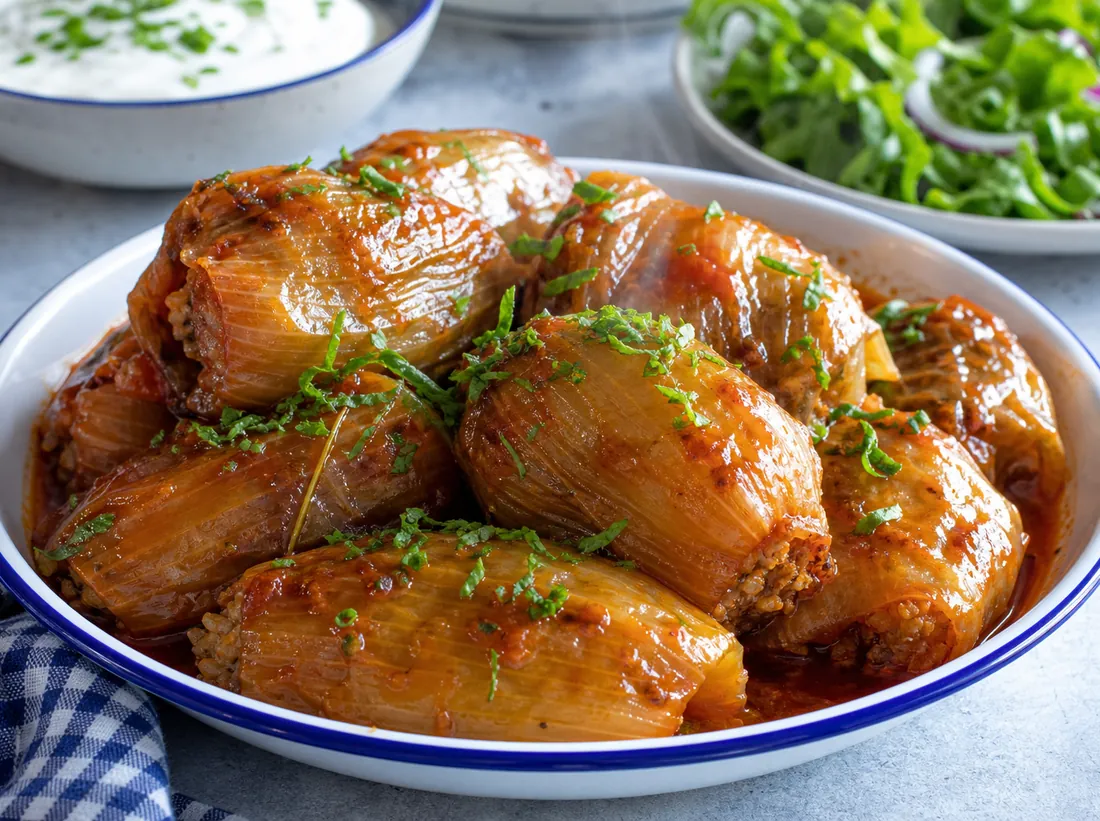
Stuffed onions belong to the family of Ottoman stuffed dishes, but in this form, a single layer rolled around a filling, they developed above all in Syria and Iraq. In Aleppo and Damascus they were called mehshi basal, and in Baghdad they were part of dolma, the big tray of stuffed vegetables for Shabbat and holidays. The sweet and sour taste, from tamarind, lemon and sugar, is the signature of those kitchens, and of their Jewish cooking in particular.
In Israel stuffed onions moved from Syrian and Iraqi homes into Israeli cooking at large. A newer generation sometimes swapped tamarind for silan and pomegranate molasses, which every supermarket stocks, and baked the onions uncovered until they caramelised. That is how the caramelised stuffed onion was born, one of the most searched dishes before every holiday.
What makes Stuffed onions itself
In a stuffed onion the onion is not a wrapper, it is half the flavour. After boiling and a long bake its sharpness vanishes completely, and its natural sugars concentrate and caramelise with the sauce. The real work is separating the layers: boiled just long enough to soften and peel, not so long that they tear. The filling is small, a level spoonful per layer, because the onion has to close around it.