The story of Stuffed cabbage
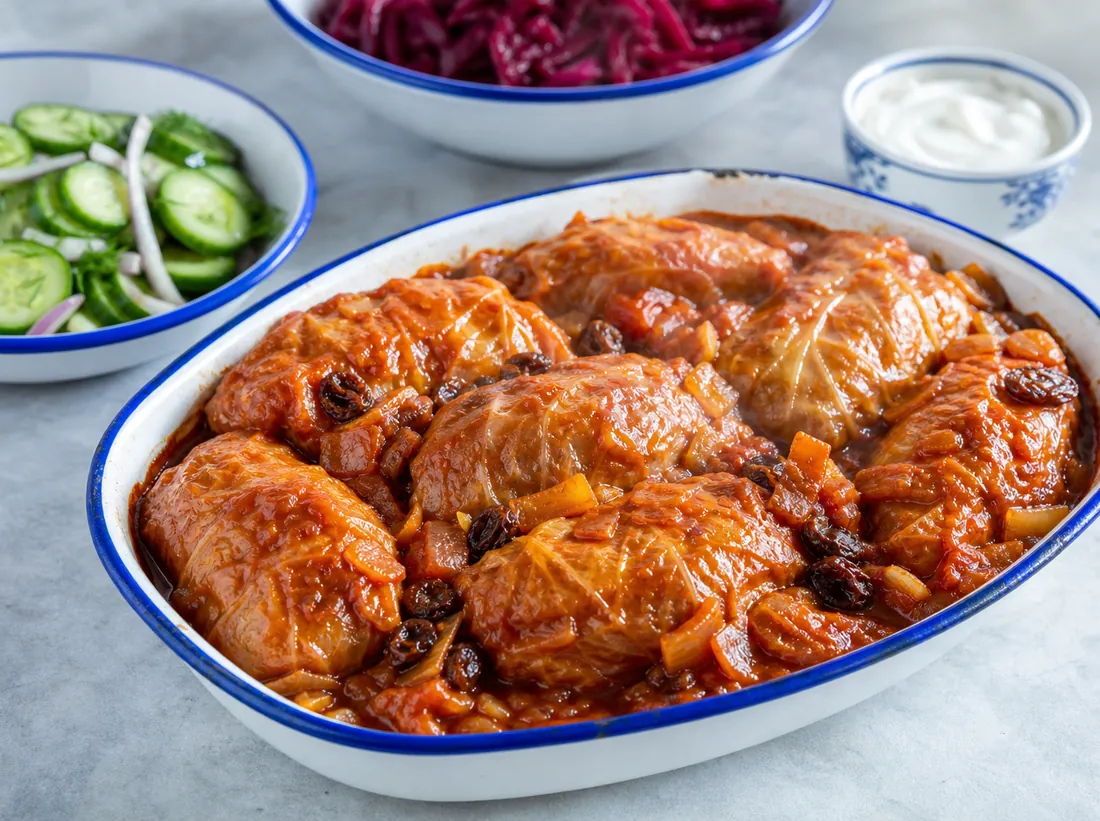
Almost everywhere cabbage grows, people stuff it. In Poland the rolls are called gołąbki, in Russia and Ukraine golubtsy or holubtsi, in Romania sarmale, in Hungary töltött káposzta, and in Turkey lahana sarması. The Jews of Eastern Europe adopted the dish and made it their own: a beef filling, and a sweet and sour tomato sauce, with sugar and lemon or sour salt, the beloved flavour of Jewish cooking in the region.
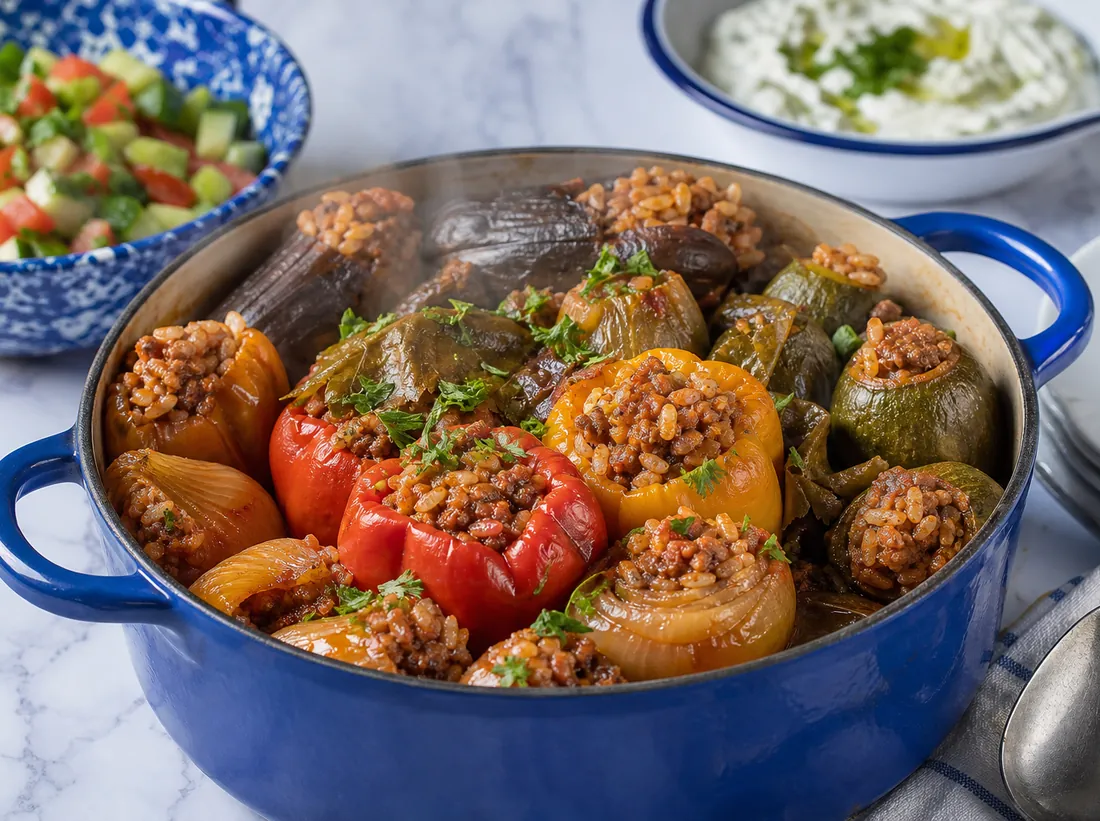
The name holishkes, along with holoptches and galuptzes, comes from Yiddish and changes from town to town. In Israel the Ashkenazi rolls met the cabbage leaves of Iraqi Jews, which cook on the dolma tray, and the malfouf of Lebanese and Syrian cooking, and every home kept the eternal argument: how sweet, how sour, and raisins or no raisins.
What makes Stuffed cabbage itself
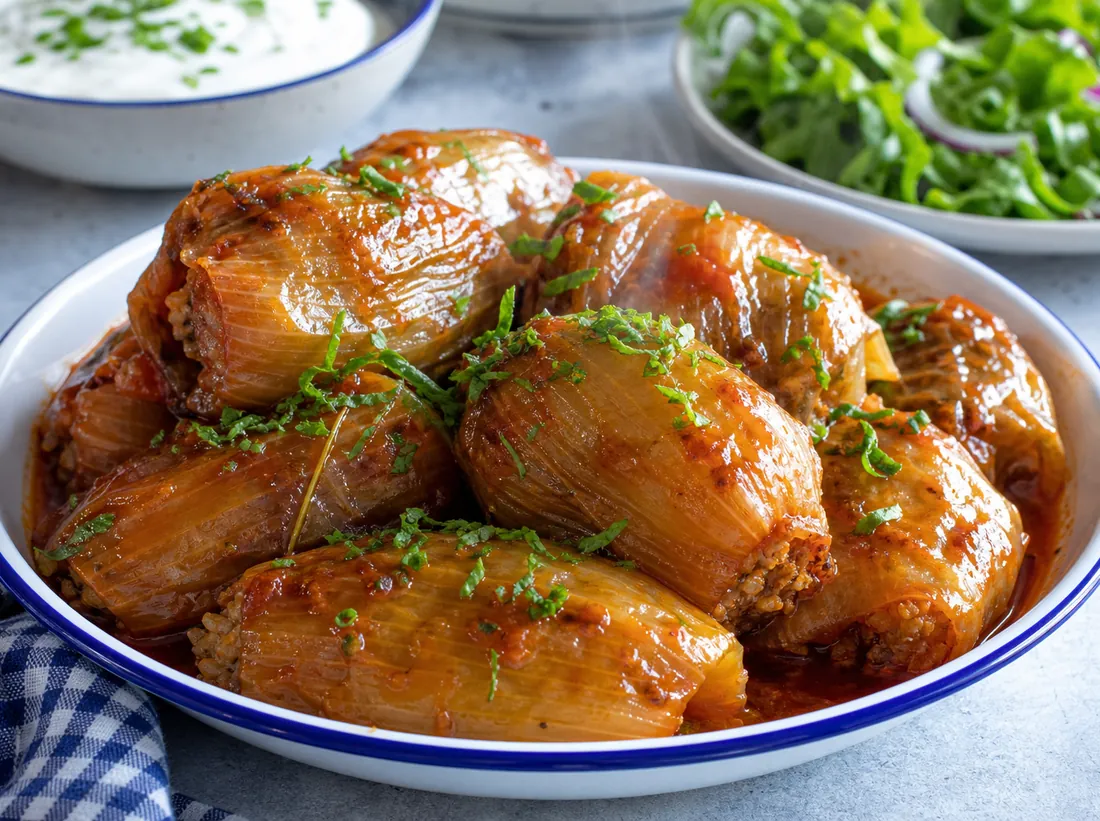
In stuffed cabbage the sauce matters as much as the filling. It cooks for two and a half hours with the rolls, and the cabbage gives it a deep sweetness and body. The Ashkenazi filling is simple: beef, a little rice, onion and egg, and the roll is fairly large, about 50 g of filling per leaf. A slow bake in the oven, rather than boiling in a pot, is what turns the leaves soft as butter without falling apart.