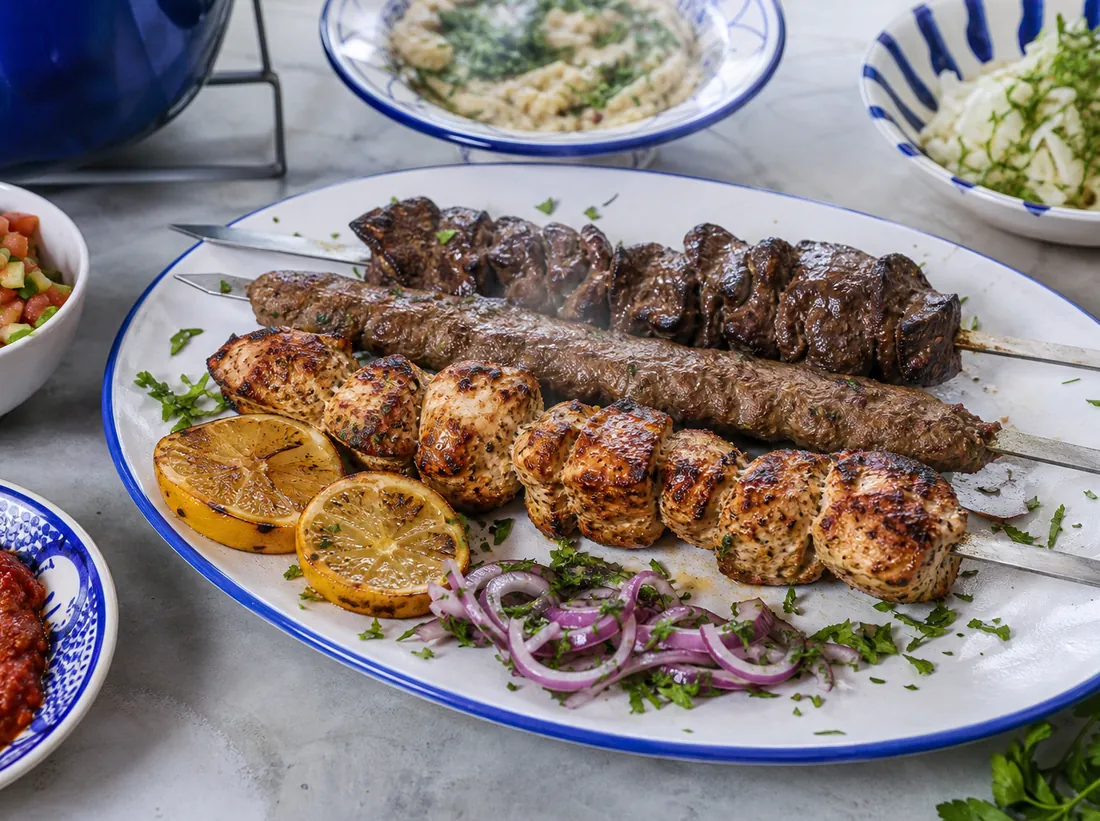
The story of Shawarma
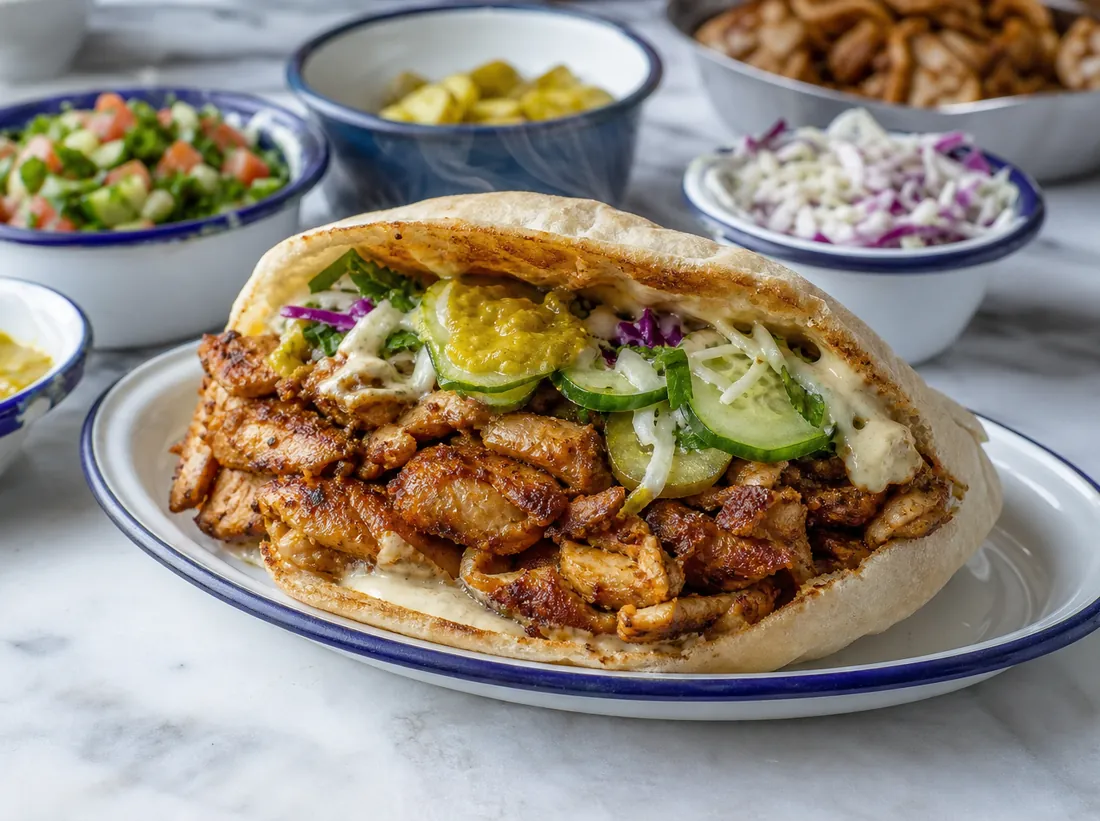
Shawarma was born in the 19th century Ottoman Empire, when cooks in Turkey stood the roasting spit upright and began grilling a stack of sliced meat in front of a vertical fire. That gave the world döner kebab, and the name shawarma is usually linked to the Turkish word çevirme, turning. From there the turning spit travelled to Syria, Lebanon and Egypt and became a street sandwich: thinly sliced meat, flatbread and a tangy sauce.
In Israel shawarma reached the stands from the local Arab kitchen and over the years became a national street food beside falafel. Expensive lamb gave way to turkey, which was plentiful, with layers of lamb fat between the slices that melted and basted the spit. Iraqi Jews brought laffa and amba, a spicy pickle of mango and fenugreek, and both became part of Israeli shawarma. Today most stands turn a spit of pargiyot, boneless chicken thighs.
What makes Shawarma itself
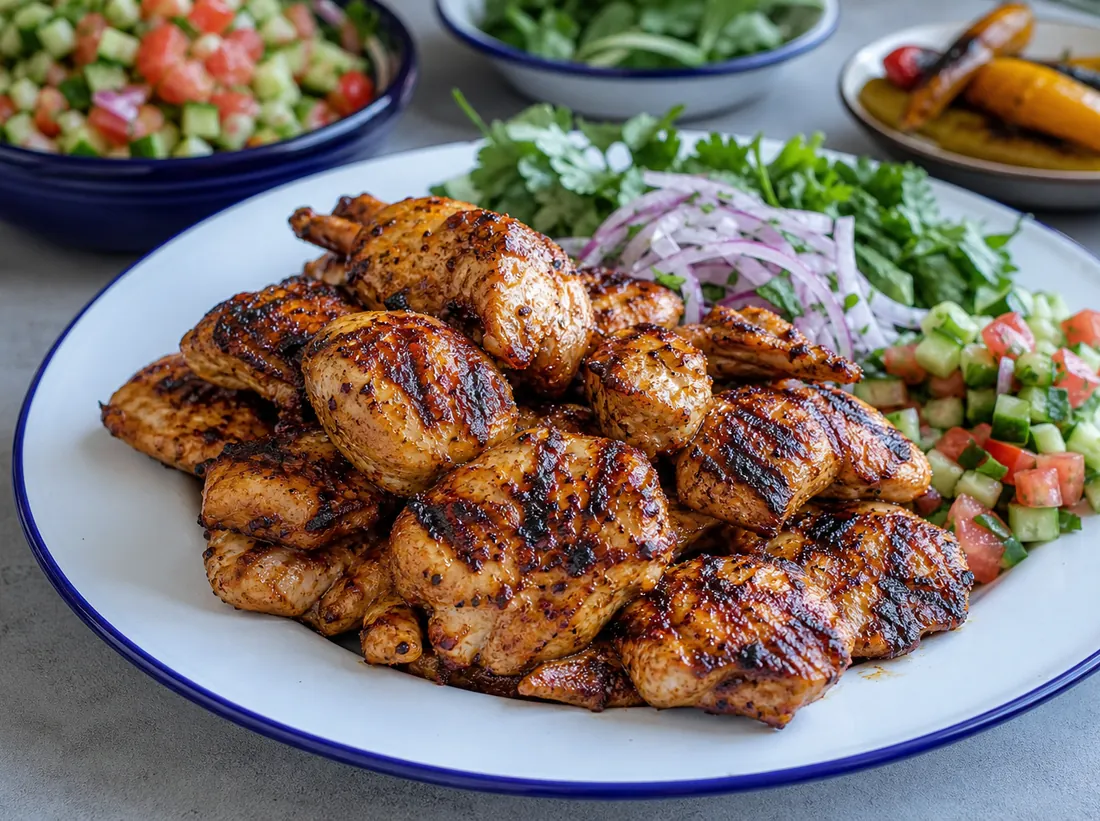
What makes shawarma shawarma is the cutting, not only the spice. On the spit the meat roasts from the outside and is shaved off in thin layers, so every bite has crisp browned edges next to juicy meat. At home you recreate that in three moves: chicken thighs cut into 1 cm strips, a blazing cast iron pan worked in small batches, and the fat left in the pan going back into the meat at the end. The Israeli spice is warm and deep: cumin, coriander, turmeric and paprika, with a pinch of cinnamon, cardamom and allspice that gives the familiar smell of the stand.